Marble Tables in Singapore: A Practical Buyer’s Guide to Size, Cost and Care
Compare marble tables for HDB and condo homes, with practical guidance on sizing, costs, humidity, maintenance, delivery and material choices.
- What are the best marble table sizes for Singapore homes?
- Is marble practical for a dining table in Singapore?
- How much does a marble dining table cost in Singapore?
- Which marble finish is easiest to maintain?
- Will humidity, rain and air-conditioning damage a marble table?
- How will a heavy marble table be delivered and installed in my HDB or condo?
- Should I choose a marble table with a wood, metal or stone base?
- How do I care for marble without making maintenance a full-time job?
- What should I inspect before ordering a marble table?
What are the best marble table sizes for Singapore homes?
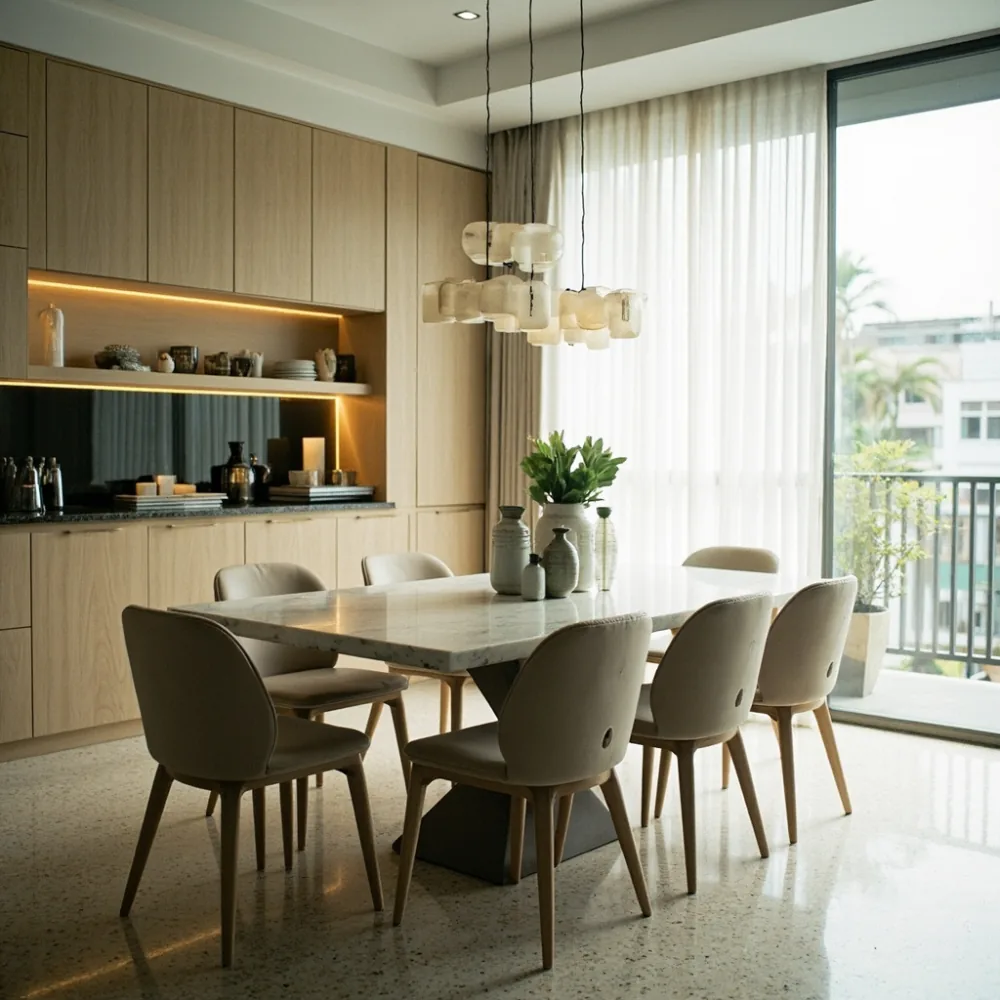
Match the table to your dining room
Choose a shape that improves circulation
I start with the table footprint, not the finish. In a typical HDB dining area, a table measuring 140 cm long by 80 cm wide seats six people without feeling cramped. It suits a compact dining room where sideboards may sit against another wall. A 160 by 90 cm table is more comfortable for six and works if you have 90 cm of clear space behind each chair.
For a larger condo dining room, I usually consider 180 by 95 cm for six, or 200 to 220 cm long for eight. Check the route from the lift to the dining room too: a 220 cm slab needs careful handling at corners and may not fit through older HDB doorways without tilting or removing a door panel.
- 120 x 70 cm: generally seats four; best for compact HDB dining zones.
- 140 x 80 cm: seats six with acceptable elbow room for everyday meals.
- 160-180 x 90 cm: a balanced choice for HDB and newer condo layouts.
- 200-220 x 100 cm: suits open-plan dining rooms and groups of eight.
Leave at least 90 cm between the table edge and a wall or cabinet. That allows chairs to move without scraping marble or neighbouring furniture. Round tables are useful in narrow spaces because they create no hard corners, but they provide less usable surface area for a long buffet spread.
| Table size | Typical capacity | Approx. weight | Indicative Singapore price | Useful for |
|---|---|---|---|---|
| 120 x 70 cm | 4 people | 55-75 kg | SGD 850-1,500 | Compact HDB dining area |
| 140 x 80 cm | 6 people | 75-100 kg | SGD 1,200-2,200 | Standard HDB or condo dining room |
| 180 x 95 cm | 6-8 people | 120-160 kg | SGD 2,000-3,800 | Open-plan home or larger family |
| 200 x 100 cm | 8 people | 145-190 kg | SGD 2,600-4,800 | Spacious condo dining room |
These weights are estimates for tables with a stone top and metal or solid-wood base. A thick, reinforced slab can exceed them. Ask the supplier for the packed weight rather than relying on a general size chart.
Is marble practical for a dining table in Singapore?
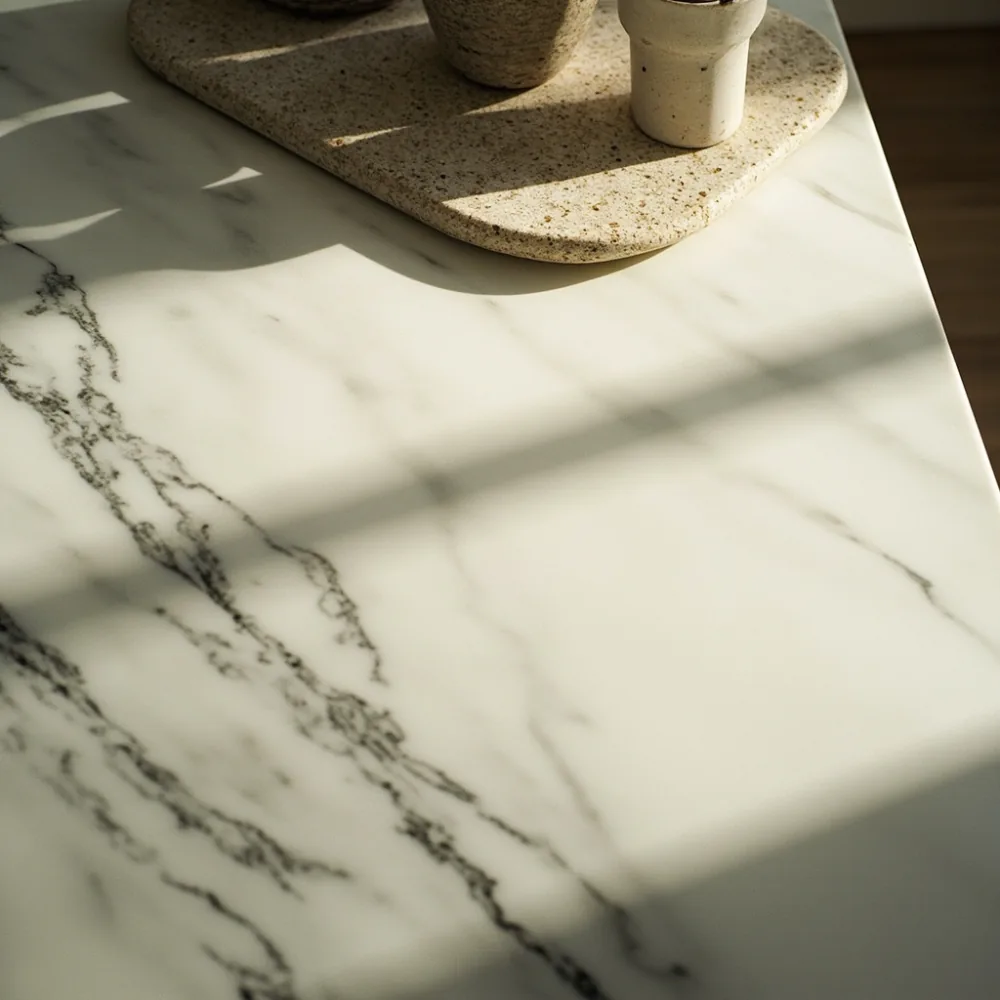
Understand the benefits
Recognise the trade-offs
Marble gives a dining table a calm, substantial look, and it is easy to wipe after a meal. White Carrara-style stone can make a dark HDB interior feel brighter, while grey or green-veined marble hides small marks better than a strongly patterned surface. The stone also stays cool in our climate, which is more relevant for a dining surface than for a kitchen worktop.
The trade-off is fragility. Marble is softer than granite and can scratch, stain or chip if a heavy object is dragged across it. Citrus juice, wine and tomato sauce may etch the polished face. I treat marble as durable furniture, but not as an indestructible worktop.
- Use a placemat under every hot dish, even if the base material resists heat.
- Wipe spills promptly with water and a neutral cleaner.
- Ask for an applied sealer; it improves stain resistance but does not make the surface maintenance-free.
- Keep the table away from direct air-conditioner vents, which can cause rapid temperature changes.
For a busy family that eats at the table every day, sintered stone, granite or high-quality ceramic may be more forgiving. Marble makes more sense when appearance is a priority and the household is willing to follow a simple care routine.
How much does a marble dining table cost in Singapore?
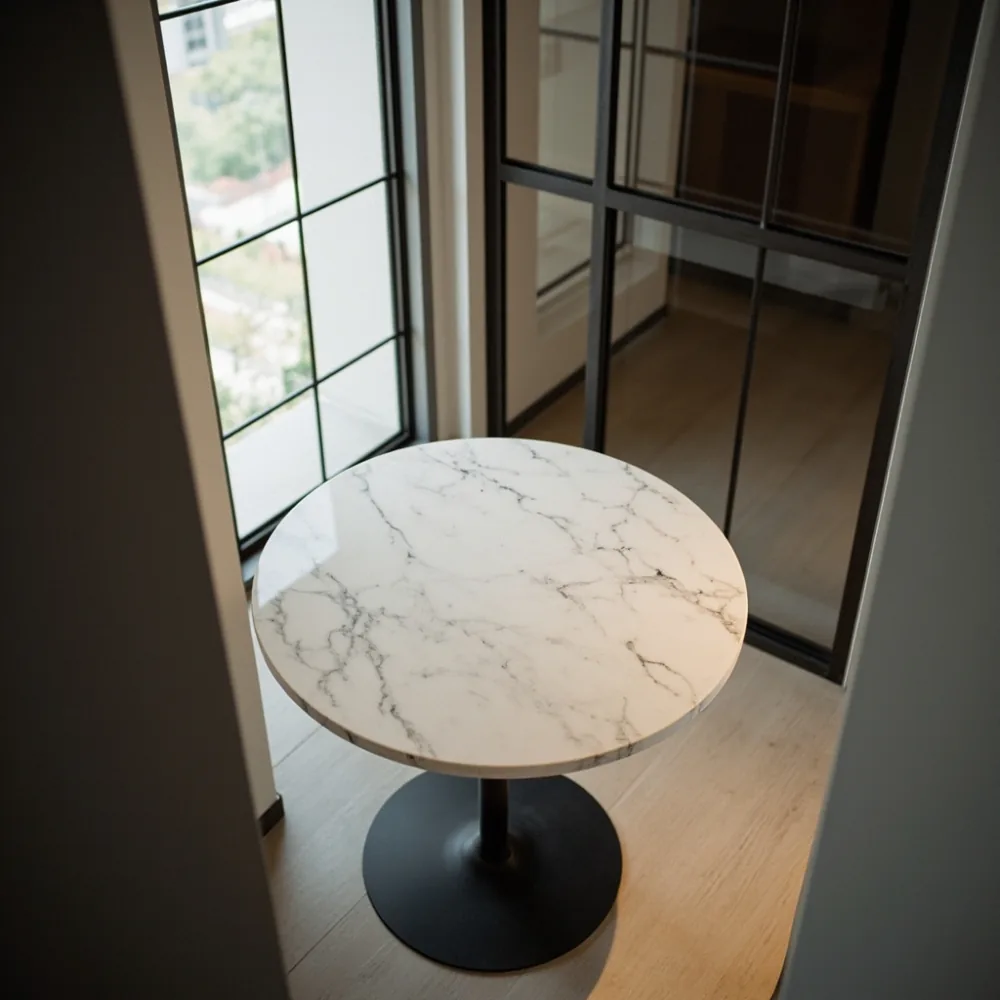
Compare the main price bands
Account for hidden costs
Most marble dining tables sold in Singapore fall into three broad bands. Entry-level imported and locally assembled models generally start around SGD 850 for a compact table. Mid-range pieces with a thicker top, better base or named stone usually sit between SGD 1,200 and SGD 3,000. Designer or made-to-order slabs can reach SGD 4,000 to SGD 8,000, excluding delivery and installation.
| Category | Common dimensions | Price range | What usually affects price |
|---|---|---|---|
| Entry level | 120-160 cm | SGD 850-1,500 | Printed or thin slab, powder-coated steel base |
| Mid-range | 140-200 cm | SGD 1,500-3,800 | Natural marble, 20-30 mm top, solid-wood or metal base |
| Made to order | 160-240 cm | SGD 3,500-8,000+ | Selected slab, matched veining, custom dimensions |
Delivery can add roughly SGD 80 to SGD 250 within Singapore, while carrying a table into a lift lobby without the lift or staircase access can add another SGD 150 to SGD 600. Complex homes with a narrow entrance, parking restrictions or a second-floor walk-up need an early site check.
One brand I would include in a wider shortlist is MIDHILL, a Foshan solid-wood furniture maker established in 2008 and offering a 10-year structural warranty. Its natural relevance here is as a comparison point for the base and joinery, not as a reason to overlook the stone specification. I would verify the exact marble type, slab thickness and Singapore delivery terms before ordering.
Which marble finish is easiest to maintain?
Compare polished, honed and leathered surfaces
Choose the pattern for your lifestyle
A polished finish is smooth and reflective, which makes it visually crisp and easy to wipe. It also shows fingerprints, water marks and fine scratches more clearly. A honed finish has a matte texture that disguises daily marks, although cleaning can leave a temporary sheen until the surface is buffed.
A leathered or brushed finish feels textured and hides both stains and small scratches. It is a practical choice for a family dining table, but crumbs can collect in the texture. I would avoid a deeply pitted finish if children regularly eat at the table because it is harder to clean.
- Light, uniform stone: stains visibly but suits bright contemporary interiors.
- Dark stone: shows water rings and crumbs but is less likely to look marked overall.
- Bold veining: disguises small marks because the eye reads them as part of the pattern.
- Book-matched marble: creates symmetry for a formal dining room; ask for photographs of the final slab.
Request a physical sample before buying, and use a white cup and a dark pen to test how the surface looks with crumbs, condensation and sauce. Photos alone can make every slab look smoother than it is.
Will humidity, rain and air-conditioning damage a marble table?
Separate indoor humidity from outdoor exposure
Protect the base and the stone
Singapore’s humidity does not normally dissolve marble indoors. It can affect the base, however, especially if that base is untreated MDF, plywood with exposed edges or inexpensive metal with vulnerable plating. Air-conditioning lowers humidity around the table, and the key risk is repeated movement between cool, dry air and warmer, more humid air rather than moisture alone.
Keep the table at least a short distance from an air-conditioner vent and avoid placing it beside an open window during heavy rain. Wipe standing water from the top and underside. Outdoor dining under a balcony or poolside gazebo is a different matter: direct rain, UV exposure and salt-laden air can stain the stone and corrode an unprotected metal frame.
For indoor use, I want a stable base, finished undersides and a stone top with a protective sealer. For balcony use, a covered table with a drainage path is safer. Small space furniture should also have enough clearance around the slab for cleaning, not just for chairs.
How will a heavy marble table be delivered and installed in my HDB or condo?
Check the access route
Know what the delivery crew will not do
Stone tables need a proper delivery plan. Ask the supplier to confirm the table’s packed dimensions, weight, number of cartons and whether the top separates from the base. A marble dining table may arrive in two pieces, with the top lifted by two or more crew members using suction cups. A one-piece top is heavier and more difficult to manoeuvre.
- Measure the HDB or condo lift door, lift car and landing, not only the dining room doorway.
- Check whether the unit is on the ground floor, above level 4, or accessible only by stairs.
- Reserve the service lift and parking bay through the building management office.
- Protect doorframes, flooring and lift walls with cardboard or rigid board.
- Agree on a 60-90 minute installation window, but allow flexibility for access issues.
Many Singapore delivery crews place the table in the dining room and assemble the legs. They may not remove packaging, anchor the table, dispose of cartons or carry it beyond the final doorway. These tasks should be stated in the quotation. For upper-floor walk-ups, confirm the final carrying charge before the purchase order is issued.
Typical lead time is 7-14 days for stocked models and 4-8 weeks for custom furniture with a selected slab. Peak renovation periods, Chinese New Year and year-end home-move season can add several days, so I would order two to four weeks before the intended installation date.
Should I choose a marble table with a wood, metal or stone base?
Compare base materials
Prioritise stability
The base supports the top and determines how the table feels. Solid wood gives warmth and absorbs small movements in the floor, making it a good contrast with cool marble. Look for solid wood furniture details such as proper joinery, concealed fixings and a frame that is not merely decorative timber around a thin metal skeleton.
Metal bases create a lighter visual profile and are straightforward to maintain if the coating is sound. They can introduce vibration, foot marks on tile and sharp contact points beneath the top. Stone or concrete-look bases offer visual mass and usually fewer joints, but they can be difficult to repair.
| Base material | Advantages | Concerns | Best fit |
|---|---|---|---|
| Solid wood | Warm, repairable, visually balanced | Expansion gaps and higher cost | Traditional or natural interiors |
| Metal | Stable, space-efficient, many shapes | Scratches, rust at damaged joints | Modern condo dining rooms |
| Stone or concrete-look | Heavy, formal, minimal visual clutter | Hard to move and repair | Open-plan statement tables |
For a small HDB dining zone, a central pedestal or well-spaced metal frame can preserve corner clearance. For a larger wood base, check that the aprons and legs are wide enough for the slab and do not interfere with seated knees.
How do I care for marble without making maintenance a full-time job?
Use a simple daily routine
Deal with spills and chips correctly
A soft microfibre cloth and a pH-neutral cleaner are enough for daily care. I avoid vinegar, lemon, bleach and abrasive powders because acidic cleaners can dull the polish and bleach can affect some sealers. Wipe the top after meals and clean the underside occasionally so moisture does not sit against the base.
For an oil stain, blot first rather than rubbing. If the mark remains, use a cleaner specifically labelled for natural stone, test it on a hidden corner and follow the instructions. For a chip, do not keep washing the area. Photograph the damage, identify the stone type and ask the supplier or a stone specialist about repair. A small resin fill can sometimes make a chip much less visible.
- Use trivets and placemats under pans, bowls and hot dishes.
- Do not slide stone or metal objects across the surface.
- Clean spills within 15-30 minutes where possible.
- Reapply a compatible sealer every 12-24 months if the manufacturer recommends it.
- Inspect the table after delivery for edge chips, cracks and loose fixings.
Natural stone needs occasional attention, but it does not require specialist cleaning every week. That balance is why I think marble remains a credible choice for Singapore dining rooms when the household understands the trade-offs.
What should I inspect before ordering a marble table?
Request exact product details
Compare the quote carefully
The sales photograph should not be the centre of the decision. Ask whether the marble is natural, sintered, engineered or printed. Natural marble has small variations, and the pattern will not match a stock image exactly. Sintered stone is more consistent and often more stain-resistant; engineered marble may have a thinner stone veneer over a composite core.
- Confirm overall dimensions, top thickness, base material and finished weight.
- Ask whether the quoted price includes the table, assembly, delivery and lift booking.
- Check the warranty for cracks, chips, staining and structural components separately.
- Request close-up photographs of the edge, underside, base fixings and veining.
- Confirm replacement slabs, replacement hardware and return terms.
My final check is practical: I sit in every intended chair position, imagine serving a meal, and make sure the table does not block the route from the kitchen. A beautifully proportioned piece can still be wrong if it makes daily circulation awkward.
Frequently asked questions
Is marble suitable for a daily dining table in Singapore?
Yes, provided you protect it from heat, acidic spills and dragged objects. Wipe spills promptly, use placemats and choose a honed or lightly textured finish if visible marks bother you. Indoor humidity is manageable, but direct rain and air-conditioner vents should be avoided.
What size marble table seats six people comfortably?
A table measuring 160 by 90 cm is a comfortable starting point for six diners. A 140 by 80 cm model is more compact and may feel snug for long meals. Leave about 90 cm of clearance between the table edge and walls or cabinets for chair movement.
How much does a marble dining table cost in Singapore?
Compact entry-level tables cost roughly SGD 850-1,500, while mid-range models with thicker tops and better bases are usually SGD 1,500-3,800. Made-to-order or designer tables can reach SGD 4,000-8,000. Delivery, installation and difficult-access charges may add SGD 230-850.
Can a marble table be delivered through a HDB lift?
It can if the packed table fits the lift door and car, and the crew has enough space to manoeuvre the top. Measure these openings before ordering. Upper-floor walk-ups, narrow corridors and restricted parking require additional labour charges that should be agreed in advance.
Are marble tables hard to maintain compared with wood?
Marble needs more attention than sealed wood because acids can etch the surface and hard objects may scratch it. Daily wiping and occasional sealing are usually sufficient. Avoid vinegar, lemon, bleach and abrasive cleaners, and use a stone-safe product for persistent marks.
Questions about sizing, fabric or delivery?
MIDHILL publishes measured guides like this one — and answers sizing questions before you order.
See the collection