When the Air Gets Heavy: Protecting Solid Wood Furniture in Singapore's Humidity
I still wince when I think about a walnut dining table I saw in a Tampines HDB three years ago. The owners had placed the piece right under the air-con vent, then forgot to run the dehumidifier for two weeks during the Lunar New Year break. By the time they came home, a 180 cm slab had bowed 4 mm across the width and a hairline crack had opened along a joint. The piece was not cheap, and the damage was avoidable. That visit, more than any textbook, taught me how unforgiving Singapore's climate can be to a solid wood bed frame, a solid wood wardrobe, or any piece built from real timber — including a marble table that sits on a wooden base.
Living here means dealing with a year-round relative humidity that hovers between 70% and 85%. Monsoon bursts push it past 90% for days at a time. For furniture makers like my team — MIDHILL has operated out of Foshan since 2008 and ships solid wood pieces to more than fifteen countries — Singapore is a familiar brief. We refinish, repair, and replace parts on pieces that are only three or four years old. Most of what we see in our Foshan workshop is preventable. Below is the long version of what I tell every customer in Bedok, Punggol, or Bukit Merah who asks why their solid wood sofa or bed frame is suddenly talking back to them.
Why does humidity make a 200 cm dining table cup, bow, or crack?
Wood is hygroscopic. It breathes in moisture when the air is wet and breathes it out when the air dries. Across a single humid week in Clementi, a solid oak dining table can swell 0.5% to 1% across the grain. Multiply that across a 100 cm width and you have a 5 mm to 10 mm change you can actually measure with a steel ruler. Over six months of neglect, joints tighten, drawer runners seize, and a once-level surface develops a gentle smile that will not sand out.
The trouble is rarely the wood itself. The trouble is the imbalance. A piece built in a Foshan workshop at 55% humidity and dropped into a Punggol condo at 82% humidity has to acclimatise, and it will acclimatise on your floor, in your living room, in front of your guests. A solid wood dining table that arrives flat-packed can arrive 4 mm wider than the spec sheet once it has been in your home for fourteen days. That is normal. What is not normal is a piece that twists, because twisting means the moisture was uneven — usually because the piece sat in direct afternoon sun from a west-facing window, or three feet from a running kitchen extractor.
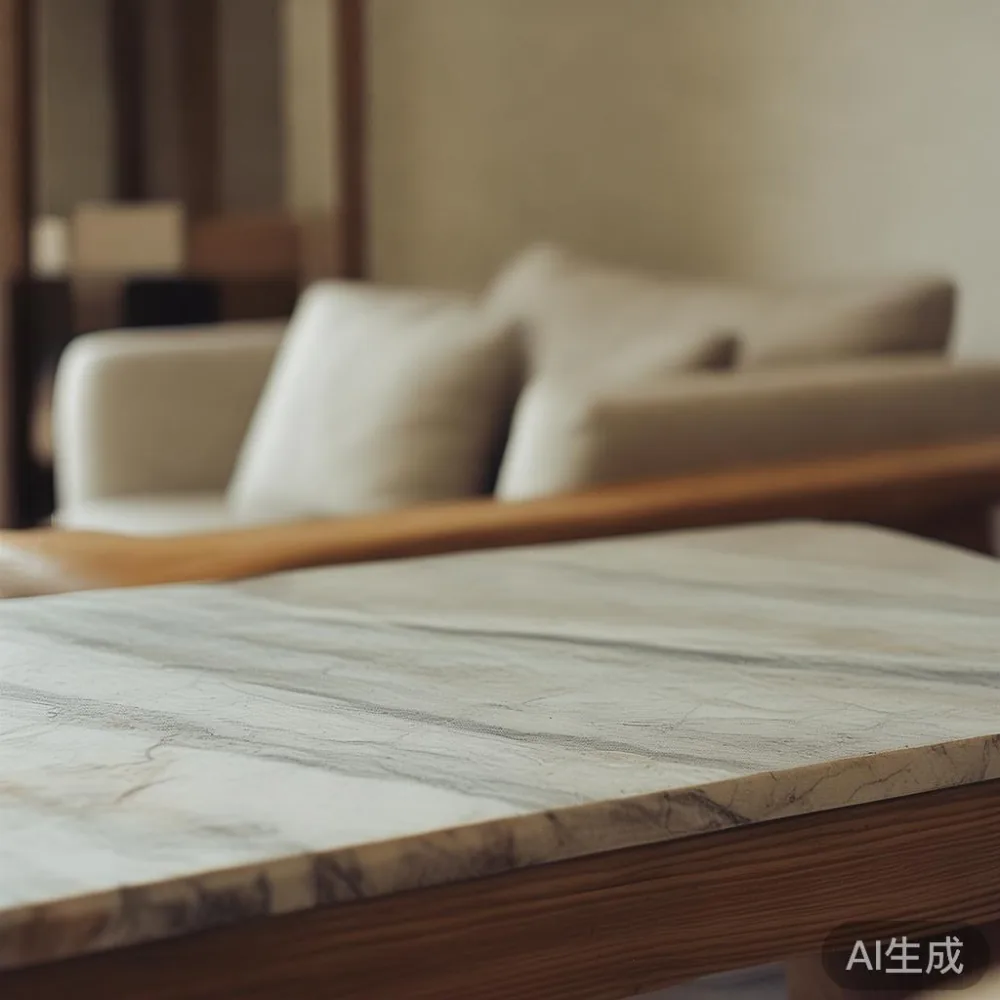
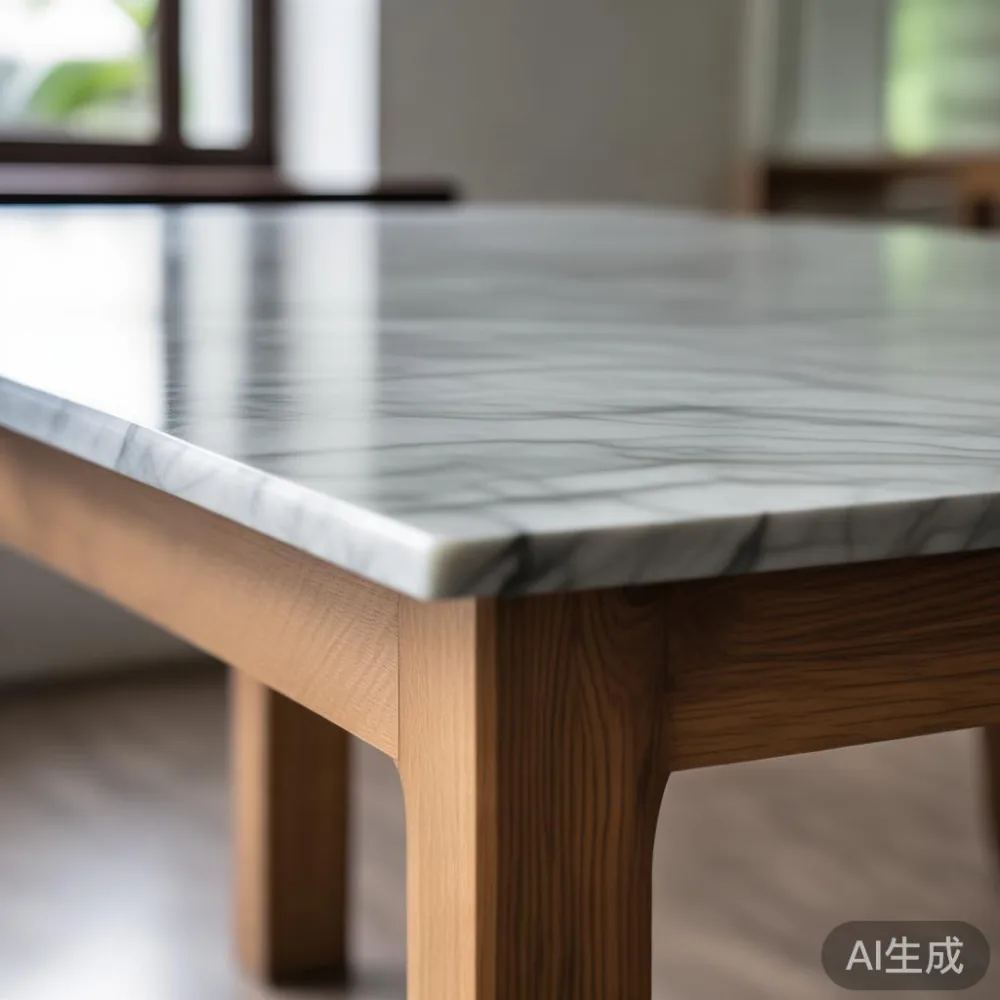
A marble table is not immune either. The stone top is stable, but the wooden base still moves. On a 130 cm round version, I have measured the base swell 5% in volume during peak wet spells, then watched it shrink back during a dry December week. Pair the marble top with a kiln-dried ash or walnut base and you have a piece that behaves predictably — provided the home is managed.
What humidity range should I keep my home at to protect a solid wood bed frame or wardrobe?
Shoot for 45% to 60% relative humidity. Anything under 40% and timber dries too fast, opening splits along the grain. Anything over 70% and the timber drinks, finishes cloud, and mildew finds the back of a wardrobe that has been pushed against an exterior party wall. A basic digital hygrometer costs about SGD 18 at any Tampines Mall electronics shop. Put one on each floor. The bedroom and the kitchen will read differently, and they should — the kitchen spikes every time you boil a pot of water.
If you live in a walk-up along Geylang or a high-floor unit in a Punggol EC, your readings will swing harder than a ground-floor HDB in Toa Payoh. Higher floors catch more wind, which can fool owners into closing every window and running the air-con at 23°C all day. That is the recipe for splits. Keep the daily warm and the air moving; aim for a slow 3% to 5% drift across a twenty-four-hour period rather than wild swings.
MIDHILL kiln-dries all structural components to 8% to 10% moisture content before assembly. That figure is roughly halfway between Singapore's wet-season peak and dry-season floor, so a piece that leaves Foshan at 9% sits comfortably in a 50% RH home. When customers ask why our solid wood bed frames and solid wood wardrobes hold their shape longer, the kiln schedule is half the answer. The other half is what happens after delivery.
How do I style a Italian light luxury bed frame in a small apartment?
Pick a bed frame under 12 cm of exposed wood profile, raise it on 18 cm to 22 cm legs, and keep two-thirds of the wall behind it bare so the headboard reads as a single quiet plane. A French light luxury approach in a 90 sqm Punggol Build-To-Order flat would use an ivory bouclé headboard against a warm-linen wall, one slim oak nightstand per side, and a single off-centre pendant — nothing else. In American light luxury styling, the same frame works with darker walnut, blackened brass reading sconces, and a stone-top marble table at the foot of the bed as a luggage bench. Post-modern light luxury styling leans into contrast: a low oak bed frame paired with a high-gloss cream wardrobe and a brushed nickel floor lamp — geometry doing the talking.
For a 9 m square second bedroom in a BTO, the practical rule is that the bed frame should not exceed 65% of the room's longest wall. A 180 cm by 200 cm Italian light luxury bed frame in a 2.8 m by 3.2 m room still leaves a 60 cm walking aisle on each side, which is the minimum you want for a lift-accessible HDB block where the service lift internal cabin is roughly 1.5 m by 2.1 m and any future move needs a clear path from door to bed.
What can I actually do every day to stop my solid wood sofa, dining table, and nightstand from moving?
Three habits cover most cases. First, keep pieces 30 cm away from exterior walls during the wet months — the coolest, dampest air in any HDB flat pools along that line. Second, rotate dining tables 90° once a month so that no single edge sits in permanent shadow; uneven light is as guilty as uneven humidity. Third, wipe with a barely-watched but enough-watched damp cloth — never a wet one, never a silicone spray, never a generic polish from a warehouse club.
A weekly wipe with a microfibre cloth and a pH-neutral soap cleaner (roughly SGD 12 for a 500 ml bottle) is enough. Skip the Pledge, skip the orange oil, skip anything labelled "wood restoring" with a picture of a lemon on it. Those products leave a waxy film that traps moisture underneath, and that is exactly what a 150 cm by 90 cm solid oak top does not need in a Bukit Batok flat that already reads 78% RH on a Tuesday afternoon.
For upholstered pieces like a solid wood sofa, the frame movement is less than a table's, but the cushions will soak up humidity like a sponge. Rotate the seat three times, flip the back twice a year. The springs last you weak link; if the frame is right, the fabric is the cheap part to replace.
How long does MIDHILL shipping take to Singapore, and what about the 14-day return?
Sea freight from Foshan to Singapore's PSA terminal runs 8 to 12 days door-to-door for in-stock pieces, 25 to 35 days for made-to-meubles on a dining table or a fitted wardrobe. Air freight on small items such as nightstands arrives in 4 to 6 days, which we offer at the customer's option for roughly 8% of the piece's value. From PSA, our local team handles the last mile into Tampines, Bedok, or Punggol in 2 to 4 working days, including a corridor-friendly delivery that respects the 1.2 m minimum HDB lift door width.
Every MIDHILL piece comes with a 14-day return window and a 10-year structural warranty on frames, drawer runners, and joinery. Free shipping kicks in above US$350, which covers most of our dining chairs, nightstands, and side tables in a single order. We also offer lifetime refinishing on solid wood pieces — sanding, re-oiling, colour change — at our Foshan workshop, with the customer covering only the freight both ways, currently about SGD 280 for a 2.4 m dining table round trip from Singapore.
Is there a real-world example of how this advice plays out in a Singapore home?
Yes — last month I visited a family in a 1,030 m sq ft Punggol Walk unit who had bought a 200 cm walnut dining table, a matching 180 cm bench, and four side chairs roughly fourteen months earlier. They had also ordered a 120 cm round marble table for the living room. The dining set was tight, the marble table base had shifted 3 mm, and one chair creaked. The cause was not the wood. It was a north-facing wall that stayed damp for four hours every morning and an air-con they ran at 21°C all night in a room with a 38°C delta to the outside. Together, those two factors drove a daily humidity cycle from 88% at 6 a.m. to 42% by 11 p.m. — a 46-point swing that no piece of solid wood can survive without complaint.
We added a dehumidifier set to 55% in the dining zone, rotated the table 90°, oiled the base of the marble table with a hardwax oil, and tightened three loose chair dowels in the customer's own home. Six weeks later the table was flat, the marble table base was stable, and the creak was gone. The fix cost the family SGD 240 in parts and labour, less than 8% of what they had spent on the original set. That is the daily rhythm of insect and care a Foshan maker wants every Singapore home to adopt.
What should I do before a piece arrives, and what should I never do?
Before delivery, run the dehumidifier in the receiving room for forty-eight hours at 55%. Open the boxes — yes, open them — and let the components acclimatise for at least seventy-two hours before assembly. Flat-pack cartons trap humidity inside; a sealed box in a Tampines corridor on a wet afternoon can hit 95% internally even when the home reads 70%. Skipping the unbox acclimatise step is the single fastest way to bow a tabletop.
After delivery, never place a solid wood piece on a damp carpet or directly against a freshly painted wall that has not cured for thirty days. Never use a steam mop within 1.5 m of a wooden leg. Never place a hot pot directly on a marble table with a wooden base without a trivet — the heat differential travels straight down into the joinery. And never ignore a small split for more than one season, because a 2 mm split in February becomes a 6 mm split by August, and a 6 mm split in a load-bearing joint is a warranty claim nobody wants to file.
The rule I repeat to every customer is simple. A solid wood dining table, a solid wood bed frame, a solid wood sofa frame, a solid wood wardrobe, and a marble table with a wooden base are all living materials wrapped in a finished surface. Treat them like a leather bag in a tropical climate, repeat every one of them as a small daily habit, and they will outlast three moves and two children. Neglect them, and they will remind you, loudly, the next time a wet spell rolls in from the Strait of Singapore.