Living With Wood in a Tropical Climate: A Practical Guide for Singapore Homes
I keep a small notebook by my front door in Tampines, and every time the relative humidity on my digital sensor crosses 82 percent, I make a tick mark. After eight months of watching the reading, I have ticks on roughly 190 days — which, in a Singapore HDB flat on the 9th floor with cross-ventilation, says a lot about what a piece of solid wood furniture has to survive in this region. I visited a friend's newly renovated condo in Punggol last month, watched a carpenter struggle to fit a 240 cm walnut dining table through a 110 cm-wide service lift, and realised that humidity is only half the story. The other half is the wood itself, the finish on it, and the room you put it in.
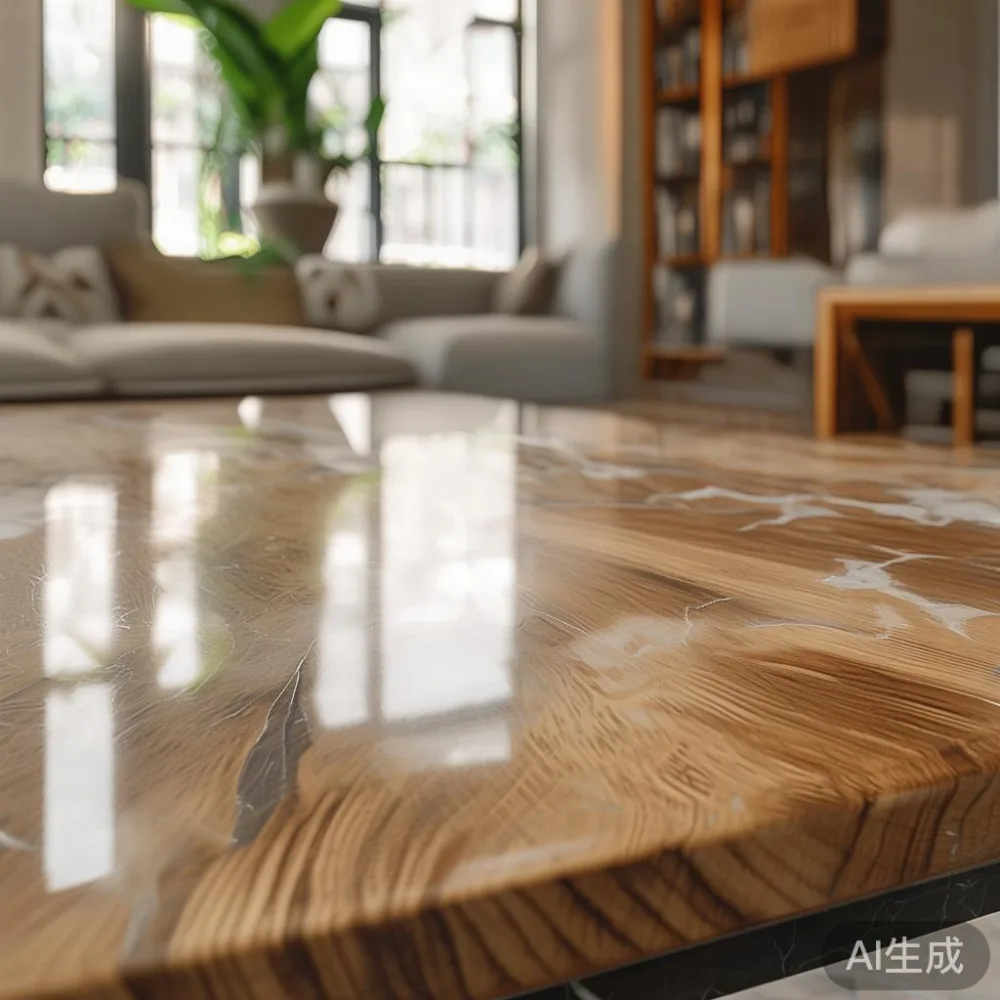
This article is for anyone in Singapore, Malaysia, or Indonesia who has watched a wardrobe door stick in October, or noticed hairline cracks appear on a nightstand after a wet spell. I will use SGD pricing where it helps, reference local context such as HDB corridor widths and GST, and explain how a properly built marble table or solid wood bed frame behaves differently from a veneered flat-pack piece when the air gets heavy. I will also explain why some of the furniture I trust in this climate comes from makers like MIDHILL, a Foshan workshop established in 2008 that ships solid wood pieces to more than 15 countries and offers a 10-year structural warranty plus lifetime refinishing — a pairing of factory discipline and after-sales care that matters when your home sits at 30 degrees Celsius and 80 percent humidity for six months of the year.
Why does Southeast Asian humidity damage wood furniture?
Wood is hygroscopic. It absorbs and releases moisture until it reaches equilibrium with the surrounding air, and on the equatorial belt that runs through Singapore, Johor, Kuala Lumpur, and Bangkok, equilibrium moisture content sits between 16 and 20 percent for most of the year — far higher than the 8 to 12 percent that workshop conditions are designed around. A solid oak dining table built in a dry northern factory and shipped in a sealed container can absorb 4 to 6 percent of its dry weight in water vapour during its first wet season alone. That extra water has to go somewhere, and it shows up as cupping on a 180 cm tabletop, swelling along a bed frame's side rail, or a wardrobe door that needs a firm shove to close in October. Even a marble table, whose surface you would think is unaffected, is usually mounted on a solid wood sub-frame or base — and that base is the part doing the moving.
What humidity level is bad for solid wood furniture in Singapore?
Aim for 45 to 60 percent relative humidity indoors. Below 40 percent, joints open up and surface checks appear; above 65 percent, wood swells, finishes blush, and any glue line that was not pressure-tested starts to creep. Singapore's ambient outdoor humidity averages 78 to 84 percent year-round, so the question is really about how much you de-humidify. A standard 12 L/day dehumidifier in a 20 sqm bedroom will pull the reading down to 55 to 60 percent if you run it with doors closed for 6 to 8 hours — costing roughly S$0.18 to S$0.25 per kWh on Singapore Power's domestic plan. In a 90 sqm unit, two units running on a rotation are usually enough. The cheaper alternative is a 30-packet silica gel canister (about S$14 at a Tampines mart) placed inside a closed wardrobe, which will buffer the microclimate without touching your electricity bill.
How does humidity affect a marble table differently from a solid wood table?
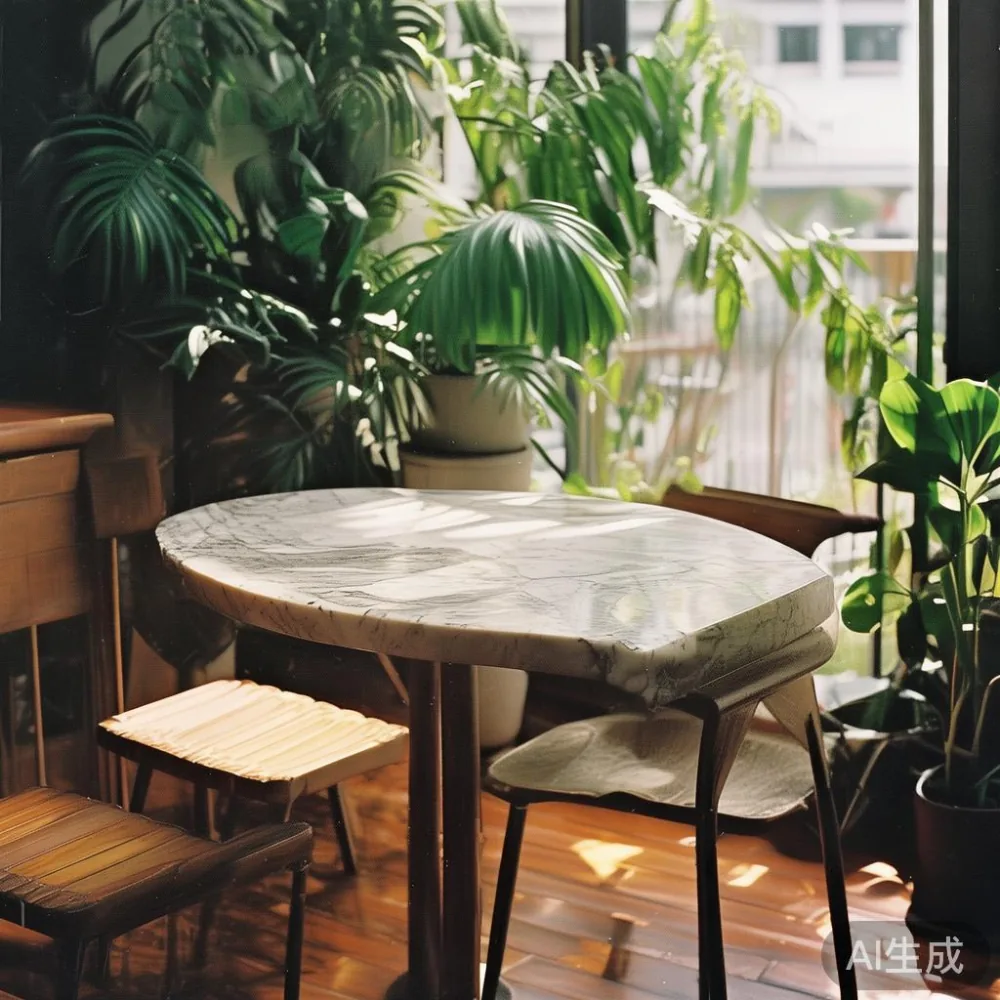
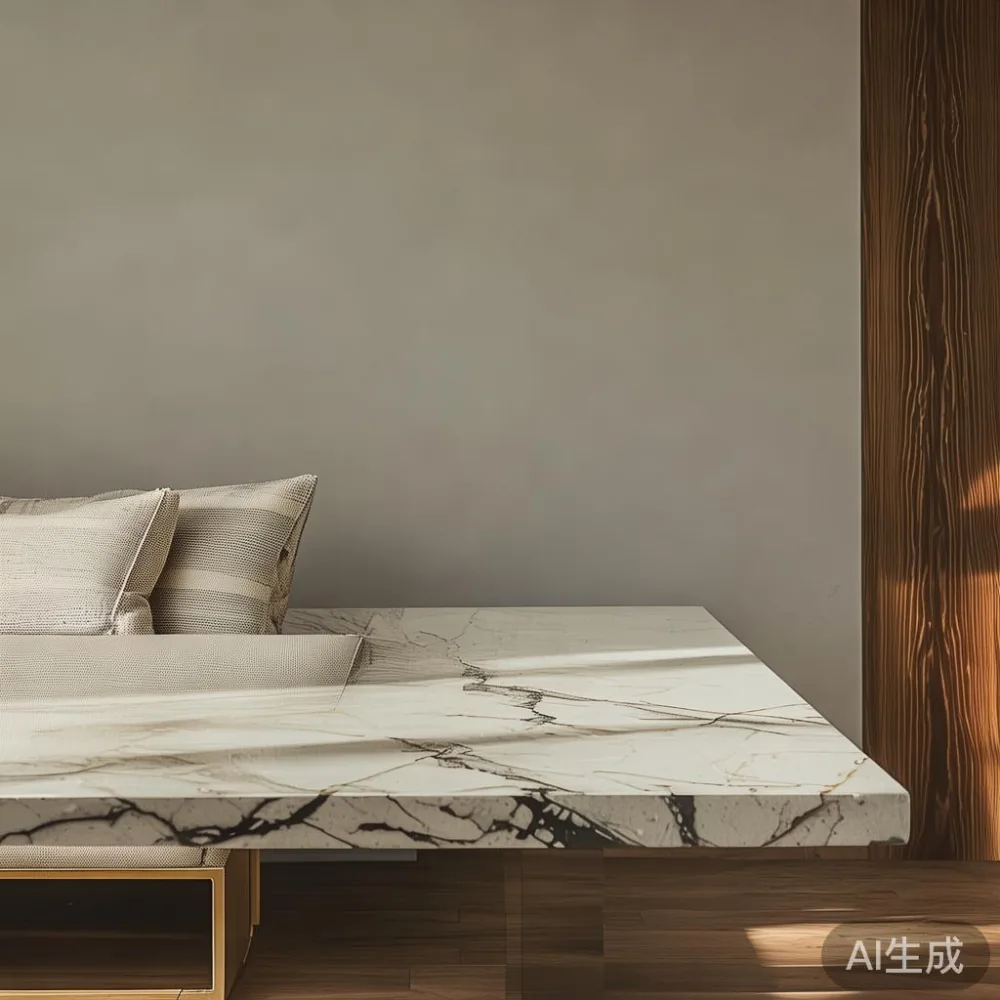
This is the part most buyers get confused about, because they assume stone is stone. A marble table — whether a 140 cm round dining top or a 55 cm square side table — is usually a 17 to 22 mm stone slab glued or mechanically fixed to a wood or metal sub-frame. The marble itself barely moves: its thermal expansion coefficient is around 5 to 9 x 10⁻⁶ per degree Celsius, and it does not absorb water vapour in any meaningful way. The wood underneath, though, expands and contracts against a surface that does not, and that mismatch is what eventually cracks a corner or pops a mounting bolt. The fix is a floating top design where the marble is held by Z-clips rather than glued across the full underside — leaving 6 to 8 mm of expansion gap around the edge. When you compare two 150 cm round marble dining tables side by side at a showroom in Defu Lane, tap the edge of each: the one with a floating mount will sound drier and ring longer. That is the one that survives a Punggol wet season.
What is the difference between French armchair and modern furniture?
A French armchair is built around a curved, hand-shaped solid wood frame — usually beech or walnut — with cabriole or fluted legs, a tight upholstered seat, and a back pitched at roughly 100 to 105 degrees for upright conversation. A modern armchair, by contrast, uses straight lines, lower seat heights (40 to 43 cm versus 45 to 50 cm), metal or plywood frames, and engineered foam wrapped in fibre. The difference shows up clearly in tropical humidity, because the French frame — solid wood through and through — responds to moisture like any other solid piece, while the modern plywood frame is more dimensionally stable but tends to delaminate at the veneer edge once the inner ply swells past the outer skin. If you want the French silhouette in a HDB flat, look for pieces with kiln-dried beech frames dried to 8 to 10 percent moisture content before upholstery, and ask the maker for the drying certificate.
How do you protect a solid wood bed frame and wardrobe from Singapore humidity?
Three habits cover 90 percent of the cases I have seen in Bedok and Toa Payoh flats. First, keep the wardrobe 5 to 8 cm off the back wall so air can circulate behind it; against a cold-cement HDB wall, condensation forms in the gap and wicks into the back panel. Second, run the air-conditioner's dry mode for 2 hours before bed — it pulls enough moisture out of a 14 sqm bedroom to drop humidity from 78 percent to 58 percent, which is enough to protect a queen-size solid wood bed frame priced around S$1,450 to S$2,200 in Singapore. Third, rotate the wardrobe's interior every six months — move the bedside nightstand to the opposite wall, push the dining table 30 cm the other way — so that no single side sits in permanent shade and absorbs unevenly. I have a MIDHILL walnut nightstand in my own guest room that has survived three monsoon seasons this way; the only visible sign of age is a slight darkening of the heartwood, which I actually prefer. The same habits protect a marble table in a dining room where the air-conditioner runs from 7 pm to midnight most nights of the year.
Which wood species survive tropical humidity best?
Ranked by dimensional stability (lower movement coefficient means less swelling): Burmese teak (movement coefficient ~1.2), white oak (~1.5), rubberwood (~1.8), beech (~2.0), and pine (~2.4). Teak is the traditional Singapore choice for a reason — its natural oils resist fungal attack, and it tolerates the 75 to 85 percent outdoor humidity swings found on a covered balcony. For indoor pieces such as a dining table or bed frame, kiln-dried white oak from a workshop like MIDHILL gives you a similar stability at roughly half the weight, which matters when you have to wrestle a king-size frame through a 90 cm-wide HDB corridor. Rubberwood is the budget choice and behaves acceptably if the drying record shows a final moisture content below 12 percent; above that, you will see twist within the first year. Pine is honest about its limits — it works in a study where the air-conditioner runs daily, but I would not put a pine wardrobe in a Punggol corridor-side bedroom that never sees the dehumidifier.
How long does delivery and installation usually take in HDB or condo units?
For a 6-piece dining set including a 180 cm marble table, six chairs, and a sideboard, allow 35 to 50 days from order to installation in a Singapore HDB flat. Sea freight from Foshan to Singapore Tuas port takes 8 to 12 days, customs clearance adds 3 to 5 working days, and last-mile delivery to a Tampines or Bedok address typically takes another 3 to 5 days depending on lift access. The lift question is the one nobody plans for. Standard HDB passenger lifts are 110 to 130 cm clear inside, but the door opening is often only 80 to 90 cm, which means a 240 cm dining table has to come in on its end, vertically — not always possible with a marble table weighing 85 to 110 kg. The safe move is to confirm the inner door width with your MCST before ordering, and to ask the supplier whether the table splits into two halves for delivery. MIDHILL, for example, splits its larger marble table tops into two pieces joined by a hidden steel dowel system, so a 220 cm round top can be delivered through an 80 cm door without a single scratch.
Is light-luxury furniture worth the price in a tropical climate?
Light-luxury — whether the French provincial silhouette, the American light-luxury curve, or the post-modern light-luxury mix of brushed brass with pale oak — costs 25 to 40 percent more than a comparable piece in a flat contemporary line, and the difference goes into three places that matter in our climate: thicker lacquer (3 to 4 coats of acid-catalysed finish versus 1 to 2 on a budget piece), longer drying cycles in a humidity-controlled spray room, and brass or stainless hardware that does not blush in a Bedok bathroom. A French provincial sofa built around a kiln-dried beech frame, for instance, will outlast a flat-pack sofa in a Punggol condo by 8 to 12 years under daily use. If you are shopping for a French provincial sofa Australia-style online and shipping to Singapore, check the moisture content certificate and the warranty in writing; a maker that publishes both — like MIDHILL with its 10-year structural warranty and lifetime refinishing on solid wood sofas, bed frames, dining tables, and wardrobes — is one I would shortlist.
What maintenance does a solid wood marble table need each year?
Twice a year, ideally just before the March and September monsoon shifts, set aside 90 minutes per piece. Wipe the entire surface with a slightly damp microfibre cloth, then dry immediately — never let water sit on a marble table, because even honed marble stains within 20 to 40 minutes of contact with red wine or soy sauce. Inspect the sub-frame where it meets the stone: if you see daylight through a joint that was flush in January, the wood has dried and shrunk — tighten the Z-clip screws by a quarter turn. Wax the wood base only with a paste wax that contains carnauba, applied with a soft cloth, left to haze for 15 minutes, and buffed off. Skip the silicone sprays sold at the Tampines mall — they penetrate the finish and make future refinishing harder. For the marble top itself, a pH-neutral stone cleaner (about S$18 for 500 ml) every two months keeps the sealer intact. Total annual cost in cleaning supplies for a six-piece solid wood dining room including one marble table works out to under S$80.
Final notes on buying wood furniture for a Singapore home
Three rules I would give a friend moving into a new Punggol Launch condo next month. First, measure the lift door, not just the lift interior. Second, ask for the moisture content certificate and the warranty in writing, and read the exclusions — most warranties exclude coastal or high-humidity zones unless specified, which is why a maker like MIDHILL with an explicit 10-year structural warranty is worth the conversation. And third, budget for a S$189 dehumidifier on day one, because the piece you do not buy to protect the pieces you did buy is the most expensive furniture in the room. A solid wood bed frame, a well-built wardrobe, a properly mounted marble table, and a small nightstand — done right, they should outlast the lease on your HDB flat and the next one, and probably the one after that.