How Southeast Asian Humidity Affects Your Marble Table and Solid Wood Furniture
Last month I visited a friend in a 680 sqft HDB flat in Bedok, and I watched her drag a dining table back to its previous position after the legs had visibly shifted across her living room floor. Two weeks of December rain had pushed the indoor relative humidity to 88%, and the solid wood sofa frame in the corner had begun to bow outward by roughly 4 mm at the centre of the backrest. Within the same hour, I noticed a pale ring blossoming on the surface of her marble table where a glass of cold chrysanthemum tea had been sitting. That single afternoon in Tampines became the seed for everything I want to share in this article.
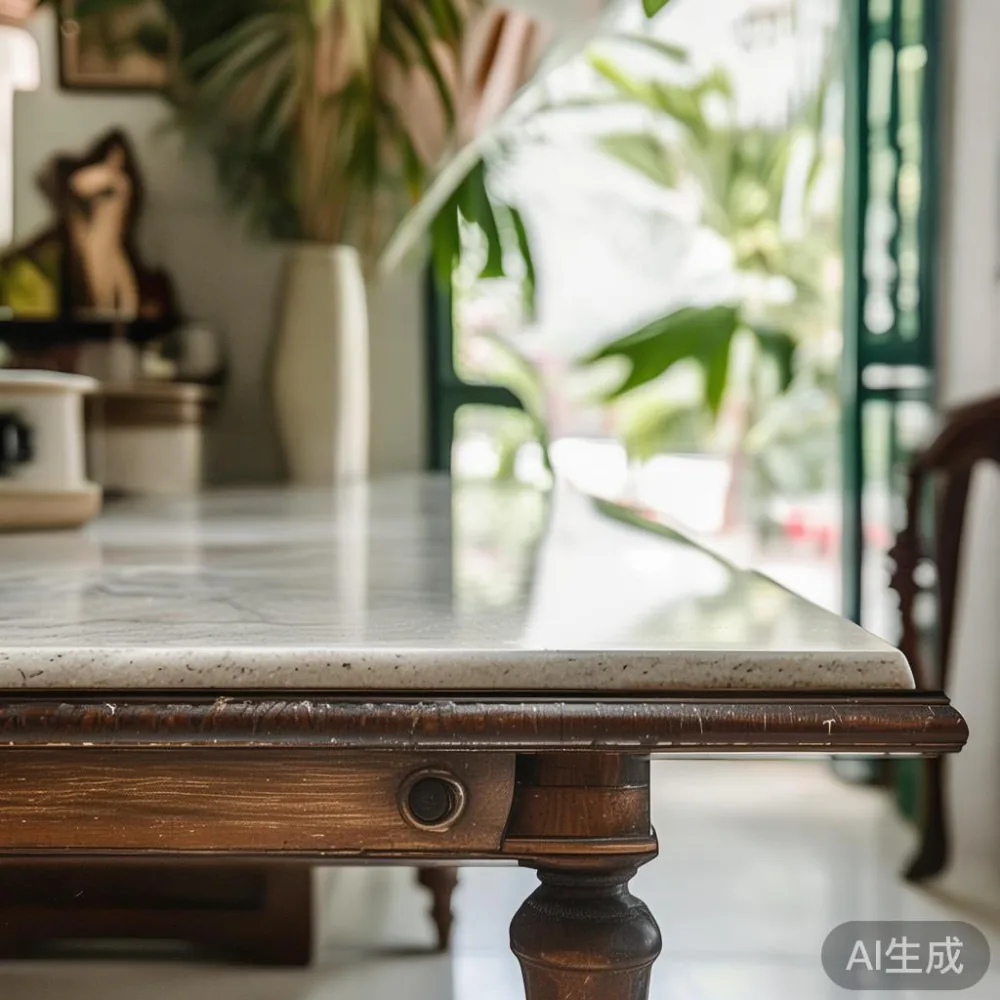
Why Humidity in Singapore, Malaysia, and Thailand Hits Solid Wood So Hard
The climate across Singapore, Kuala Lumpur, Johor Bahru, and Bangkok is classified as tropical rainforest, which means outdoor relative humidity sits between 70% and 95% for most of the calendar year. Indoor humidity in HDB flats and condos is only marginally lower, because construction methods here typically rely on cross-ventilation through open windows rather than sealed HVAC systems. When a piece of solid wood furniture crosses from a drier factory floor in Foshan, where moisture content is usually stabilised at 9% to 11%, into a Punggol corridor with 82% RH, the timber begins to exchange moisture with the air within hours.
Walnut, ash, oak, and beech are hygroscopic, which is a polite way of saying they breathe. For every 4% change in moisture content, the average solid timber board will move approximately 1% across its grain. A 180 cm dining table top can swell 12 mm to 18 mm in width across a single monsoon week, and that movement shows up first as a sticky drawer, then as a hairline crack along a joint. The same physics applies to a bed frame, a wardrobe side panel, and even a small nightstand tucked against a bathroom wall. If you have ever wondered why your HDB door refuses to close in January, the answer is often the same answer that explains why your solid wood sofa creaks at night.

Do Marble Tables Actually React to Singapore Humidity Too?
Yes, and the reaction is different but still real. Natural marble is a metamorphic stone made largely of calcium carbonate, and although it does not swell the way wood does, it reacts to warm, humid air in three observable ways. First, the polished surface oxidises slowly and develops a patina within 6 to 18 months. Second, condensation forms under cold cups and creates those tell-tale white rings that my friend in Bedok could not remove. Third, the resin or epoxy fill that sits inside micro-fissures of the marble table can cloud up when the stone expands 0.3 mm to 0.5 mm across its surface during the wettest weeks.
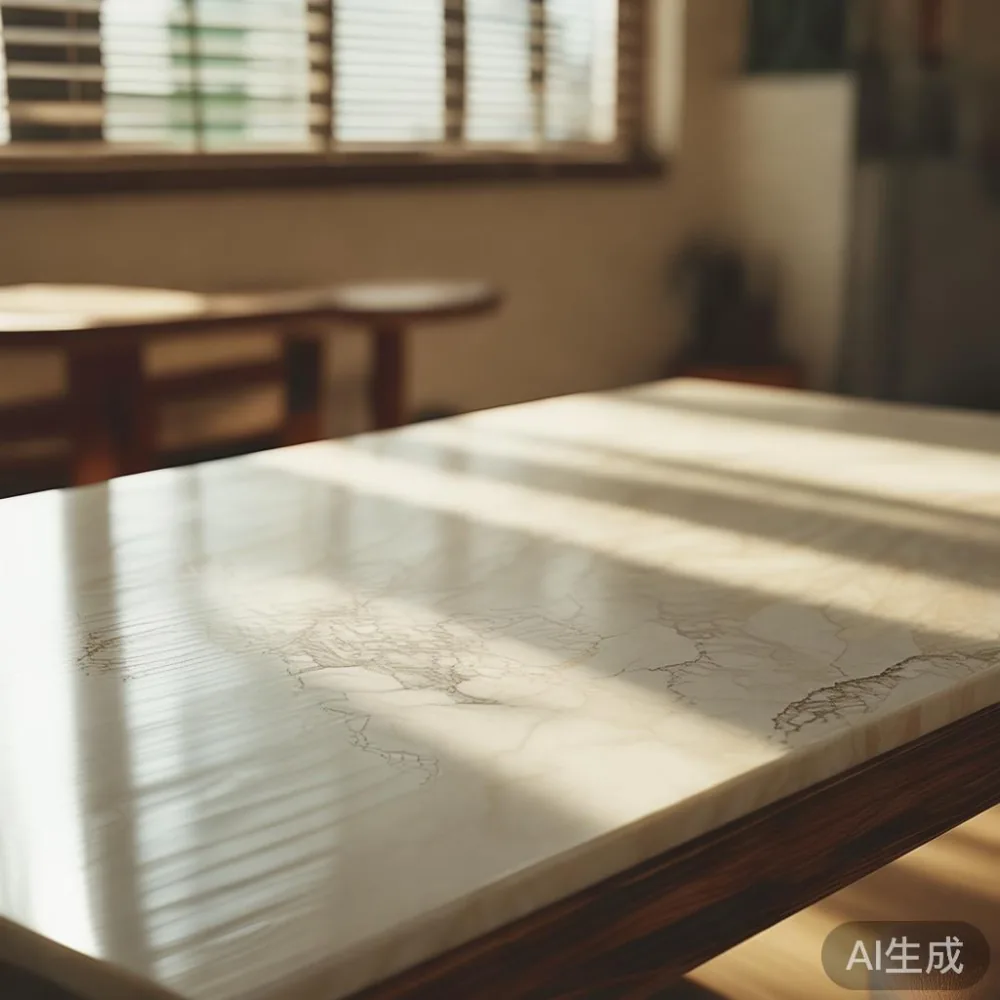
Heat and humidity travel together in this part of the world. Indoor temperatures of 28°C to 32°C are normal, and that warmth accelerates any chemical reaction taking place inside the stone. A 120 cm round marble table sitting under a window facing west will routinely reach 41°C at 3pm in May, which is hot enough to soften certain wax finishes. The good news is that none of this ruins the table. It simply means the surface needs a wipe-down with a pH-neutral cleaner once a week and a fresh coat of stone sealant every 12 to 24 months.
Which Rooms Cause the Most Damage and Which Cause the Least?
Not every corner of an HDB flat creates the same risk. After a year of visiting homes across Bedok, Tampines, Punggol, and Toa Payoh, I have started mentally mapping the humidity zones of every layout. Kitchens run 75% to 85% RH and occasionally spike to 92% when three burners run at once. Bathrooms reach 95% during a 12-minute hot shower and take roughly 40 minutes to fall back to 70%. Bedrooms sit around 65% to 75% during the night because air-conditioning typically pulls humidity down to 55%. Living rooms in non-aircon spaces swing between 70% and 88% across the day.
This distribution matters when you place big-ticket pieces. A wardrobe pushed against a shared bathroom wall will absorb moisture through the back panel every morning, which is why I recommend leaving a 5 cm gap between the wardrobe and the wall for airflow. A solid wood sofa does best in the air-conditioned living room, away from the balcony sliding door. A dining table belongs in the driest central position of the flat, 80 cm minimum from any wall. A nightstand should never sit directly against a window that is left open at night, even if the view of the HDB corridor looks pleasant. A 36 mm thick Italian light luxury dressing table is a different category of risk entirely, because the integrated mirror and storage drawers compound moisture stress at the joinery, which is why the piece needs a stable room.
How Should Buyers in Tampines, Bedok, and Punggol Choose Sizes That Survive the Climate?
Size is the single most overlooked variable. Many HDB corridor widths measure only 1.2 m to 1.5 m, and lift openings in most blocks cap at 2.1 m high by 1.0 m wide. A 220 cm dining table ordered online may technically fit your flat once assembled, but it cannot physically enter the building in the first place. Always check the diagonal measurement of the longest side and confirm it sits at least 10 cm under your lift's inner dimensions. The same rule applies to bed frames, wardrobes, and any marble table wider than 150 cm.
For the actual living space, choose furniture that lives within the climate you can control. If you run air-conditioning for 8 hours a day in the bedrooms, prioritise pieces placed in those rooms. The dining area is trickier because most Singapore families do not air-condition it, so a 140 cm to 160 cm table in solid rubberwood or ash handles moisture swings better than softer pine. If you have coastal air drifting through a Punggol unit facing the strait, a piece labelled Coastal for dining room is built with seasoned timber and tighter joinery that copes with brackish moisture better than standard indoor stock.
Can I Move a Solid Wood Sofa Through a Narrow HDB Lift in One Piece?
Often no, which is why modular construction matters. I have watched two separate delivery teams in Tampines struggle with a 230 cm three-seater that simply would not rotate inside a 1.0 m wide lift opening. The rebooking fee was SGD 80, the second delivery slot was 14 days later, and the customer service credit covered only SGD 30. A modular solid wood sofa that splits into two 115 cm halves will ride the same lift on the first attempt, every time. When you shop, look for products whose packaging dimensions are explicitly published, not just the assembled dimensions. This is also where export-grade suppliers have an edge: a Foshan factory shipping to 15+ countries will already engineer pieces to fit common lift and corridor sizes in Singapore, Malaysia, and the UAE, which is why MIDHILL publishes packaging measurements on each product page.
What Does Proper Climate Care Actually Look Like Week to Week?
Care is simpler than most people think, and it costs almost nothing in a country where a basic dehumidifier can be picked up for SGD 89. The first habit is to keep indoor humidity between 45% and 60% using a small unit in each main room, which costs roughly SGD 25 to SGD 35 per month in electricity. The second is to wipe your marble table and solid wood sofa with a dry microfibre cloth once a week, working in the direction of the grain. The third is to rotate removable panels every season so the timber ages evenly.
For the marble surface, the weekly routine involves a pH-neutral cleaner, a soft cloth, and 30 seconds of patience. Avoid vinegar, lemon juice, and any kitchen degreaser, because acidic products etch the calcium carbonate within seconds. Once a year, apply a penetrating stone sealant, allow 15 minutes of cure time, and buff off the excess. For the solid wood pieces, the goal is to keep direct sunlight off the surface for more than 2 hours per day, which is why sheer curtains in west-facing Bedok flats pay for themselves within a year by preventing the SGD 600 to SGD 1,200 cost of refinishing a faded dining table.
Which Style Direction Holds Up Best Under Tropical Conditions?
Light luxury styling in the post-modern light luxury register tends to favour clean lines and minimal ornamentation, which means fewer moisture traps at the joinery. A simple Italian light luxury for small living room layout with a slim three-seat sofa, a compact marble table, and a round side piece gives air multiple paths around each object. French provincial, by contrast, leans on deeper carving and curved legs, which gather humidity in the recesses and demand more frequent dusting.
Mid-century modern for office setups work surprisingly well in HDB study corners because the geometry is rigid, the timber sections are thicker, and the joinery is exposed. You can see the seams and dry them with a cloth during your weekly clean. If your study shares a wall with the kitchen, place a silica gel pack behind the desk at the start of each monsoon week. For the bedroom wardrobe, French provincial for office logic does not quite apply, but the underlying rule is the same: thicker solid sections, fewer ornamented surfaces, and air gaps of 3 cm to 5 cm against the wall all reduce trapped humidity.
How Do Warranty, Refinishing, and Returns Reduce Real Risk for Singapore Buyers?
A 10-year structural warranty on solid wood frames, dowels, and joinery is the kind of commitment that signals the maker has controlled the moisture content of the timber from the kiln to the crate. Lifetime refinishing on dining tables, bed frames, and wardrobes covers the cosmetic wear that high humidity and tropical sun will eventually cause, and a 14-day return window covers the much rarer scenario of receiving a piece that does not fit your lift or your taste. Free shipping over US$350, which lands near SGD 470 at current rates, is meaningful here because international freight of a 90 kg dining table from Foshan to a Bedok flat costs SGD 280 to SGD 420 on its own.
Cross-reference all of this against the maker's track record. MIDHILL has shipped from Foshan since 2008 and now delivers to 15+ countries, which means the kiln schedules, the crate dimensions, and the packaging foam have already been calibrated for tropical destinations. The MIDHILL European light luxury sofa line, for example, is engineered with removable covers and kiln-dried ash frames sized to enter a standard 1.0 m HDB lift in two pieces. When a factory publishes that level of detail and backs it with a 10-year structural warranty plus lifetime refinishing, the climate risk for the buyer drops sharply.
What Should You Ask Before Clicking Add to Cart?
Five questions cut the purchase risk in half. What is the moisture content of the timber at packing, and is it documented? What are the packaging dimensions, and will they fit a 1.0 m by 2.1 m HDB lift? What is the indoor humidity range the piece was designed for? Does the warranty cover joint failure caused by seasonal moisture movement, or only manufacturing defects? And what does the refinishing service actually include, in hours of labour and in square metres of surface treated?
Take screenshots of every spec sheet, measure your lift in person with a SGD 12 tape measure, photograph the access corridor, and confirm the lead time before GST adjustment. Export prices are usually quoted before the 9% GST is added at Singapore customs, so an SGD 1,200 dining table lands closer to SGD 1,308 once the duties apply. Allow 25 to 40 days for sea freight plus 7 days for last-mile delivery in most Singapore addresses. Browse the full MIDHILL collection at midhill.co, where the product pages list packaging dimensions, kiln-dried moisture content, and warranty terms in the same place you check the price, which removes most of the guesswork this climate normally demands.