How to Choose the Right Marble Table for a Singapore HDB Living Room
Choosing a marble table for a Singapore HDB living room is less about finding a striking slab and more about fitting daily life into a measured floor plan. A 120 cm dining table may feel generous in a show unit and pinch beside 4 HDB chairs in a Tampines flat. A 140 cm sofa can suit a 480 cm living-room wall yet leave no breathing room against the corridor side. Dimensions matter because Singapore homes are compact, shared, and constantly used.

This guide works through room measurements, table shapes, access routes, and comfort for 2 to 6 people. It also considers common condo layouts in Bedok and Punggol, where a more open plan changes the spacing equation. Prices are shown in SGD, and the examples reflect typical solid-wood and marble furniture decisions rather than showroom impressions.
A well-proportioned room has furniture that supports movement without looking sparse. A room can feel larger with a slim-profile solid wood sofa, a clear 75-90 cm circulation route, and one substantial centrepiece. The aim is balance: enough space to sit, serve, clean, and reopen a dining area without rearranging chairs every evening.

Start with a floor plan, not a showroom photo
Measure the finished room, not the HDB plan. Finished dimensions can differ by several centimetres because of skirting, air-conditioning diffusers, window frames, and balcony thresholds. Record the wall length, wall depth, door swings, and the position of power sockets. If your living and dining spaces form an L, treat the corner where they meet as a traffic junction rather than as extra display area.
For a rectangular dining zone, a practical starting point is 110-130 cm for 2-4 people. Add 55-60 cm of clearance behind each chair when someone is pulling it back. Thus, a 120 cm table with chairs on two long sides needs roughly 240 cm of length, including elbow room. If the short end meets a wall, allow another 75 cm for someone to pass behind the end chair.
My colleague in Tampines tested a 180 cm dining table in her 4.2 m by 3.1 m living-dining room last month. The table looked elegant online, but her usual route from the flat entrance to the balcony narrowed to 54 cm whenever a chair was occupied. A 140 cm model restored a comfortable 72 cm passage and made the same room feel larger. That experience is a good reminder that access can matter more than visual width.
Mark circulation paths with painter's tape before delivery. Leave at least 75 cm beside a sofa used for walking through, 90 cm in front of a wardrobe where doors open, and 60 cm between a dining table and a wall if service is needed on that side. These figures are guidelines, not rules, but they expose problems while rearranging costs nothing.
What room dimensions suit each table size?
A 90 cm round marble table suits 2 people in a small dining bay. A 100 cm square can seat 2 comfortably or 4 at close quarters. A 120 cm round seats 4 with useful elbow space, while a 140 cm round can accommodate 6 without the long rectangular footprint. Rounded edges are especially helpful near HDB corridors where a narrow path turns into the dining area.
Rectangular tables are more flexible. A 120 cm by 70 cm model usually seats 4, and a 160 cm by 80 cm model can seat 6. If your dining wall is under 240 cm, a 120 cm length may create a better daily rhythm than 140 cm. Do not assume that more table capacity is automatically better; Singapore apartments often need easier chair movement and a clear route to the kitchen.
For living rooms that double as dining rooms, compare the dining footprint with the sofa zone. A 200-220 cm solid wood sofa needs around 80-90 cm in front for people to walk and for coffee-table use. If adding a 120 cm marble table would leave less than 75 cm between furniture pieces, consider a compact 90 cm round dining arrangement or divide the functions between adjacent rooms.
Condo owners often have a longer room but the same pressure to keep sightlines open. A 150 cm marble table may fit a 320 cm dining wall with 85 cm remaining for circulation. Check the balcony threshold, sliding-door tracks, and any structural column before committing. A table placed 10 cm from a sliding door may block access even when the measurements appear generous.
How do I choose a boho style for a balcony?
Choose a boho style for a balcony by combining light natural materials, a relaxed layout, woven textures, and plants, while keeping balcony access and drainage paths clear.
This question is simple to ask but useful to answer before the main room is furnished. A HDB balcony may be only 1.2 m wide, so a full dining set can dominate it. A small round marble table, paired with a slim chair, may suit a reading corner better than a wide table with 4 seats. The point of the style is informal comfort, not filling every centimetre.
Use weather-appropriate materials outside: cushions with UV-resistant covers, a chair that dries quickly, and plant pots with drainage trays. Keep tall planters away from a railing where wind can tip them. If the balcony is enclosed, check the HDB management rules and leave access to washing facilities, service panels, and emergency equipment. A style choice should not compromise a functional space.
How should the marble table relate to the sofa and other furniture?
Consider the sofa first, then select a dining table that shares the room's visual weight without competing with it. A solid wood sofa with a warm oak or walnut finish pairs well with a pale marble table because the stone adds brightness while the wood softens the room. A darker stone can work with a light fabric sofa, but it may make a small HDB room feel visually heavier.
Do not buy the table by matching its colour perfectly to the sofa. Contrast is useful when the shapes and spacing are correct. A round marble table beside a straight sofa creates a gentle change of direction. A rectangular table aligned with the sofa can make a narrow room feel orderly, provided there is enough clearance on every side.
Check the height of the table against seating. A dining table is usually 74-76 cm high, and a standard dining chair seat is around 45-48 cm. A coffee table serving a sofa should generally sit 40-45 cm high. If the marble table is intended for both dining and occasional display, choose a stable base that prevents knees from striking the edge and avoid a narrow central pedestal in homes with young children.
Plan the nightstand and bed frame only after the living area is resolved. A low HDB bedroom may not allow a large bed frame plus a 50 cm nightstand on both sides. In the living room, the same discipline applies: the marble table should not reduce a walkway to the width of a suitcase. Leave 60-75 cm where people pass and 75-90 cm where chairs are actively pulled back.
Storage can complete the room without adding more pieces. A sideboard with a depth of 40-45 cm may fit behind a sofa if the room permits it, but a 50 cm depth can be difficult near a balcony door. A narrow wardrobe may belong in the bedroom rather than beside the dining zone. Choose storage that supports the room's proportions, not merely its storage volume.
How do lift and corridor widths affect delivery?
A table that fits the room can still fail to reach it. HDB blocks vary, so check the lift car dimensions, lift door opening, corridor turns, and staircase landing before ordering. A marble slab that is 180 cm long and 100 cm wide needs careful handling even if its weight is manageable for a trained delivery team.
Ask for the packaged dimensions, not only the table dimensions. Protective packaging can add 5-10 cm on each side. A common residential lift has an internal depth around 210-230 cm and a door opening near 90 cm, although individual blocks differ. If the table cannot enter the lift vertically, the team may need to angle it, remove protective parts, or use a staircase. Do not assume a tilted stone top is safe; the edge and centre support must be protected.
Leave a clear route from the flat entrance to the dining area. Remove shoes, delivery obstacles, and fragile floor items. Measure the narrowest door, including the handle. If the dining table must be assembled in the room, confirm whether the top, base, and fasteners arrive separately. For heavier pieces, have 2 people available and protect the floor with cardboard or a purpose-made moving mat.
MIDHILL can discuss packed measurements and delivery timing before a Singapore order is confirmed. Factor in 7-14 delivery days for made-to-order or specially finished pieces, plus a buffer for peak periods and building appointments. GST is shown separately on the final invoice, so ask for the all-in figure rather than comparing sticker prices. Free shipping over US$350 applies to the stated threshold; in Singapore, confirm whether the destination and service level meet the current terms.
What should I check about marble, finishes, and care?
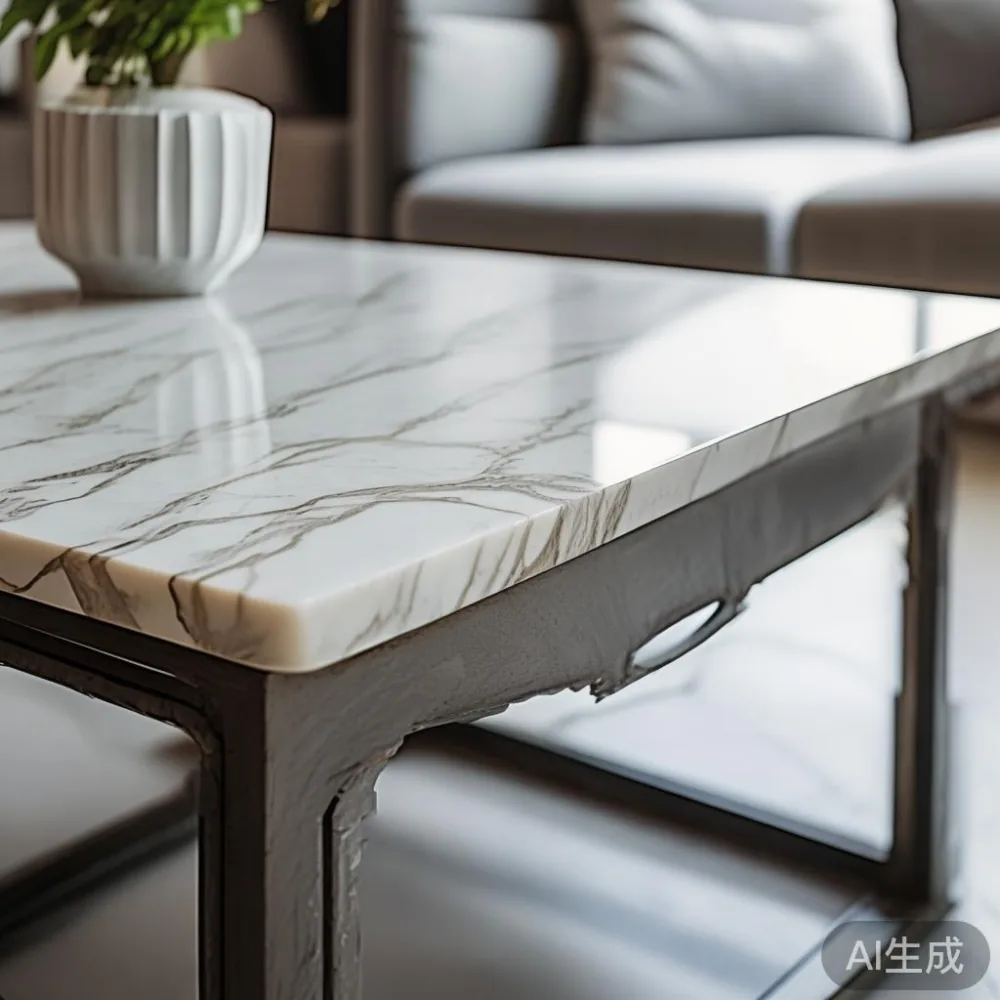
Check marble thickness, edge profile, base design, surface finish, and the supplier's care guidance before ordering. Natural stone varies in vein pattern, so inspect the actual slab or approved sample rather than relying on a screen image. A 2 cm top may be visually substantial, while a reinforced or differently supported construction may behave differently. Ask for the stone type, expected weight, and any movement instructions.
Light-luxury furniture often balances strong materials with restrained detailing. A French light luxury approach suits a pale stone top, a slim profile, and soft neutral fabrics. American light luxury can use deeper walnut tones and a more substantial silhouette. Post-modern light luxury may pair clean geometry with one distinctive element, such as a rounded edge or a visible timber base. The style label matters less than proportion, finish quality, and how the piece feels in the room.
For a marble table used daily, a honed surface may be easier to maintain than a highly polished one because it shows fewer fingerprints. It can still stain, so wipe spills promptly and use a neutral cleaner approved by the supplier. Avoid dragging chairs across the floor. Place coasters and trivets, and check whether the table base allows comfortable legroom for a dining chair.
For the surrounding furniture, match maintenance expectations. A solid wood sofa frame, bed frame, dining table, wardrobe, and nightstand may have different care routines. Solid timber can be refinished, while upholstery needs its own cleaning method. MIDHILL offers a 10-year structural warranty and lifetime refinishing on applicable solid-wood products; read the product terms to confirm what each finish covers.
How can I compare a Singapore order with the final cost?
Compare the delivered cost, not only the showroom price. List the table price in SGD, GST at the prevailing rate, delivery charge, lift or access surcharge, assembly, and any special handling. A 140 cm marble table quoted at SGD 1,280 before GST may land near SGD 1,406 when 10% GST applies, assuming no other charge. Check the actual rate at checkout rather than calculating from memory.
Ask about returns before placing the order. A 14-day return period gives time to inspect scale, finish, and access, but custom sizes, special stones, or made-to-order pieces may have different conditions. Confirm whether the original packaging must be retained and who pays for return transport. These details matter in Singapore homes where a failed delivery means waiting for another lift booking.
Set a total budget before comparing designs. For a practical HDB dining zone, you might allocate SGD 900-1,600 for the marble table, SGD 1,200-2,500 for a solid wood sofa, and smaller amounts for supporting pieces. These ranges are examples, not promises; stone choice, size, finish, and delivery requirements can move the total.
Most importantly, buy the size that your household will use. A compact table may suit 2 people and leave room for a child's homework chair. A larger table may suit 6 people and create a natural gathering point. Measure twice, ask for packed dimensions, and keep the main route open. A well-chosen marble table can make a Singapore living room feel composed without making it harder to live in.