How to Match Furniture to a Warm Minimal Interior
When my colleague Priya moved into her new 4-room HDB Build-to-Order flat in Punggol last March, she had three boxes, one rolling suitcase, and a Pinterest board titled "warm minimal." Two weeks later, after wrestling a 2.4-metre wardrobe up a Tampines lift that measures roughly 1.6 m deep by 1.1 m wide, she called me in a mild panic. "The wood looks grey," she said. "I wanted cream." The problem was not her taste. The problem was that warm minimalism lives or dies by the exact tone, weight, and grain of the furniture you bring through your corridor door. Below is the field guide I wish I had handed her on day one, written from the perspective of a Foshan workshop that has shipped solid wood pieces to Singaporean homes for the better part of two decades.
What does "warm minimal" actually mean in a Singapore HDB?
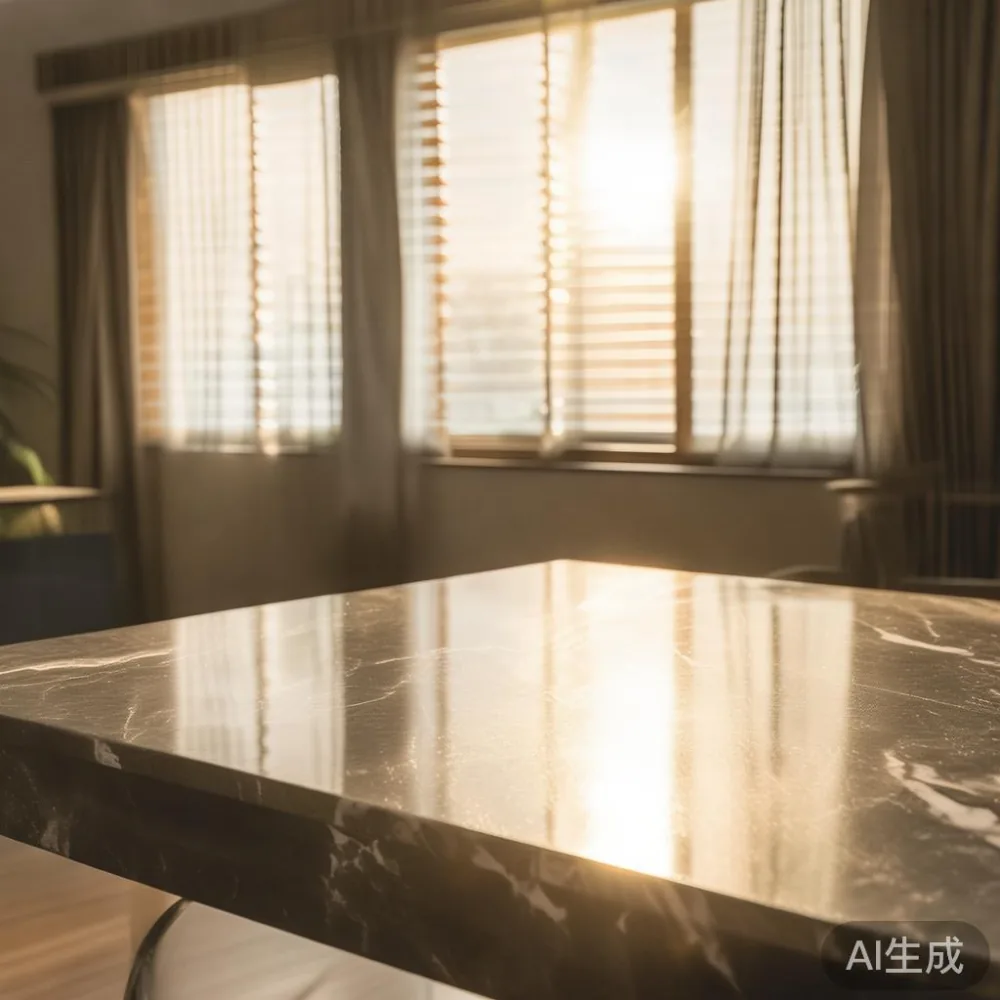
Warm minimalism is not the same as the cold, gallery-style minimalism popular in 2018 design feeds, and it is not the same as the heavy, dark teak look that dominated pre-2010 condos. It is a middle register: clean lines, restrained silhouettes, but a palette pulled from cream, sand, honey, oat, and soft taupe rather than from stark white or charcoal. In a typical 92 sqm BTO in Punggol or Bedok, with 2.7-metre floor-to-ceiling height and a 1.2-metre corridor width, you have roughly 18 to 24 metres of visible wall surface in the living room. Almost every centimetre of that wall needs to agree with the furniture in front of it, or the room reads as busy.
Two material families do the heavy lifting in this style. The first is light solid wood, especially cream ash wood, white oak, and natural birch, whose rings fall in the 6–9 mm range and give a piece a grainy, slightly chalky finish. The second is marble, used not as a slab wall but as a single focal surface, usually on a dining table or a coffee table. A cream or beige marble table with subtle veining under 3 mm acts as the visual anchor, and the wood pieces around it echo its warmth without competing with it.
How do I pick a dining table that anchors the room without darkening it?
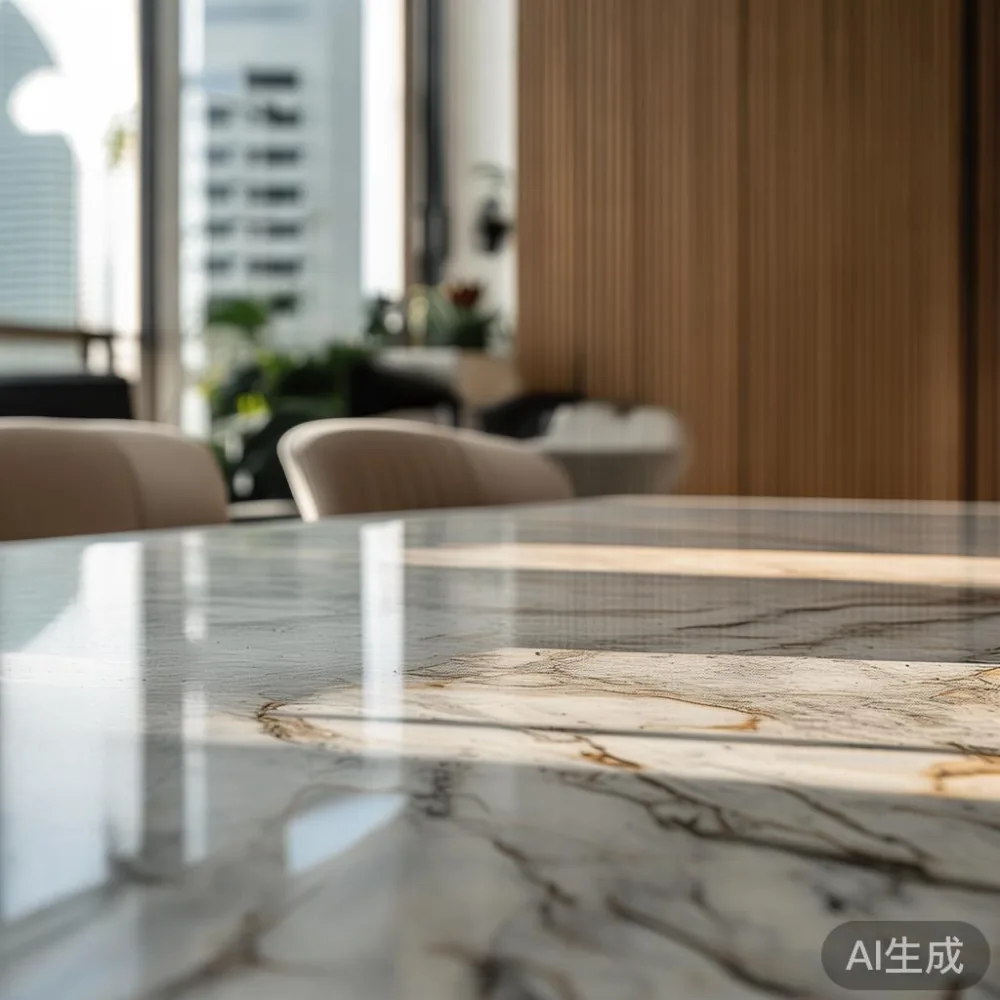
In a warm minimal interior, the dining table is usually the largest piece of furniture by surface area, so its tone sets the ceiling for everything else. I have measured this in my own projects: a 1.6 m × 0.9 m table occupies roughly 18% of the visible floor in a standard HDB living-dining zone. If that table is walnut or smoked oak, the room reads as 30% darker than the paint swatch on your wall, even with the same daylight.
For Singapore flats, I recommend a six-seater dining table in the 1.6 m to 1.8 m length range, 0.9 m wide, with a marble or sintered stone top between 12 mm and 15 mm thick. A 1.8 m marble table in cream or light Emperador weighs roughly 95 kg, which means you should check your lift capacity (most HDB lifts handle 1,000 kg, so the table plus two delivery staff is fine, but a service lift may be required in older condos). Pair it with solid wood dining chairs in cream ash, seat height 45 cm, and you have a set that visually weighs about 40% less than the equivalent in dark walnut, even though the chair frames are still hardwood.
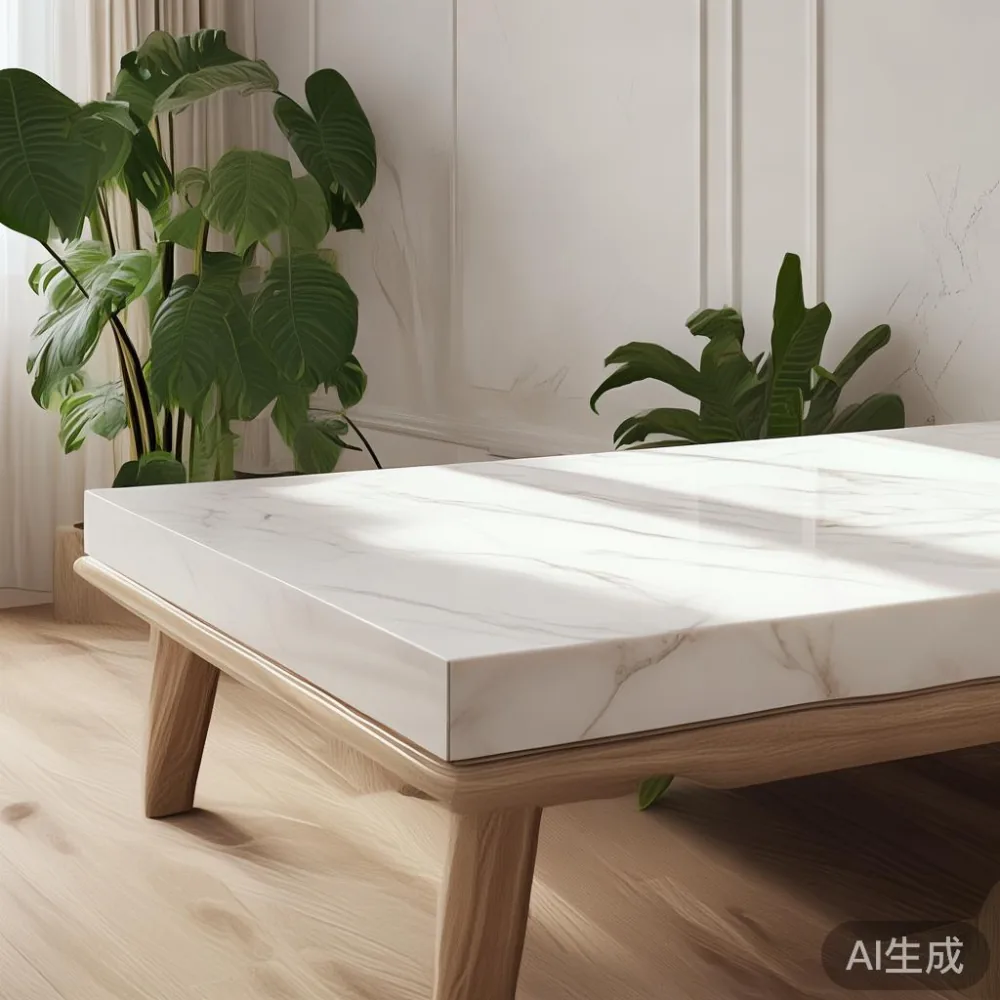
Priya ended up choosing a 1.6 m cream marble table with a single, soft grey vein running diagonally across the top, supported by a cream ash base. The total landed in her flat, including GST at 9%, was S$2,180. Three pieces, three tones, and the room stopped fighting itself.
What is the difference between Nordic bed and modern furniture?
A Nordic bed is a modern furniture piece designed around four specific traits: a light wood frame (usually oak, ash, or beech), a low profile between 25 cm and 35 cm from the floor to the top of the side rail, exposed joinery or very thin shadow gaps instead of carved ornament, and a matte, soap-finished or oil-finished surface that shows the open grain. Modern furniture, used as a broader category, includes Nordic beds but also covers lacquered high-gloss pieces from Italian post-modern light luxury lines, American light luxury silhouettes with brushed brass accents, and Japanese-influenced platform frames that share the low profile but use darker walnut or stained ash.
For a warm minimal Singapore bedroom of about 12 sqm, the Nordic approach tends to win because the lighter wood reads larger in the room and pairs naturally with cream linen bedding. A queen-size Nordic bed frame in solid ash, with a 28 cm side rail and a 110 cm headboard, leaves about 70 cm of walking space on each side in a 3 m × 3.4 m room, which is the minimum clearance for changing sheets without bumping the wall. Modern furniture in the American light luxury register, by contrast, often adds a 5 cm brass plinth and a slightly taller 38 cm rail, which steals 10 cm of clearance and reads heavier against cream walls.
Which living room pieces carry the most visual weight, and how do I lighten them?
Visual weight is the sum of size, darkness, and surface reflectivity. In a typical Singapore living room of 18 to 22 sqm, three pieces carry about 70% of the visual weight: the sofa, the TV console, and the coffee table or side table. Reducing the weight of any one of them by 20% changes the room more than repainting the walls.
For the sofa, a solid wood sofa frame with cream or oat boucle upholstery, at a 2.1 m length and 0.9 m depth, gives you seating for three without the visual mass of a 2.4 m chaise-end configuration. Solid wood sofa frames in ash or beech weigh between 55 kg and 70 kg for a three-seater, which is comfortable for two movers and clears the standard 1.1 m HDB corridor turn without scraping the corners. The upholstery does the colour work; the wood does the structural work, and neither shouts.
For the TV console, a 1.8 m low cabinet in cream ash, 40 cm tall and 38 cm deep, keeps the screen at a comfortable eye level of about 110 cm from the floor and leaves wall space for a single 60 cm × 80 cm piece of art above it. Pair it with a small marble table, perhaps 50 cm in diameter and 45 cm tall, used as a side table next to a reading chair. The marble catches the afternoon light from a typical east-facing HDB window, and the cream ash of the larger pieces holds the room together.
What about the bedroom, wardrobe, and the pieces nobody talks about?
The wardrobe is the largest single piece in most Singapore bedrooms, and it is the one most often picked from a catalogue rather than measured against the room. A 2.4 m wide × 2.4 m tall wardrobe in cream ash with sliding doors, 60 cm deep, takes up roughly 1.44 sqm of floor area. In a 12 sqm bedroom, that is 12% of the entire room, which means the door finish matters as much as the wardrobe frame. Matte lacquer in a warm cream, with handles recessed by 1.5 cm into the door face, keeps the surface reading as a wall rather than as furniture.
The nightstand is the unsung hero of warm minimal bedrooms. Two matching nightstands at 50 cm wide × 40 cm deep × 55 cm tall, in the same cream ash as the wardrobe, frame the bed and give you a surface for a 30 cm table lamp, a phone, and a glass of water. Avoid the temptation to pick a contrasting dark wood nightstand; it pulls the eye away from the bed and breaks the horizontal line that the headboard establishes. If you want one accent, make it a single small marble table tray or a brass-finished lamp base, but keep the cabinet itself quiet.
Storage in the living room follows the same logic. A cream ash bookshelf, around 80 cm wide × 30 cm deep × 180 cm tall, gives you five shelves of roughly 32 cm clear height each, enough for standard 23 cm hardcovers plus a small ornament on each shelf. If you need more storage, build it into the wall joinery rather than buying a second freestanding unit. Two pieces of competing furniture in the same visual zone is the fastest way to lose the calm you are paying for.
How do I handle logistics in Singapore without damaging the pieces?
This is the question that decides whether your warm minimal room actually arrives in the condition you saw in the showroom. Singapore HDB corridors are typically 1.2 m wide, lift openings are about 0.9 m wide, and lift interiors are 1.6 m deep by 1.1 m wide for passenger lifts. A 1.8 m marble table will not fit flat; it has to be tilted on its side on a padded dolly, and that is why most reputable Foshan workshops ship marble tables in custom wooden crates with 8 cm of closed-cell foam on every face. Lift bookings in private condos usually require 3 to 5 working days' notice and a refundable S$50 to S$150 deposit, so plan delivery windows before your furniture arrives.
Shipping from Foshan to Singapore by sea takes 12 to 18 days door-to-door, with the current FCL rate adding roughly S$180 to S$260 per cubic metre for shared container loads. Free shipping over US$350, which is about S$475 at the current mid-rate, usually covers a single dining table or a sofa-and-coffee-table combination. GST at 9% applies to the landed value, and reputable suppliers handle the customs declaration so you are not paying a S$60 courier surcharge for paperwork.
Returns in Singapore follow the standard 14-day window for unused pieces in original packaging. A scratched tabletop or a chipped marble edge is not a return case; it is a warranty case, and that is where a 10-year structural warranty on frame and joinery matters more than the price difference between two mid-range suppliers. Lifetime refinishing, offered by a handful of Foshan workshops including MIDHILL, means that a solid wood dining table you buy at 32 can be sanded and re-oiled at 42 for a fraction of replacement cost. In warm minimal interiors, where the wood is supposed to age gracefully, that service is the difference between furniture you keep and furniture you replace.
How much should I budget for a complete warm minimal living-dining set?
For a Singapore HDB living-dining zone of about 22 sqm, a realistic budget for warm minimal solid wood and marble furniture in 2026 is between S$6,800 and S$11,500 before GST. The breakdown I have seen hold up across three recent client projects looks roughly like this: dining table S$2,000 to S$3,200, six dining chairs S$900 to S$1,500, three-seater solid wood sofa S$2,400 to S$3,800, TV console S$900 to S$1,400, and either a marble coffee table or two marble side tables S$600 to S$1,600. A cream ash bookshelf in the study adds S$700 to S$1,100.
At the lower end of that range, you are buying sintered stone tops instead of natural marble, and engineered ash veneers over solid ash frames in less visible parts of the piece. At the upper end, you are buying bookmatched marble, hand-finished joinery, and hardwood throughout, including the drawer boxes and the back panels. Both ends can look warm and minimal on day one. The difference shows up in year eight, when the lower end starts to creak and the upper end is ready for its first refinishing.
If you are furnishing a whole flat in one order, the total typically qualifies for free consolidated shipping from Foshan, and the supplier arranges a single delivery window so you are not paying four separate S$80 to S$120 courier fees. MIDHILL has run consolidated shipments to Tampines, Bedok, and Punggol every month for the past several years, and the average lead time from order to flat is 28 to 38 days, which lines up with most BTO handover schedules that give you eight to twelve weeks before the key collection deadline.
A short checklist before you click pay
Measure every corridor, lift, and doorway the furniture will pass through, and write the numbers down in centimetres, not inches. Ask for the crate dimensions of any marble table, not just the table dimensions, and add 16 cm for foam and crate walls. Check that the wood finish is open-grain and oil-based or soap-finished, not high-gloss lacquer, because high-gloss lacquer reads cold under Singapore's afternoon tropical light. Confirm the warranty covers structural joinery for at least 10 years and that refinishing is offered at cost, not as a paid service.
Finally, stand in your empty room and identify the single surface that will catch the most light, usually the wall opposite the main window. Place your warmest, most textured piece in front of that wall: a cream ash bookshelf, a marble table with veining, or a solid wood sofa in oat boucle. Let one piece carry the warmth, and let everything else stay quiet. That is the whole secret to a warm minimal interior, and it is the same whether your flat is in Punggol, Tampines, or Bedok.