How to Style a Small Singapore Apartment Without Making It Feel Crowded
I visited a friend's new three-room HDB flat in Punggol last month, and within ten minutes I understood exactly why she had asked me to come over. The unit itself was 65 square metres, the lift was wide enough for her new armchair, and the corridor outside her door measured 1.2 metres from wall to wall, which sounds like nothing but is actually quite workable. The problem was not the flat. The problem was that she had tried to fit a four-seater solid wood dining table, a king-size bed frame, a six-door wardrobe, two nightstands, and a marble coffee table into a space that wanted one or two of those things, not all of them. She had been told that a small apartment requires a small number of small pieces, and she had read that advice and done the opposite of it. By the time we cleared one corner of unwanted furniture, the room had grown by what felt like twenty per cent.
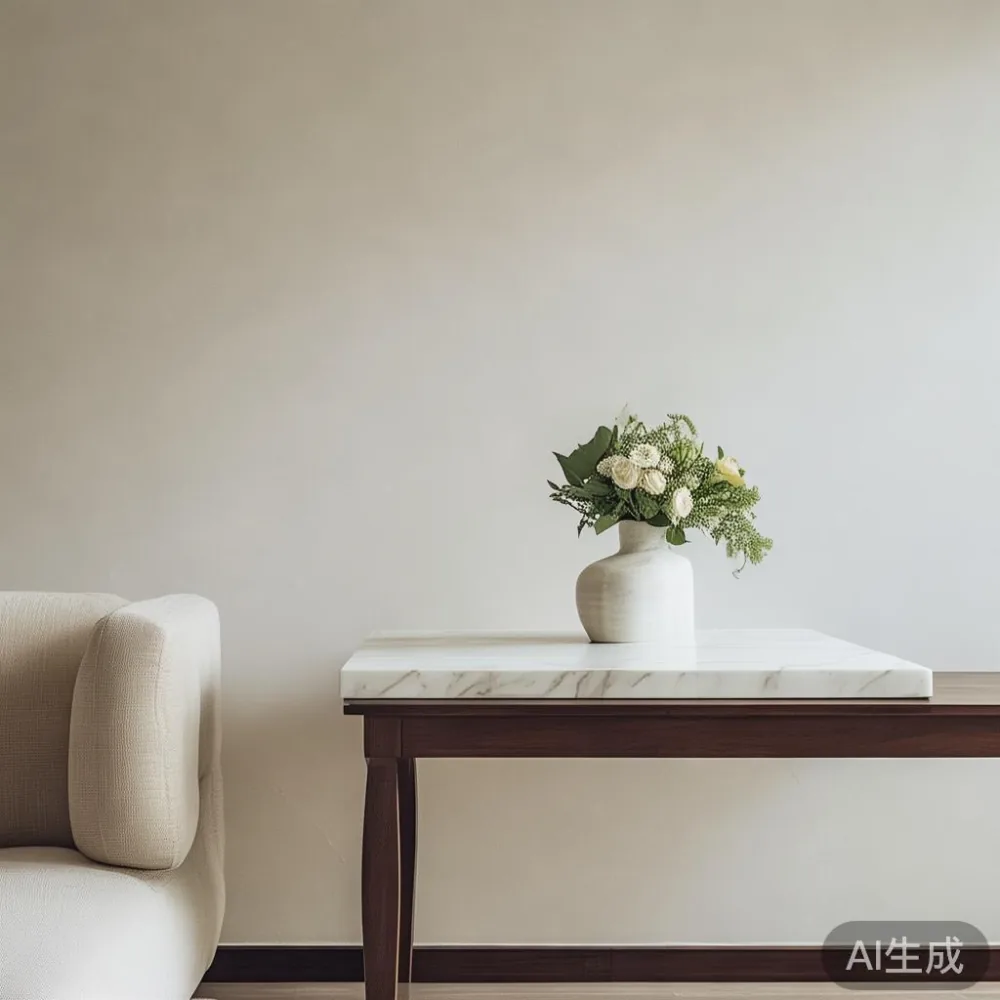
That afternoon is the starting point for everything below. If you live in a Singapore HDB flat or a compact condo in Tampines, Bedok, or Punggol, the rules of layout are unusually tight. Ceilings are usually 2.6 to 2.8 metres, doors open inward, and corridors into bedrooms are often 0.9 to 1.0 metres wide, which is what every courier will quietly complain about the first time they deliver a bed frame. You are paying a premium per square foot, so every piece of furniture you bring home is paying rent on space that could breathe, hold light, or stay empty. This guide is about how to choose pieces that earn their place, with a particular focus on the marble table category that anchors MIDHILL's collection: dining tables, coffee tables, and side tables built in solid wood with stone tops, finished for Singapore's humidity, and shipped flat-packed with a 14-day return window if your layout does not work out.
Why does a small flat feel crowded even when it isn't full?
The honest answer is that crowding is rarely about quantity; it is about how many visual borders your eye has to process. Every piece of solid wood sofa, every wardrobe door, every dining chair leg is a line. The more lines, the more your brain reads as clutter, even if the floor is empty. A small HDB living room in Bedok with two walls, one window, and one sofa should feel generous. The same room with a marble coffee table, two armchairs, a media console, a floor lamp, a side table, and four floor plants will feel like a stockroom.
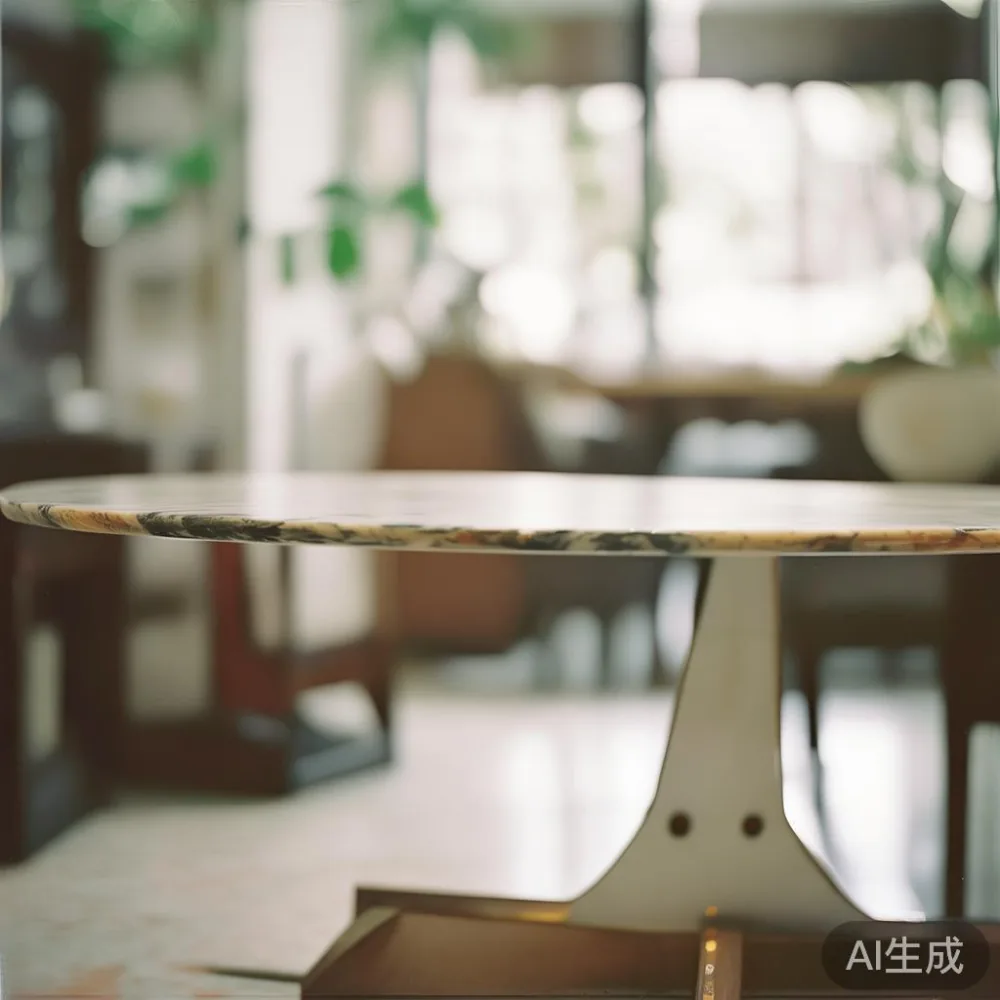
The second cause is proportion mismatch. A 2.4-metre solid wood sofa in a 3-metre living room leaves only 30 cm of walking space on either side, which forces you to walk sideways and turns the room into an obstacle course. A 1.8-metre sofa in the same room feels deliberate. The third cause is finish noise: too many different wood tones, too many metal accents, too many fabric patterns. Calm interiors usually have three to four finishes across the whole flat, not three to four finishes in one corner.
What is the single best investment for a small Singapore apartment?
A marble table that doubles as a dining surface, a work surface, and a place to put your keys. Specifically, a 120 cm to 140 cm rectangular marble table in a light cream or warm grey veining, paired with two solid wood dining benches that slide fully underneath when not in use. In a 9-square-metre HDB dining nook, this configuration seats four on weekday dinners and six when guests come, but visually collapses to the footprint of a console when you push the benches in. I have watched a colleague in Tampines run a 90-square-foot condominium this way for three years, and her flat reads as larger than her neighbour's identical unit down the corridor.
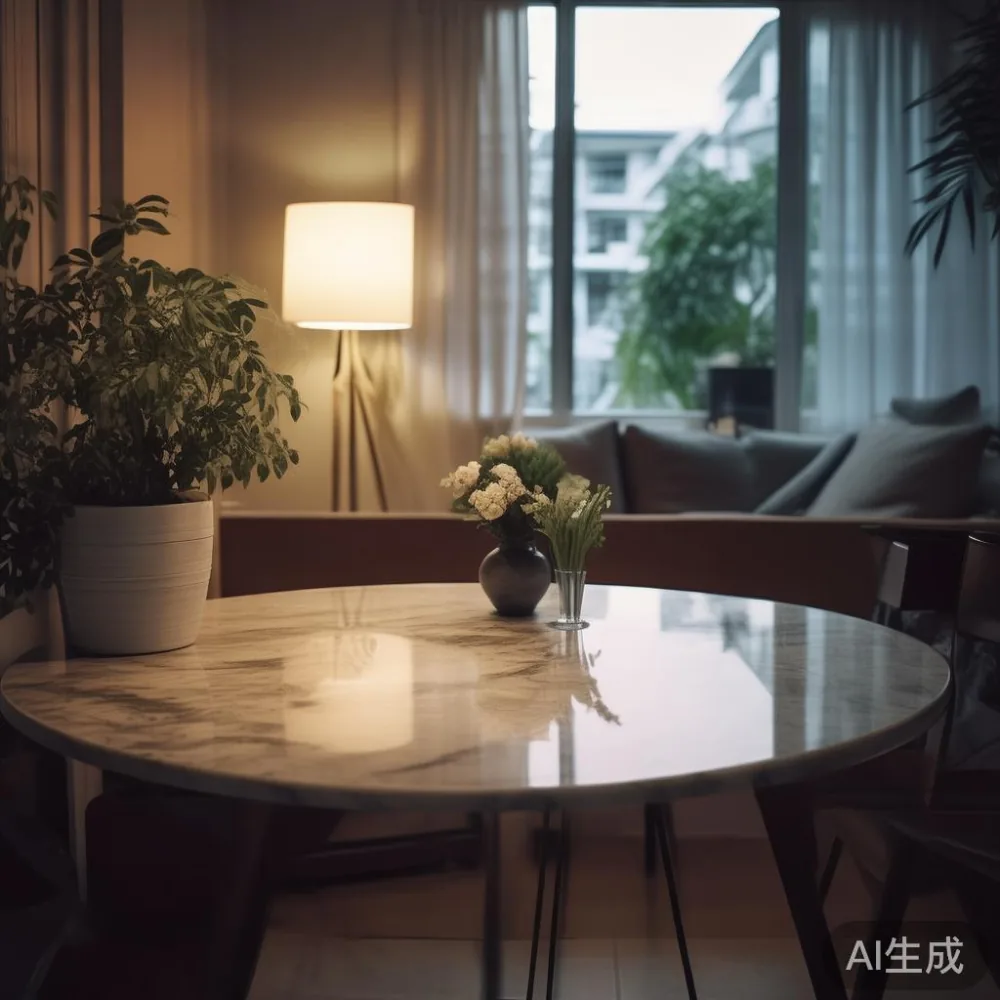
The reason a marble table solves the crowding problem so efficiently is that stone carries visual weight without carrying visual noise. A solid wood dining table in the same size looks heavier because the grain repeats along the surface; a marble table in the same size reads as a single plane of calm, which your eye treats as background rather than as another object competing for attention. For Singapore humidity, a sealed sintered-stone or marble top over an ash or walnut base is a strong choice, because the wood subframe can be specified for the local climate and the top will not warp the way an all-wood surface can after years of air-conditioning cycles. Budget roughly SGD 1,400 to SGD 3,200 for a 140 cm piece in this category, depending on the base material and the marble pattern.
How do you choose a bed frame and wardrobe that do not eat the room?
Choose a bed frame with a headboard no taller than 110 cm, and choose a wardrobe with sliding doors rather than hinged ones. A queen-size bed frame at 152 cm by 188 cm is the standard for Singapore couples, but a storage-integrated base lifts the mattress 35 cm, which lets you use the under-bed volume for luggage, duvets, and Balikbayan boxes you cannot bring yourself to recycle. The wardrobe should match the ceiling height. In most HDB rooms that means a 2.4-metre-tall, 180-cm-wide unit with mirrored sliding doors, which gives you two seasons of clothing storage in a footprint that costs less than SGD 2,800 fully fitted.
A frequent mistake is buying a six-door wardrobe because it looks generous on the showroom floor. In a 10-square-metre HDB bedroom, a six-door unit leaves 45 cm of clearance on either side and forces the bed into the centre of the room, which then blocks the window. A three-door sliding wardrobe in the same wall position leaves you a clear walking line of 60 to 70 cm, which is what the code recommends for daily use. Light luxury in this category reads as: one material on the door fronts (matte lacquer in warm white or a single oak veneer), slim 1.5 cm handles, and a single internal drawer bank rather than a complex shelf system you will rearrange twice and then never touch again.
What role does a solid wood sofa play in a small living room?
A small one. Specifically, choose a solid wood sofa in the 1.8 to 2.0-metre range with a 75 cm seat depth and removable cushions, in a single neutral fabric. Anything larger starts to dominate the room, and anything smaller feels like a bench pretending to be a sofa. The frame should be visible, not buried in upholstery, because an exposed ash or walnut frame reads as architecture rather than as a soft blob. American light luxury tends toward this look: clean lines, a wood frame you can see, cushions that are generous but structured, and a price band of SGD 2,200 to SGD 4,800 for a three-seater in a Singapore-spec fabric.
Last month I sat on a friend's new solid wood sofa in her Punggol four-room flat, and the most useful detail was the arm height. At 58 cm, the arm was exactly the height of her marble side table, which meant she could slide a laptop, a cup of coffee, and a book across without standing up. That single dimension saved her from buying a separate laptop table, which is the kind of decision that decides whether a flat reads as crowded. Pair the sofa with one accent chair rather than two, and skip the footstool unless you genuinely use one every night. The eye reads empty floor as space; the eye reads another upholstered object as another border.
How much does a dressing table cost in Singapore?
A dressing table in Singapore typically costs between SGD 480 and SGD 2,200, depending on size, material, and whether you opt for a built-in mirror and drawer bank. Entry-level models in engineered wood with a single drawer start around SGD 480 to SGD 700, mid-range solid wood dressing tables with a marble top and cushioned stool run SGD 1,100 to SGD 1,600, and premium French light luxury pieces with sintered-stone tops and brass fittings sit at SGD 1,800 to SGD 2,200.
The pricing step that surprises most buyers is the marble top. A 100 cm by 40 cm sintered-stone surface in a warm grey or Carrara-look veining adds roughly SGD 280 to SGD 450 over the same table in all-wood, which is what makes the dressing table feel like a piece of furniture rather than a piece of joinery. For a small HDB master bedroom, a 90 to 110 cm-wide dressing table is usually the right size, because anything wider pushes into the bed-frame clearance. If your wardrobe already has a mirrored door, you can skip the dressing-table mirror entirely and save 18 to 25 cm of depth, which is the difference between a comfortable chair pull-out and an uncomfortable one.
How should you arrange a marble dining table for four in a Singapore home?
For four people in a Singapore HDB, a 120 cm by 70 cm rectangular marble dining table is the comfortable minimum, and a 140 cm by 80 cm marble dining table is the comfortable standard. The 140 cm version seats four with 60 cm of elbow room per person and seats six with 35 cm of elbow room, which is tight but workable for a weekend dinner. Round marble tables in the 110 to 120 cm diameter range are also worth considering for square dining nooks, because they eliminate the corner-bump problem in tight spaces.
Allow 90 cm of clearance between the table edge and the nearest wall or piece of furniture, which is the distance an adult needs to pull out a chair and sit down without bumping the person behind them. In most HDB layouts that means the table sits in the centre of a 2.4-metre by 2.7-metre dining zone, with benches on the long sides and chairs on the short sides only when guests come. As for the chairs, choose solid wood dining chairs with a seat height of 45 cm and a back height under 90 cm, so the chair profile stays below the table top and the room reads as one calm plane when no one is sitting down. MIDHILL's 140 cm marble dining tables with an ash or walnut subframe sit in this size band and ship flat-packed to Singapore addresses in roughly 14 to 21 working days, with GST and delivery included for orders above SGD 480.
Where can a Modern light luxury ash wood nightstand actually help a small bedroom?
It helps in the 35 cm of space between the bed frame and the wall. A modern light luxury ash wood nightstand in the 45 to 50 cm-wide, 35 to 40 cm-deep range gives you a drawer for phone, charger, and a book, and a top surface for a 25 cm-diameter table lamp, without pushing the bed 10 cm away from the wall. Ash is a particularly good wood for Singapore because it is dimensionally stable across air-conditioning cycles and it does not darken the way cherry or mahogany can under tropical daylight. A matching pair will run SGD 360 to SGD 720 in this category, which is less than the cost of a single accent chair and considerably more useful on a Tuesday night.
The styling rule for nightstands is simple: one lamp, one drawer-closed object, one open object. A lamp, a book, and a small ceramic dish is a complete vignette. A lamp, three books, a phone charger, a water bottle, a candle, and a frame is a bedside table that has become a storage unit, and your eye will read the cluster as clutter before you have even noticed it. If you find yourself needing more surface, the answer is not a bigger nightstand; the answer is a smaller wardrobe or a clearer shelf somewhere else in the room.
What delivery and after-sales details matter for Singapore buyers?
Three things matter: whether the lift can take the largest box, whether the courier will carry the box up the corridor, and what happens if the piece arrives damaged or simply does not fit. For HDB blocks built before 2000, the lift opening is often 0.9 metres wide by 2.1 metres tall, which is fine for flat-packed bed frames and dining tables but is genuinely tight for an assembled wardrobe. For newer blocks in Punggol and Sengkang, the lift opening is usually 1.1 metres wide, which fits almost everything. MIDHILL ships flat-packed by default, which sidesteps most of these issues, and offers a 14-day return window from the date of delivery, plus a 10-year structural warranty on solid wood frames and lifetime refinishing on dining and coffee tables for customers who want their pieces renewed five or ten years down the line.
Delivery to Singapore typically runs 14 to 21 working days from the Foshan warehouse, with customs clearance and GST handled by the carrier. Lift-level delivery is the default; door-to-room delivery inside the flat is usually an additional SGD 60 to SGD 120 depending on the block and the number of pieces. For Singapore buyers above the SGD 350 free-shipping threshold, the all-in landed cost is usually very close to the Singapore-dollar price listed on the site, with only the GST uplift to add.
What is the short version of the styling rule?
One anchor, one accent, one empty surface. The anchor is the marble dining table, the marble coffee table, or the bed frame, depending on the room. The accent is one piece that contrasts in material or finish: a solid wood sofa next to a marble table, a brass lamp next to an ash nightstand, a single piece of framed art above a console. The empty surface is a wall, a floor zone, or a tabletop corner that is allowed to be empty, so the eye has somewhere to rest. Small Singapore apartments feel crowded when you remove all three of those, and they feel calm when you keep them.
The last move I would make, if I were furnishing my friend's Punggol flat again from scratch, is to choose the marble dining table first, build the room around its dimensions, and only then buy the chairs, the bench, the sideboard, and the rug. Furniture chosen in that order tends to belong to the room. Furniture chosen in any other order tends to belong to a different flat in a different city, and your HDB will feel crowded because the pieces keep arguing with each other instead of with the walls.