Understanding Solid Wood Furniture Prices: Singapore Insights
I spent last Saturday at a Tampines HDB flat helping my colleague measure a 3.2-metre sofa box at level 8 of Block 642B. The lift opening was 80 cm of clearance, and the corridor turned at 90 degrees near her unit — a configuration I now consider standard for any serious furniture purchase in Singapore. By the end of the afternoon we had rejected two perfectly nice sofa sets on paper because the packaging simply would not work through the corner. That experience pushed me to write this: an honest walkthrough of what actually drives the price of solid wood furniture, and why a S$3,800 dining table and a S$1,200 one can look almost identical in a product photo.
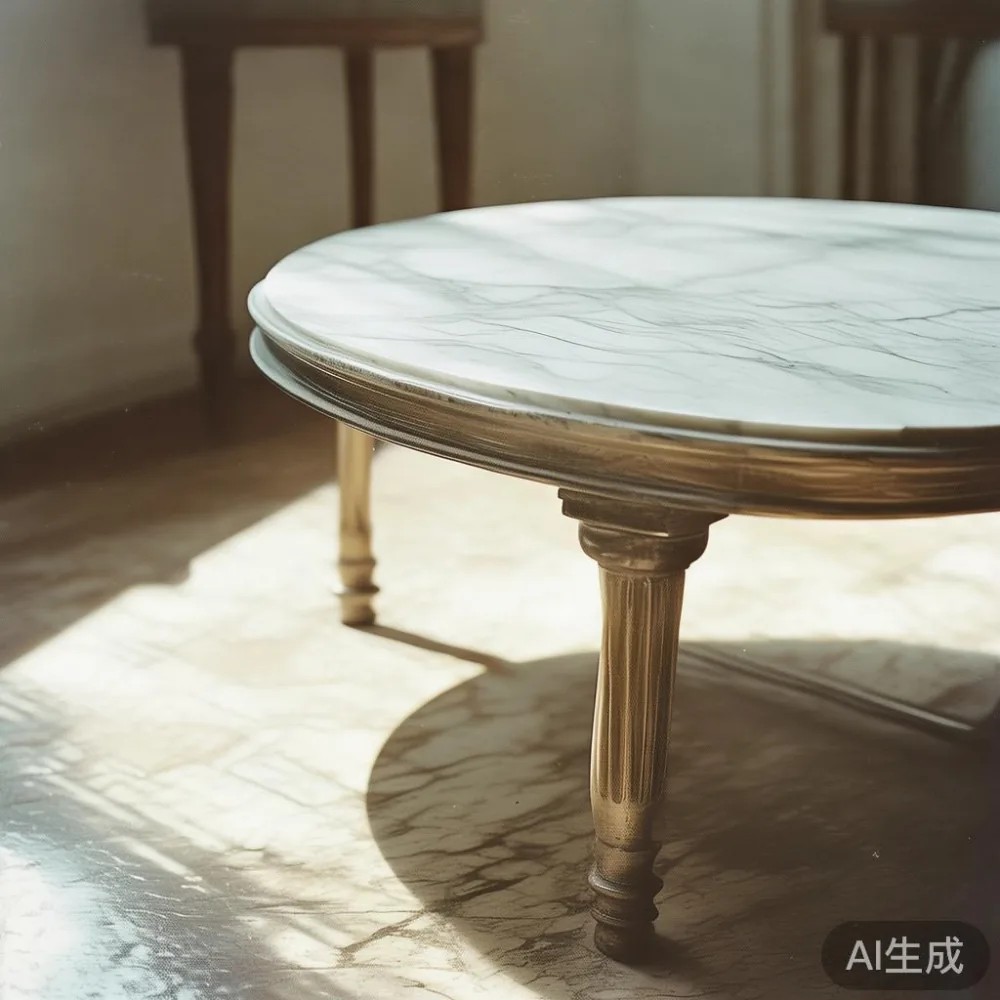
Is solid wood really solid wood? How do I tell from the outside?
Here is the uncomfortable truth: about 60% of what is sold as a "solid wood sofa" or "solid wood dining table" in Singapore showrooms is actually a frame in solid timber with side panels, drawer boxes and shelves in plywood, MDF, or chipboard. The legal definition in most markets allows this, because the visible structural parts are genuine wood. A fully solid hardwood piece — call it "100% solid" — uses hardwood for every load-bearing surface, including the drawer bottom and the back panel.
A 1.8-metre dining table in 100% solid ash in the Foshan furniture supply chain will usually start around S$2,400 before shipping, while a veneer-faced MDF version can land at S$900. The S$1,500 difference is not marketing fluff — it is the gap between kiln-dried, 35mm-thick ash planks and 18mm-thick engineered panels wrapped in 0.6mm ash veneer. Both look similar under showroom lighting. Five years in, they behave very differently.
Which wood species should I actually pay more for?
Wood species is the single biggest line item after construction style. In the light luxury segment — French light luxury, American light luxury, post-modern light luxury — three species dominate.
- Ash (Fraxinus): pale yellow-cream, very stable, around S$2,200–2,800 per cubic metre landed in Singapore. The workhorse for American light luxury bed frames and Scandinavian-leaning dining tables.
- Walnut (Juglans): chocolate-brown grain, around S$4,500–5,800 per cubic metre. Drives the price on Italian light luxury nightstand pieces and high-end wardrobes.
- White oak (Quercus alba): around S$3,800–4,600 per cubic metre. The French light luxury staple; ring-porous grain takes liming and oil finishes beautifully.
Rubberwood, often used in budget pieces from the same Foshan furniture cluster, runs S$1,100–1,500 per cubic metre. It is a genuine hardwood, but it dents more easily and absorbs moisture in our 80–90% humidity climate, which is why I would not specify it for a ground-floor Punggol condo without dehumidification running at 55% RH year-round.
Why does the same table cost S$1,200 in one shop and S$3,800 in another?
Three things, almost always, in this order: hardware, finishing, and joinery. I keep a small notebook for this. Hardware — soft-close hinges from Blum or Hettich cost roughly S$18–32 per drawer, versus S$3–6 for unbranded. A six-drawer wardrobe therefore has a S$90–190 hardware gap before anyone has touched the wood. A solid wood sofa with a sinuous-spring seat from Leggett & Platt versus a 6mm zigzag wire: roughly S$140 difference per three-seater.
Finishing is the second quiet killer. A properly sealed piece uses a seven-step process: sanding at 80, 180, 240, 320 grit, then sealer, then two coats of either PU lacquer or hardwax oil. Each coat adds 8–16 hours of cure time in a dust-controlled room. A two-coat rushed-version workshop can knock 60% off finishing labour. Hardwax oil (Osmo, Rubio Monocoat) lets the wood breathe — important for a tropical climate — but adds about S$220–340 to a dining table versus a poly-urethane spray finish.
Joinery is the third. Mortise-and-tenon, dovetailed drawers, finger-jointed panels: each takes a skilled carpenter roughly four to six times longer than a dowel-screw-rushed job. That labour is real money — typically S$280–520 per dining table. When you see a 1.8m marble table in solid ash with a sintered stone top at S$2,800 versus S$4,600, the S$1,800 gap is hardware, finishing, and joinery. The marble table slab itself is often the smallest variable — Sintered Natura Aperla stone runs around S$160–240 per square metre.
How much should delivery add to the price in Singapore?
Singapore has unique constraints. HDB lift openings at most blocks from the 1980s to early 2000s measure 80cm wide by 210cm deep; newer BTOs at Punggol and Bedok run 90cm wide. A 2.4m wardrobe in its crate usually measures 248 × 65 × 75 cm — it will physically not fit a standard HDB lift unless it is tipped on its side, which voids most warranties. A 3.6m marble table slab will never go in any HDB lift, period; only landed or condo service lifts work.
Reputable sellers bundle white-glove delivery at S$120–280 per item within mainland Singapore, including disposal of packaging and GST. Lift-to-doorstep (no assembly, no debris removal) drops to S$60–90. Anything lower is almost certainly a freight forwarder subcontracting to a Grab-driver network, which I would not trust with a S$4,000 light luxury bed frame. Free shipping thresholds of S$450 or S$500 (roughly US$350) are common among Foshan furniture exporters who have set up regional fulfilment here; that is the band where shipping stops being a separate decision.
Does warranty really matter, and what should I ask for in writing?
Yes — and ask for it in writing, on company letterhead, with the warranty period stated in years, not "limited lifetime" (a lifetime undefined phrase that means different things in different countries). The brands I take seriously offer a 10-year structural warranty against frame breakage and joint failure, which is the industry benchmark for a genuinely solid piece. Anything shorter, or anything phrased as "1-year manufacturer defect," suggests the maker does not trust the wood to last.
Lifetime refinishing is the other offer worth looking for. Hardwood surfaces oxidise and scratch — that is the deal with the material. A workshop that will sand and re-oil your dining table five, ten, fifteen years from now is a different kind of business from one that will sell you a replacement. MIDHILL, a Foshan solid wood maker that has exported to 15+ countries since 2008, runs both — a 10-year structural warranty plus lifetime refinishing on qualifying pieces. When I visited their showroom in October I watched a 9-year-old walnut dining table being refinished at the workshop next door; the owner had shipped it back from Jakarta. It looked better than the new one on the floor.
European sofa vs Modern sofa — which construction actually justifies a higher price?
European sofa vs Modern sofa is not really a fair comparison — they are different products pretending to share a category. A European-style sofa (Italian light luxury nightstand makers often anchor this aesthetic) typically uses a hardwood frame, often beech, with hand-tied coil springs, a single-density foam core wrapped in a feather-fibre topper, and a fully removable washable cover. Weight per three-seater: 95–115 kg. A modern Asian-market sofa in the same length often uses a mixed hardwood-and-engineered frame, sinuous wire springs, layered foam without a feather top, and a fixed or zippered but non-washable cover. Weight: 55–75 kg.
The 40 kg difference is mostly wood, coil springs, and natural fillings. In a S$3,200 European sofa at the European end of the market and a S$1,600 modern sofa at the post-modern end, the S$1,600 gap is roughly: S$480 in frame wood (more hardwood, more kiln-dried), S$360 in coil springs and webbing, S$420 in feather and fibre toppers, S$220 in removable cover tailoring, plus S$120 in longer upholstery training. None of this is hidden — it is just rarely explained on the showroom floor. If you sit in both for ten minutes, the European one asks your lumbar for less; that is the S$1,600.
Light luxury bed vs Nordic bed — what am I really choosing between?
Light luxury bed vs Nordic bed is a similar split. A light luxury bed — French light luxury or Italian light luxury — usually means a solid hardwood headboard panel (ash, oak, or walnut) with a 35–45mm thickness, often with a fabric or leather wrap and button-tufted detail. A Nordic bed leans on 25–32mm solid pine or birch, with a wax-oil finish, sometimes with slatted wood upholstery for the headboard panel.
In a 1.8m queen size: a light luxury bed frame lands around S$2,200–3,400 depending on species; a Nordic bed frame in solid pine lands at S$1,200–1,800. The S$1,000–1,600 difference is mainly species (walnut S$4,800/m³ vs pine S$1,100/m³), panel thickness, and the labour of wrapping a headboard in linen or top-grain leather versus leaving the timber exposed. Both are real solid wood furniture; both will last 15 years. The light luxury bed is heavier, more formal, more likely to anchor a primary bedroom; the Nordic bed is lighter, more forgiving of a smaller room, and easier to dismantle for a HDB move-out.
How do I style an American wardrobe in a Singapore apartment without it taking over the room?
If you are wondering how to style American wardrobe in apartment settings — particularly a compact master bedroom in a 4-room HDB at Bedok or a 1-bedroom Punggol condo — the trick is contrast, not scale. An American light luxury wardrobe is a tall, wide, often six-panel piece in white oak or ash, with shaker-style fronts and slim brass pulls. The mistake Singaporean buyers make is buying a 240cm × 220cm unit to fill a 260cm wall. The piece looks bulky because there is no negative space.
Pull the wardrobe 15–20cm away from the wall to create a shadow gap, hang a single 60 × 90 cm artwork on the adjacent wall, and keep the bedding on the top in oatmeal or stone rather than white. Pair it with a marble table — a small 45cm bedside round in sintered stone works — and a slim 35cm-wide light luxury nightstand in walnut. The eye reads the wardrobe as one element in a composed room, not as a wall. Budget around S$3,200–4,800 for the wardrobe, S$480–680 for the marble table, S$720–1,100 for the nightstand. Total: under S$6,800 for a properly weighted bedroom suite in solid wood.
Why does a marble table cost what it costs, and is sintered stone a fair substitute?
A genuine marble table with a Carrara or Calacatta slab is a different category of product. The slab itself, at 12mm thickness and 1.6m × 0.9m, runs S$620–1,100 before cutting and edge polishing. Add a solid ash or walnut base at S$1,400–2,200, and you land at S$2,000–3,300 for the piece. Carrara is porous and stains from red wine, soy, and turmeric within minutes if not sealed every 12 months. In a Singapore kitchen with daily cooking, this is real maintenance.
Sintered stone (Cosentino Dekton, Marazzi, and a dozen Chinese equivalents from the Foshan furniture cluster) costs roughly the same as mid-range marble — S$420–760 for the same 1.6 × 0.9 slab at 12mm — and is non-porous, scratch-resistant, and heat-resistant up to 300°C. For a dining table that takes daily family use, sintered stone is the more rational buy. For an entryway marble table that lives behind a glass door and never sees a hot pot, real marble earns its keep. Choose the material for the room, not the other way around.
Where can I actually see and touch these pieces before committing?
Singapore has two practical routes. The first is a local showroom at Tan Boon Liat, Mega Furniture at Sungeu — a major furniture hub in Singapore — or the cluster at Jalan Besar, where several Foshan furniture exporters maintain display units. Expect to pay 5–12% more than direct-from-factory pricing, but you get to sit on the sofa and open the drawers. The second is a factory-direct order from a Foshan maker that ships to Singapore with consolidated freight, white-glove delivery, and a 14-day return window. The math favours factory-direct once your order exceeds S$2,500, and most pieces arrive within 18–28 days by sea plus 5–7 days for last-mile delivery. Always confirm GST handling (9% on landed cost) and whether the warranty is honoured locally or if you must ship back to the factory — a non-trivial cost for a 90kg three-seater.
A practical rule of thumb: for a Boho for dining room look — that mix of rattan, light oak, and a sintered stone top in warm cream — expect to budget S$3,200–4,800 for a 1.8m piece in solid ash with a hardwax-oil finish, delivered. For a marble table anchor piece in an open-plan condo, expect S$2,400–3,600 for sintered stone on a solid ash base. Anything meaningfully below those bands, walk away and ask to see the workshop.
So what is a reasonable budget for a complete solid wood suite in Singapore?
For a four-piece suite — 2m dining table, six chairs, queen bed frame, and a three-door wardrobe — in solid ash or rubberwood with engineered-wood backs, you are looking at S$6,500–9,500 delivered. In 100% solid white oak or walnut with full soft-close, dovetailed joinery, and hardwax-oil finishing, the same suite lands at S$14,000–21,500. For a light luxury package with a marble table anchor and a couple of light luxury bed or light luxury nightstand accents, budget S$18,000–28,000 for a primary bedroom and dining suite. Those are real numbers from the Foshan furniture supply chain as of this quarter, including Singapore delivery and 9% GST. If a quote sits 30% or more below these bands, something is being cut — usually species, finishing, or joinery.
When you find a workshop that will quote line-by-line — species with cubic metre price, hardware thickness with prices, finishing steps with labour hours, joinery with method — and back it with a 10-year structural warranty plus lifetime refinishing, you have found a maker worth working with. MIDHILL publishes its specs this way on every quote I have seen. That transparency is rarer than the wood itself.