What Drives the Price of Solid Wood Furniture in Singapore? A Buyer’s Field Guide
I spent a Saturday in Tampines walking through three furniture showrooms with a tape measure, a bathroom scale, and a notepad on my phone. My mission was simple: figure out why one 1.8 m dining table was S$3200 while another, almost identical to look at, was S$6800. By the end of the day I had weighed a marble table slab at 58 kg, photographed the underside of a solid wood bed frame, and learned more about kiln-dried versus air-dried oak than I ever wanted to know. Here is what I found, and what it means for anyone furnishing a 4-room HDB in Bedok or a new BTO in Punggol.
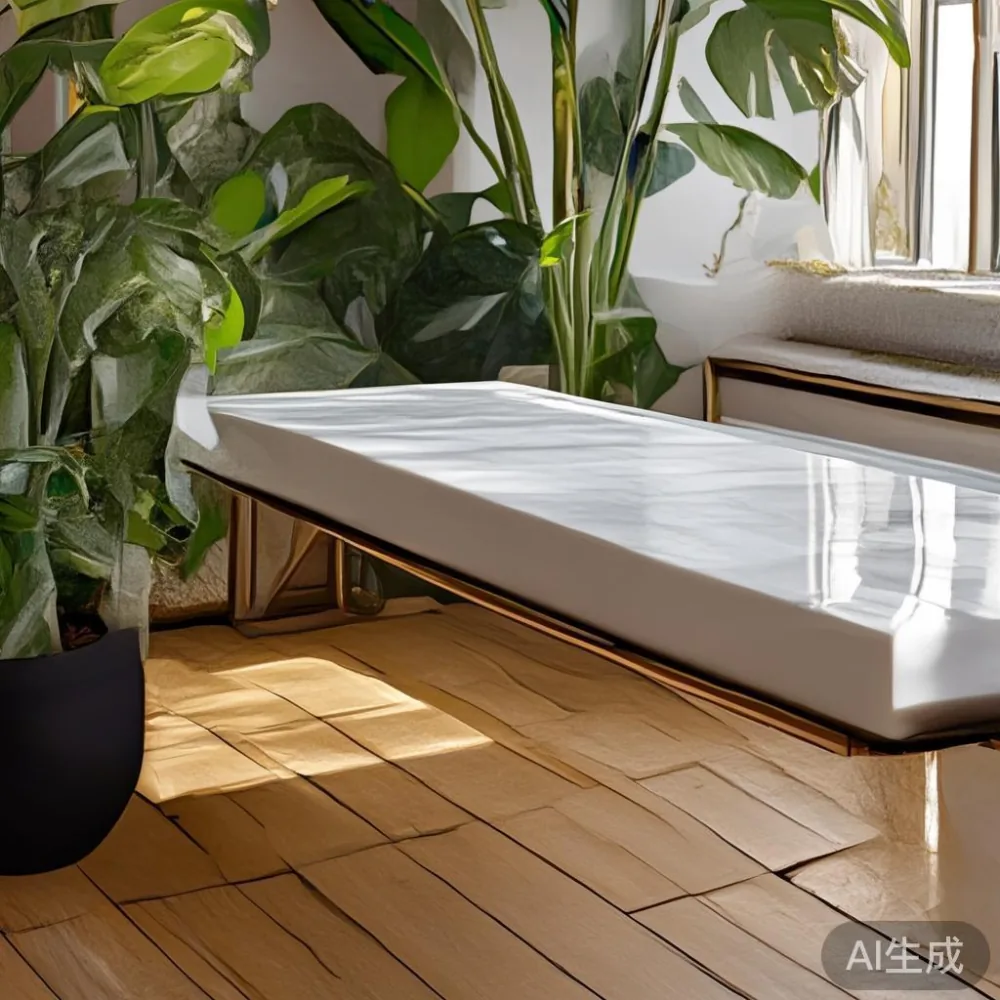
How do I choose a loveseat for a small apartment?
The short answer is: measure your lift door and your corridor first, then pick a loveseat under 1.5 m wide with removable cushions and a solid wood frame. In most Singapore HDB blocks the lift door opening is around 1.2 m wide and 2.1 m tall, and the corridor between the lift lobby and your flat door is usually 1.5 to 1.8 m. Anything wider than 1.6 m simply will not make the turn into the living room without a risky tilt-and-shove that damages the frame and the wall. A loveseat between 1.3 m and 1.5 m, with arms no deeper than 85 cm, slips in cleanly and still seats two adults comfortably for a Netflix night. Beyond dimensions, lift the front skirt and look at the joinery. A quality piece will have mortise-and-tenon corners, corner blocks glued and screwed, and a kiln-dried solid wood frame rather than plywood or particleboard wrapped in a thin veneer. If the salesperson cannot tell you the moisture content of the wood, walk away.
Why does solid wood cost more than veneer or engineered wood?
Three reasons, and the first one nobody sees. Wood is sold by volume and by grade. A kiln-dried FAS-grade American white oak board at 25 mm thickness runs roughly S$280 to S$420 per cubic metre of usable timber after drying losses, while the same volume of Russian birch plywood costs around S$90 to S$130. A 1.8 m dining table needs about 0.08 m³ of solid stock after waste, versus 0.04 m³ of plywood for a comparable engineered table. That alone is a S$15 to S$30 raw-material gap before a single machine has touched the wood. Then add labour: a good factory in Foshan like MIDHILL runs CNC routers, four-side moulders, and robotic sanding lines, but a real solid wood dining table still needs 18 to 25 hand-finishing steps including sanding between coats of lacquer, which is why a worker touches each table for roughly 6 to 8 hours. Finally, drying. Air-drying a 50 mm oak board takes 9 to 14 months. Kiln-drying to 8 to 10 percent moisture content takes another 4 to 6 weeks and costs real electricity. Cheap furniture skips this and you pay later in cracked panels and lifted veneer.
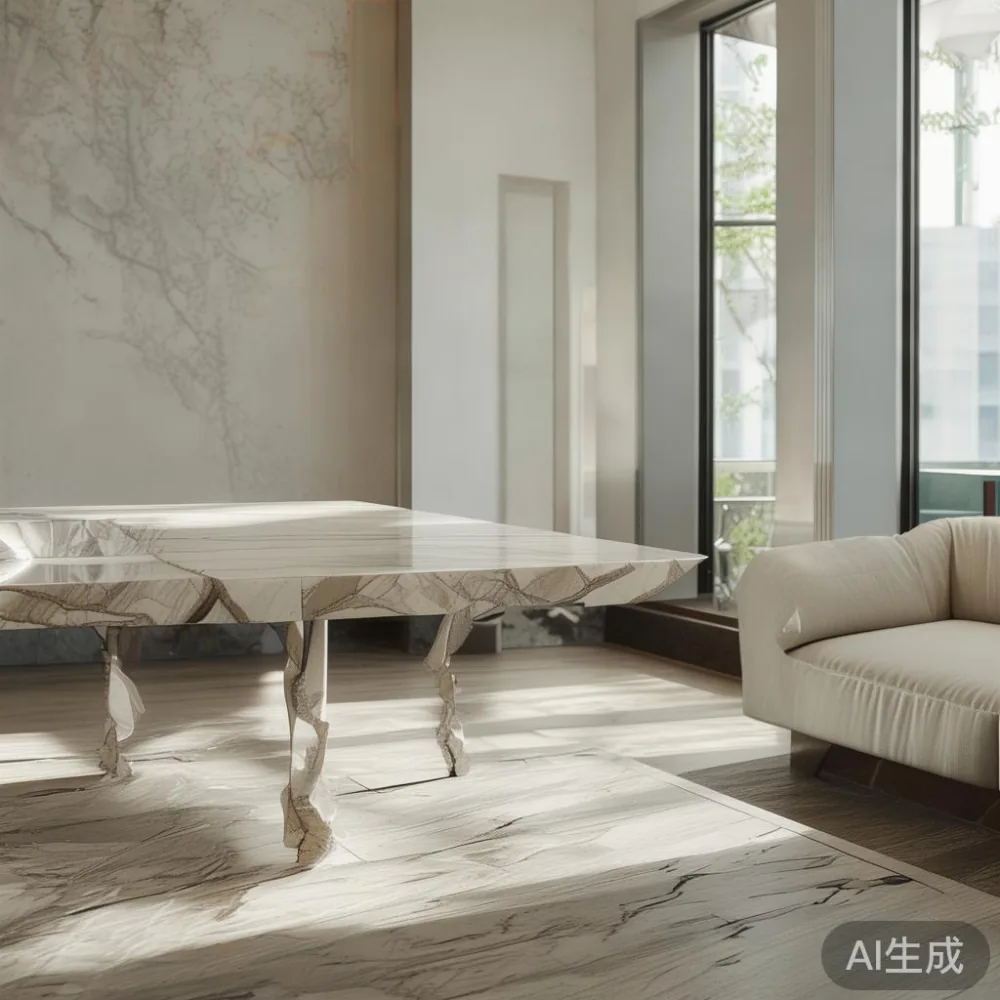
How much should I budget for a solid wood dining table in SGD?
For a 1.4 m to 1.6 m solid wood dining table that seats four to six, expect to pay between S$2200 and S$5200 landed in Singapore. The low end is usually rubberwood or ash with a matte lacquer finish, delivered in 25 to 35 days by sea freight from Foshan. The mid range, S$3200 to S$4500, is where American light luxury styling starts to show up: beveled edges, tapered legs in walnut or white oak, and a satin finish that feels closer to a European showroom than a flat-pack import. The top end, S$4500 to S$5200 and above, typically adds a marble table top insert, soft-close extensions, or a thicker 38 mm to 45 mm tabletop. A 1.8 m to 2.0 m table for six to eight runs S$3500 to S$6800. Always ask whether the price includes GST, delivery up the lift, and installation. A S$400 table that arrives with a S$180 delivery surcharge and 9 percent GST is really a S$630 table.
What is the real difference between rubberwood, ash, oak, and walnut?
Rubberwood is the entry ticket. It is a plantation hardwood from old rubber plantations in Malaysia and Thailand, dense enough for furniture, and usually priced 35 to 50 percent below imported oak. A rubberwood dining table in a 1.4 m size lands around S$1800 to S$2600, which makes it a sensible choice for a first home or a rental in Punggol. Ash is the Scandinavian favourite: light in colour, strong in flex, and forgiving on dents. American ash runs about 20 to 30 percent above rubberwood. White oak is the workhorse of French light luxury and American light luxury collections, with a tighter grain that takes dark stains beautifully and a Janka hardness around 1360, which means it resists chair-leg scuffs for years. Walnut sits at the top of the mainstream pile, with a chocolate tone that needs no stain and a price tag about 60 to 90 percent above oak. Exotic imports like Burmese teak or African sapele can push a 1.8 m table past S$7500 simply on raw timber cost.
Does shipping from Foshan really take that long, and what does it cost?
Sea freight from Foshan or Guangzhou to Singapore takes 7 to 12 days port to port, then another 5 to 10 days for customs clearance, GST payment, and last-mile delivery to your door. Plan on 18 to 30 days total for a made-to-order piece, or 12 to 20 days for in-stock items that ride a faster vessel. A 1.8 m solid wood dining table in proper export packaging weighs 60 to 95 kg and takes up roughly 0.6 to 0.9 cubic metres; shipping for that volume runs about S$140 to S$260 by sea, plus S$60 to S$110 for customs handling and a Singapore delivery fee of S$80 to S$180 if there is no lift access or if the building requires a time slot. MIDHILL offers free shipping above US$350, which is roughly S$480, so a single dining table or two nightstands will usually clear that bar. Lift-access buildings in Bedok and Tampines typically waive the stair surcharge, while some walk-ups in older estates add S$40 per floor. Always ask for the landed figure in writing.
How can I tell if a marble table is worth the premium?
A genuine marble table top is heavier, cooler to the touch, and slightly translucent at the edges when you hold a phone torch behind it. A 1.6 m rectangular top in 20 mm Carrara or Volakas marble weighs 75 to 110 kg, compared with 18 to 28 kg for a sintered stone or engineered quartz top of the same size. That weight matters in a HDB because you need two strong adults to carry it, and the base must be engineered to spread the load. Look for a base in solid ash or walnut, with a steel reinforcement plate hidden under the marble, and felt or silicone pads at every contact point. A sintered stone top at 12 mm gives you 90 percent of the marble look at 25 percent of the weight and roughly half the price, which is why most post-modern light luxury collections now pair a 1.4 m to 1.6 m sintered top with a solid wood base for a S$2800 to S$4200 landed price. Real marble pushes the same spec to S$5200 to S$7800. If the price looks too good, it is almost certainly cultured marble, which is resin poured into a mould and yellows within 3 to 5 years.
What warranty terms are realistic for imported solid wood furniture?
A 10-year structural warranty is a serious promise and only a handful of Foshan factories back it. Most local retailers offer 6 to 24 months because they are reselling someone else’s product and cannot control the joinery. A structural warranty covers frame breakage, joint failure, and major cracking caused by wood movement, but it never covers finish wear, fade, water rings, or damage from Singapore’s humidity if the piece sits in a non-aircon storeroom. Read the small print on what counts as a defect. Lifetime refinishing is rarer and more valuable than most buyers realise: a solid wood dining table can be sanded back and re-lacquered two or three times over a 30-year life, which is why a S$4200 oak table often works out cheaper per year than a S$1800 rubberwood table replaced every 6 years. Ask whether the warranty is honoured in Singapore or only at the factory in China, and whether return shipping is on you. A 14-day return window is standard for unopened boxes, but made-to-order pieces are usually non-refundable except for manufacturing defects, so inspect within 48 hours of delivery.
Are there hidden costs I should budget for in Singapore?
Yes, and they add up faster than most first-time buyers expect. GST of 9 percent applies to the full landed value including shipping and insurance, so a S$4000 table becomes S$4360 before the delivery man knocks. Disposal of your old furniture in HDB requires a booking with the town council, which can take 5 to 14 working days, or a private disposalist at S$80 to S$220 per piece. Wardrobes and bed frames over 2 m may need a special delivery slot because the lorry cannot park under the void deck during restricted hours, which adds S$60 to S$120. Finally, dehumidifier running costs: solid wood furniture prefers 45 to 60 percent relative humidity, so budget S$10 to S$20 per month on electricity if you keep one running in a humid ground-floor unit in Bedok. None of these are deal-breakers, but they belong in your spreadsheet before you commit.
How do I match a solid wood bed frame or wardrobe to my HDB layout?
Measure first, click second. In a typical 4-room HDB master bedroom of about 13 m², a queen-size solid wood bed frame at 1.6 m by 2.0 m leaves about 60 cm of walkway on each side if the bed sits centred on the 3.2 m wall. A king at 1.8 m by 2.0 m fits, but only 45 cm of walkway, which is tight for making the bed. A storage bed with hydraulic lifts eats another 30 cm of clearance at the foot, so a king storage frame in a 3.2 m room becomes genuinely uncomfortable. For wardrobes, the standard 3-door sliding unit at 2.4 m wide by 2.4 m tall will not fit under most HDB ceiling bulkheads, so a 2.2 m or 2.0 m height is usually the practical ceiling. A solid wood wardrobe from MIDHILL in ash or walnut lands around S$3200 to S$5400 for a 3-door slider, which is roughly half what a comparable European brand charges for the same dimensions. Nightstands are simpler: pick a width that matches your bed frame, usually 45 cm to 55 cm, and the same wood species so the grain matches the room.
What is the smartest way to shop for a solid wood sofa or care sofa for small bedroom setups?
Pick the frame before the fabric. A solid wood sofa on a kiln-dried ash or beech frame, with sinuous springs or 8-gauge coils, will outlast a particleboard frame by a factor of three. For a small bedroom corner where you want a reading nook without crowding the bed, a care sofa for small bedroom setups usually means a two-seater under 1.6 m wide with a seat depth of 50 to 55 cm, arms no thicker than 12 cm, and legs that lift the base 12 to 15 cm off the floor so the floor still looks open. A 1.4 m two-seater in solid ash with washable covers lands around S$2400 to S$3600, while a 1.6 m three-seater pushes S$3200 to S$4800. Avoid any sofa that lists plywood or MDF in the frame description, even if the price looks attractive, because the frame is what fails first. Lift one corner in the showroom. If it feels light, it is light.
Two practical takeaways from my Tampines Saturday. First, price follows wood, not marketing. A S$5200 table in solid white oak is not the same product as a S$5200 table in solid walnut with a marble insert, and neither is the same as a S$5200 table in engineered oak with a paper veneer. Second, the landed cost is what matters. A S$3200 table with free shipping and a 10-year structural warranty can be cheaper over its lifetime than a S$2400 table with S$200 delivery, no warranty, and a particleboard core. Whether you end up at a showroom in Singapore or ordering from a Foshan factory like MIDHILL that ships direct, the questions above are the ones that separate a 20-year piece from a 3-year regret.