Sofa Buying Tips: Choosing the Right Sofa for Your Home
A sofa can look generous in a showroom and still fail in an HDB living room. The problem is rarely the photograph; it is the 4 cm gap beside the wall, the 76 cm lift door, the turn at the stair landing, or a seat that is technically soft but too low for an older parent. In Singapore, buying comfort begins with measuring the route into the home and then examining the sofa as furniture, not as a decorative object.
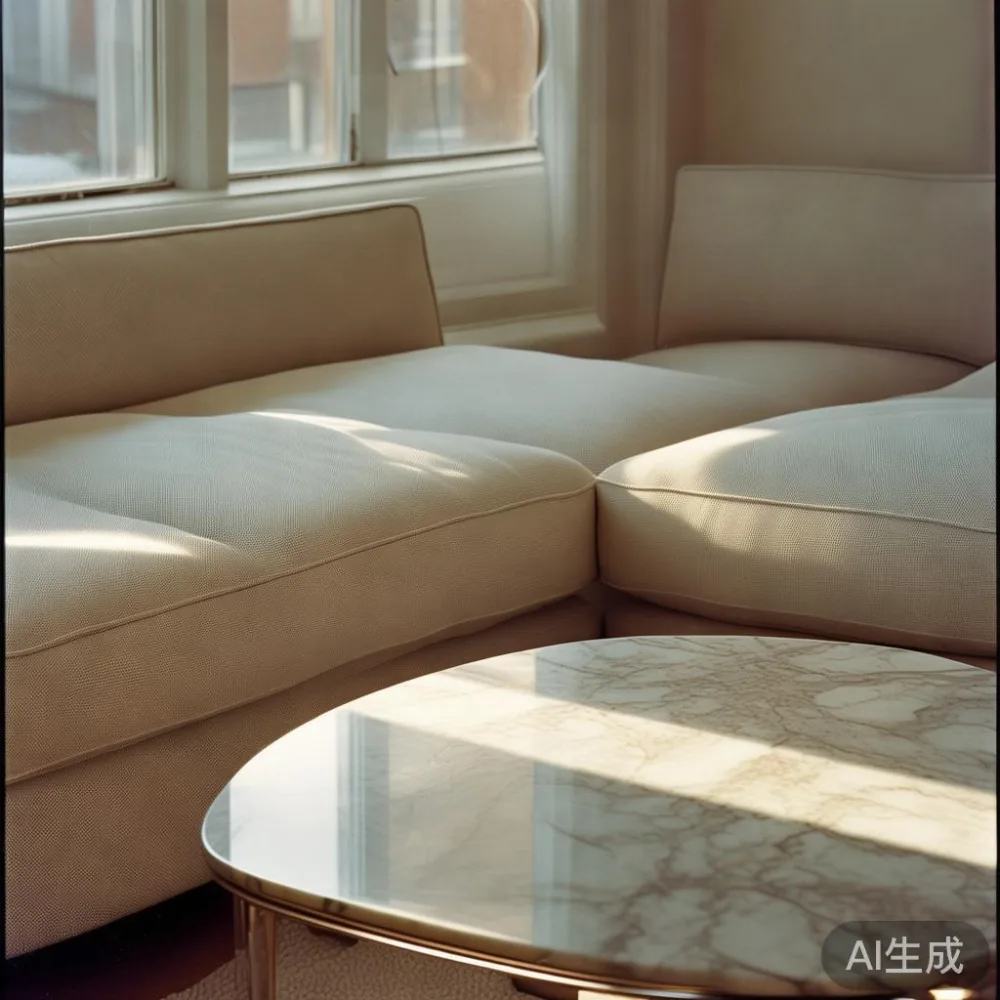
At MIDHILL, we build solid wood sofa frames for long use, and I have watched many “display-room” sofas become difficult to live with once they meet a real corridor. Last month, my colleague and I visited a client in Tampines with a 220 cm sofa. The lift was 90 cm wide, the lift car was 140 cm deep, and the sofa’s packed depth was 98 cm. It could enter the lift diagonally, but the handrail reduced the usable space by 11 cm. We unpacked the legs, removed the cushions, and it worked. A customer arriving with the same sofa in one box would have faced a serious problem.
This guide covers the measurements, clearances, comfort details, and delivery terms worth checking before you commit. The aim is not to discourage a large sofa. It is to make sure your choice remains usable after delivery day.

What dimensions should I check before ordering a sofa?
Start with the sofa’s actual dimensions, including arms, feet, cushions, and the packed carton. A nominal “three-seater” might measure 198 cm wide and 96 cm deep, while its carton measures 184 cm by 74 cm by 48 cm after the feet are removed. Record at least 6 different numbers: width, depth, seat height, arm height, back height, and packaging dimensions.
For a Singapore home, leave practical breathing room rather than filling every centimetre. A sofa 220 cm wide needs a wall at least 246 cm wide if you want 13 cm on each side, and 20 cm on each side is more comfortable for cleaning and curtain access. In many Tampines, Bedok, and Punggol HDB flats, this means choosing a 180–205 cm sofa rather than assuming a 230 cm model will fit.

Check the seat height against the people who will use it. A useful starting point is 40–46 cm from the finished floor to the top of the seat cushion. A 38 cm sofa may suit a tall adult, but it can make standing up difficult for someone with limited knee strength. A 48–51 cm sofa is easier to rise from but can feel too high for shorter users. If your household includes mixed heights, a 43–46 cm seat is a sensible compromise, with firm cushions that do not sink more than 5 cm under normal pressure.
Also measure the front clearance. Leave 60–75 cm between the sofa and a coffee table for walking space, and 90 cm if the table is used heavily. Check the rear clearance for sockets, air-con outlets, and skirting boards. A 7–10 cm gap behind the sofa often prevents the back frame from touching a dusty wall, but the right number depends on your skirting, outlet position, and whether the sofa has a low solid wood sofa back.
Concrete measurements matter because furniture tolerances can vary by 1–2 cm. Confirm the final dimensions with the supplier, request the packaging diagram, and measure the intended room again before payment. A full-size measuring tape is better than a phone app when you are checking corners and low obstructions.
Can the sofa physically reach my HDB flat or condo?
The route is where many purchases fail. For HDB flats, ask the management office or check the lift notice for internal dimensions. Measure the lift car width, depth, and door opening; note the position of the handrail and any ceiling-mounted light. Then measure the corridor, turning area, lobby columns, and the route from the service lobby to your door.
Do not compare only the lift door with the sofa width. A sofa can often pass through a narrow door diagonally, but the depth of the lift car and the diagonal created by the handrail may prevent that manoeuvre. A lift with an internal size of 140 cm by 110 cm may accept a packed sofa no larger than about 130 cm by 80 cm after careful turning, but a real test or supplier delivery survey is more reliable than geometry alone.
For a condo, add the distance from the drop-off point to the lobby, the security or loading-bay rules, and the number of corners. A 1.2 m wide, 1.4 m deep private lift may be more manageable than a public HDB lift, while a narrow fire-escape route may be governed by building rules and should not be used without permission.
Staircases require a different calculation. Measure the stair width, the landing, the ceiling height above the turn, and the angle of each flight. A sofa that can be carried vertically may still hit a handrail. Ask whether the supplier uses a hoisting service, whether balcony or window installation is permitted, and who bears the cost of a failed delivery. In Singapore, 6% GST is applied to most new furniture purchases, so a quoted price should clarify whether it is shown before or after GST.
Is the sofa comfortable even when nobody is watching?
A showroom gives you 5–10 minutes with the cushions. A daily-use sofa needs 30 minutes of testing, including sitting down and standing up several times. Check the seat depth against your height. A 55–60 cm inner seat depth suits many adults, while a 65–70 cm deep seat lets shorter people slide forward and lose lumbar support. A 48–52 cm usable width per seated adult is a practical target, and a 2–3 person sofa may be comfortable for 2 people but crowded for 3.
Press the seat by hand and then sit. Foam that feels impressive under a quick press can bottom out during a long evening. High-resilience foam around 35–42 kg/m³ can offer a good balance of support and recovery, but the comfort also depends on the suspension, cushion thickness, and frame. A solid wood sofa should use a properly joined frame, not a hollow frame whose joints rattle after 6 months.
Back support matters too. A loose cushion that is 15–20 cm thick may look plush but collapse into a soft bag after a year. A fixed or reinforced back with medium-firm foam gives more consistent support. Check the arm height: an arm around 58–65 cm can support the forearm, while an arm above 70 cm may make it harder to stand up. If the sofa is intended for older adults, test the nearest seat to a clear walking route and avoid a soft seat that requires a second attempt to rise from.
Fabric deserves an everyday test. Rub the material with a damp white cloth for 10 seconds, then check for colour transfer. Sit for 15 minutes with a drink nearby. If the weave snags easily, pet hair catches in the weave, or the fabric has a strong chemical smell when the packaging is opened, ask for samples. Request the composition and cleaning code before ordering, rather than discovering after delivery that the covers cannot be professionally cleaned.
What should I ask about construction, warranty, and service?
Ask for the frame material, joint type, suspension method, foam density, cover removability, and warranty exclusions. A supplier should be able to distinguish a solid wood sofa from a solid-wood frame combined with engineered panels, and should explain where each material is used. The same clear explanation should apply across a bed frame, dining table, wardrobe, nightstand, or marble table, because a consistent specification is easier to verify than vague claims about “premium quality.”
At MIDHILL, the structural warranty is 10 years, refinishing is available for the lifetime of the piece, and the company has exported to more than 15 countries since 2008. These terms are useful only if the contract states what is covered. Check whether moving damage, commercial use, exposure to direct sunlight, and unauthorised modification are excluded. Ask how scratches are assessed and how replacement parts are supplied after the warranty period.
For a 6-month or 7-day viewing period, photograph the sofa under daylight and artificial light, inspect corners and seams, and record the condition of the packaging. Keep the delivery note and do not sign “no damage” without checking. A 14-day return window can provide time to assess fit, but the sofa must be unused and returned in its original condition; dust, altered cushions, or removed packaging can affect eligibility.
Delivery terms deserve the same attention as the sofa. Clarify the expected delivery window, the delivery fee, GST, stair-carry charges, and what happens if the building cannot accept the item. Free shipping over US$350 is a separate international threshold and does not mean free delivery to every Singapore address. Ask for a local quotation in SGD and have the final amount, including 6% GST, shown in writing.
Is Japanese sofa worth it for a compact Singapore home?
The question “is Japanese sofa worth it” is common among people furnishing smaller flats, but style should follow use rather than trend. Japanese-inspired seating often uses a lower profile, clean lines, and compact proportions. A floor-level seat at 32–38 cm can look elegant and save space, yet it may be uncomfortable for an older person or anyone with knee limitations. A hybrid Japanese-style sofa with a 42–46 cm seat may suit a HDB home better.
For anyone comparing French sofa vs Japandi sofa, think about the room, not only the silhouette. French light luxury often introduces curved arms, shaped legs, cushions, and a more decorative mood. It can work in a 12–16 m² living room if the sofa is no more than 190–205 cm wide and the surrounding furniture remains restrained. Japandi styling tends toward straight lines, pale timber, neutral textiles, and visual breathing room.
Post-modern light luxury is another useful reference: balanced proportions, some contrast, and clean geometry without excessive ornament. A solid wood sofa with a light oak frame and off-white upholstery can fit that direction. French provincial styling may be softer and more detailed, while an Asian-influenced scheme benefits from fewer objects and more wall space.
If a Japanese sofa has no removable legs, moving it through an 80 cm corridor becomes harder. Check the low clearance beneath the frame: at least 8–10 cm can make the sofa easier to manoeuvre over thresholds, though raising it on small castors may reduce stability. Low sofas also need nearby surfaces within 40–50 cm; a small marble table should not force someone to twist or reach awkwardly from the floor.
How should a solid wood sofa fit with the rest of the room?
Measure the room as a group of distances. In a common HDB living room, a 200 cm sofa should not sit within 15 cm of a side wall if a person needs to pass behind it. A 90 cm TV console plus a 12 cm gap can crowd a 220 cm sofa, so check the full elevation of the room, not the centre line of each item.
Coordinate wood tones rather than insisting on exact matching. A pale oak solid wood sofa can sit beside a slightly darker bed frame if the finishes are within a narrow visual range. The same principle applies to a dining table, wardrobe, and nightstand. Keep one dominant timber tone, one light surface, and one or two controlled accents. A marble table with a warm white base and grey veining can bridge oak and cream upholstery, but its 45–50 cm diameter should suit the sofa’s seat count.
For bedroom planning, “how to style European bed in bedroom” becomes a question of spacing and visual balance. A European-style bed with a 150 cm mattress needs about 170–180 cm of frame width; allow 60–75 cm on at least one side for drawers or bedside access. A 90 cm nightstand is practical for a lamp, charger, and glass, and its top should be within 15–25 cm of the mattress top.
The phrase “MIDHILL French provincial bed” is often used when comparing the curved edges, shaped feet, and pale finishes of French provincial furniture. A French provincial bed can soften a bedroom, provided its carving is restrained and the mattress does not overpower the room. Likewise, “how to style Japandi bed in room” is less about adding a few pale objects and more about controlling the composition: a low-profile bed, clean bedding, 2 side tables, and 1 lamp often work better than many small accessories.
For dining zones, European light luxury for dining room can mean a 160–180 cm table, upholstered chairs with supportive backs, and one pendant centred over the surface. Leave 90 cm around a dining table for chairs and movement, or 75 cm where space is tight but no one needs to pass behind a seated diner. A marble table may need 5–10 cm additional clearance because the base and top overhang should not obstruct chair movement.
What happens on delivery day?
Plan the delivery as a timed operation. Confirm whether the sofa arrives assembled or with detachable legs and cushions. If it is assembled, ask the delivery team to bring it into the intended room, remove all packaging, position it, and check the floor for marks. A minimum order of 2 people is sensible for a sofa above 60 kg, while 3 people may be needed above 85 kg. Check the product weight and any lifting restrictions before booking.
Place the sofa on protective pads if the floor is varnished, and keep it 20–30 cm away from direct afternoon sun if the finish is light. Leave the sofa for 24–48 hours before adding heavy throws or squeezing into its final position, as some upholstered components need time to recover from compression. Open the carton carefully because a loose staple or torn fabric can cause a claim dispute.
Inspect the sofa immediately: seat cushions should sit evenly, the frame should not twist, doors and access panels should align, and all legs should be firmly in place. For a solid wood sofa, look for clean joints and an even finish. Photograph each side, the underside, and the delivery area before the crew leaves. Keep the invoice and delivery note for at least 3 years, especially if the 10-year structural warranty depends on purchase records and serial numbers.
If the piece is not right, contact the supplier within the stated 14-day return period. Explain the issue with photographs and measurements rather than a general complaint. A clear note such as “the sofa is 228 cm wide and the lift opening measures 82 cm” gives the supplier a chance to solve the problem through collection, exchange, or an agreed arrangement.
What is the final pre-purchase checklist?
Before paying, create one page with the sofa dimensions, packaging dimensions, lift and corridor measurements, intended room measurements, seat height, product weight, delivery date, total SGD price, GST treatment, and warranty terms. Have another person check the page against the quotation. This simple review catches many avoidable errors.
Confirm 8 points:
1. It fits: The finished sofa and its carton can pass through the entrance route, with at least 5 cm of working clearance where possible.
2. It can be used: The seat is 40–46 cm high for most adults, the front clearance is 60–75 cm, and 2 people can sit without forcing their bodies sideways.
3. It supports the body: The cushions do not bottom out, the back feels supportive after 15 minutes, and the arm height suits the intended occupants.
4. The materials are identified: The frame, suspension, foam, fabric, finish, and removable parts are described in writing.
5. The delivery is priced clearly: The SGD total includes GST and any stair, lift, assembly, or remote-area charges.
6. The service terms are readable: The 10-year structural warranty, lifetime refinishing option, and 14-day return conditions are understood.
7. The room works as a whole: The solid wood sofa coordinates with any bed frame, dining table, wardrobe, nightstand, or marble table already in the home.
8. The evidence is kept: You have the dimension sheet, material samples, order confirmation, and delivery photographs.
A sofa should still be comfortable after the showroom lights go off. Spend another 10 minutes on the product page, take 12 measurements around the home, and read the delivery terms before placing a large order. If you want a specification for a particular HDB flat or condo, MIDHILL can help you compare layouts and prepare the relevant furniture dimensions before the order is placed. For direct enquiries, midhillco@gmail.com is the contact address.