Marble Table and Beyond: The Real Delivery and Assembly Story When You Buy Solid Wood Furniture Online in Singapore
I watched a neighbour in Tampines wrestle a 240 cm dining table up three flights of stairs last month. The lift in his HDB block measured 1.1 m wide by 1.4 m deep, and the table base came in a single carton that was 1.25 m long. The delivery crew, two men paid S$120 for the job, ended up hoisting the box on its end through the service staircase while my neighbour held the corridor door open with his shoulder. He had ordered the table from a local e-commerce listing two weeks earlier, attracted by a S$1,490 price tag that looked like a steal. The table itself, he later admitted, wobbled within a month. The story is a useful starting point for anyone considering solid wood furniture online, especially heavy pieces such as a marble table, a six-seater dining table, or a king-size bed frame. Online pricing often hides the cost of getting the thing into your home and keeping it there for the next decade.

Why buying a marble table online is a different kind of commitment
A genuine marble table with a solid wood base weighs between 70 kg and 120 kg depending on the slab thickness, and most Singapore pieces ship with a 2 cm to 3 cm marble surface over an oak or ash frame. The carton itself usually exceeds 150 cm in length, which immediately raises two practical questions: will it fit in your HDB or condo lift, and can two delivery agents carry it up without a tail lift truck? In a typical Punggol Build-To-Order flat, the passenger lift internal dimensions run 1.10 m by 1.40 m by 2.30 m tall, and the cargo lift, where available, gives you roughly 1.50 m by 2.20 m by 2.10 m. A long marble table package will not angle into the passenger lift without the carton being stood vertically, which is exactly what my neighbour discovered.
The second commitment is the assembly. A solid wood sofa with a removable chaise, a wardrobe with mirror panels, or a dining table with an extension leaf all arrive flat-packed or partially assembled. Flat-pack reduces carton size but adds 30 to 90 minutes of self-assembly, the kind of job that needs an electric drill, a rubber mallet, and a patient second pair of hands. Pre-assembled is easier on day one but harder to deliver. Knowing which format you are buying, before you pay, is the single most useful piece of information a furniture page can give you.

How do I choose a loveseat for a study?
Measure the wall you plan to place it on first, then subtract 30 cm on each side for breathing room and a floor lamp. A loveseat for a study in a Singapore HDB should sit between 130 cm and 160 cm wide, 75 cm to 85 cm deep, and 80 cm to 90 cm tall at the back, so it clears a standard study desk at 75 cm without crowding the room. Pick a solid wood frame, ash or rubberwood, with a sprung seat and removable cushion covers, and you will have a piece that survives daily reading, napping, and the occasional green leather sectional sofa friend who drops by and wants to pull up a chair. Avoid frames under 18 mm thick, joints that are stapled rather than mortised, and seat foam below 28 kg per cubic metre density.
What does shipping to a Tampines or Bedok HDB actually cost in 2025?
Three realistic price bands exist. A small nightstand or a single-seat accent chair from a regional warehouse typically ships free above S$150, with delivery in 5 to 9 working days. A bed frame, a dining table, or a wardrobe from a Chinese maker exporting directly, the kind of operation MIDHILL runs out of Foshan with a 10-year structural warranty, generally lands at S$0 above a US$350 threshold, converted to roughly S$480, which most credit cards cover in a single order. Delivery runs 14 to 25 working days because the container is consolidated in Shenzhen or Shanghai, sea-freighted to Singapore, customs-cleared at PSA, and last-mile delivered. Below that threshold, expect S$80 to S$180 for a single piece.
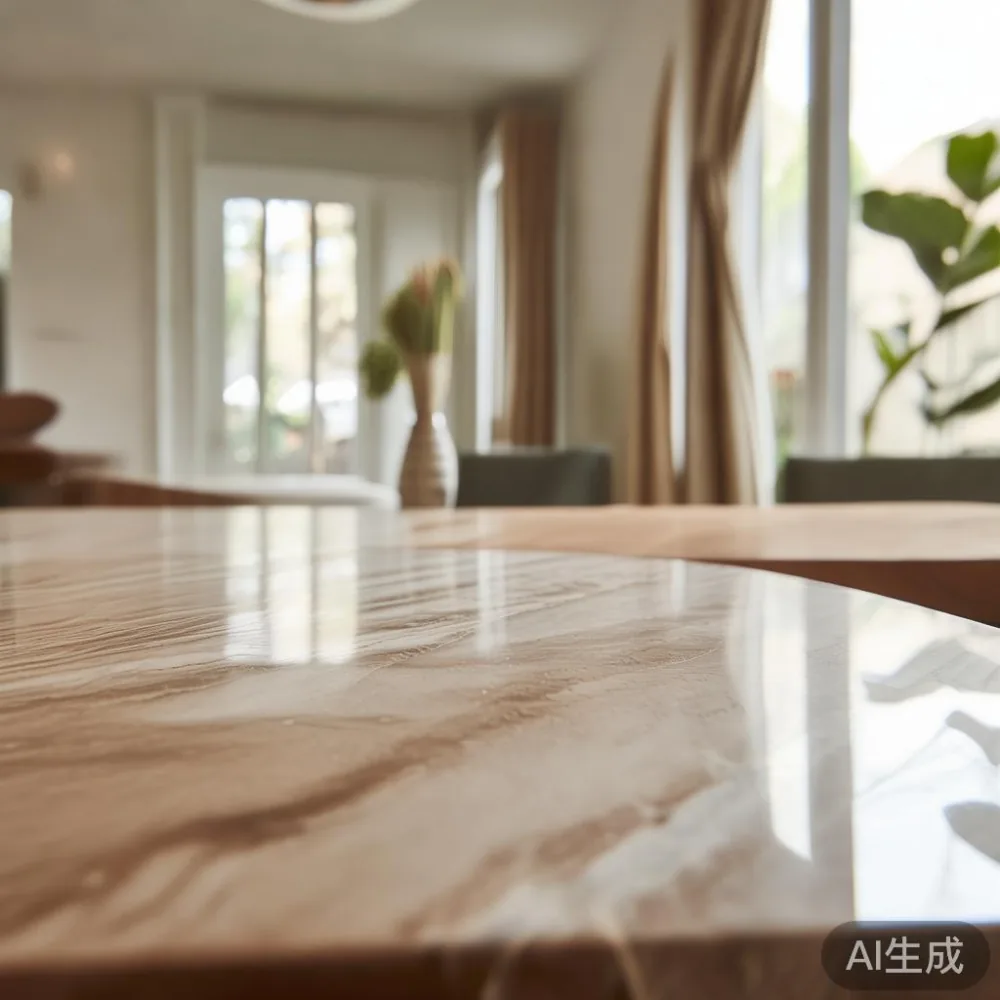
The hidden line item is the lift surcharge. Some logistics partners charge an extra S$30 to S$60 if your block has no cargo lift and the goods have to climb past the second floor. Always confirm this in writing before checkout, because a S$1,500 marble table with a S$50 lift surcharge still feels reasonable, but a S$350 nightstand with the same surcharge feels punitive.
What assembly should you expect on the day of delivery?
For a flat-pack dining table, the crew will normally deliver the carton to your door, carry it inside if the lift is accessible, and leave. Assembly is yours. Budget 45 to 75 minutes for a four-to-six-seater table, 90 to 120 minutes for a wardrobe with two sliding doors, and 20 to 30 minutes for a nightstand or a small shoe cabinet. Tools included in the carton are usually an Allen key and a basic screwdriver. You will want to have ready a cordless drill with a Phillips bit, a rubber mallet, a spirit level, and a soft blanket to lay the panels on so the marble table top or the wardrobe mirror does not scratch on tile.
For pre-assembled pieces, the crew should assemble the item in your home, place it where you want it, remove all packaging, and haul the debris back down. A good operator, the standard MIDHILL has trained into its Singapore delivery partners, sends a two-person team wearing floor protectors, asks you to confirm placement before they start, and gives you a short demo on how to level the legs on uneven HDB flooring. That last point matters more than people realise. HDB floor screed can vary by 1 cm to 2 cm across a single living room, and an unleveled dining table wobbles no matter how good the wood is.
Will the corridor in my condo or HDB block actually fit a 200 cm sofa?
Probably not in one piece. The standard HDB corridor is 1.2 m to 1.5 m wide, and condo common corridors run 1.5 m to 1.8 m. A 200 cm solid wood sofa with a fixed chaise, the kind of piece that anchors a French light luxury living room, will not corner around a 90-degree turn in a 1.2 m corridor. The solution most factories use is to ship the chaise separately and bolt it on site, which adds 20 minutes of assembly but keeps every carton under 1.8 m long. If you see a product page that lists the sofa as "one-piece delivery," measure your corridor turn radius before you order, and ask the seller for the carton dimensions in writing. The same rule applies to any marble table with a single slab top longer than 160 cm.
For older walk-ups in Geylang or Tiong Bahru, the staircase width can drop to 90 cm with a tight U-turn at the landing. Anything wider than 95 cm across will not make it. In those cases, request knock-down delivery, where the legs are removed and reattached in your home. A skilled two-person team can do this in under 30 minutes with a socket wrench.
What does GST and customs actually add to the final bill?
Singapore charges 9% GST on imported goods valued above S$400, declared at the point of customs clearance. Most direct-from-factory exporters register for GST and prepay it into the landed price, so what you see is what you pay. If the seller does not, you will be invoiced separately by the logistics agent before delivery. Watch for two red flags: a price that looks 30% to 40% below the prevailing market rate, which usually means the GST is being under-declared and you assume the risk, and a refusal to share the harmonised system code for the product, which prevents you from verifying the duty treatment.
On a S$1,800 marble table landed in Singapore, the GST alone is S$162. Add a S$60 lift surcharge and a S$40 weekend delivery premium, and you are looking at S$2,062 all-in. That number is the real comparison point, not the headline price. Once you frame every quote this way, including the lifetime refinishing service, the 14-day return window, and the 10-year structural warranty, the difference between a S$1,200 piece with no warranty and a S$2,000 piece that lasts 15 years becomes arithmetic rather than guesswork.
How long should a solid wood piece actually last in Singapore's humidity?
Properly kiln-dried solid wood, oak at 8% to 10% moisture content, ash at 9% to 11%, rubberwood at 10% to 12%, will hold up for 12 to 20 years in a Singapore home if you keep it away from direct afternoon sun and the air-con vent. The two killers are humidity swings, which Singapore moderates but does not eliminate, and water rings from cold glasses on a dining table. A post-modern light luxury dining table with a marble table top and an oak base is actually more forgiving here than an all-wood top, because the marble handles spills easily and the wood is sealed underneath. The piece to watch is a wardrobe with solid wood doors, which can cup if the bedroom runs above 80% relative humidity for weeks during the monsoon season. A dehumidifier set to 60% RH, costing about S$15 a month in electricity, will extend the life of every wooden piece in the room.
What should you photograph and document on delivery day?
Before the crew leaves, photograph the unopened carton on all four sides, the inner foam corners, the marble table slab in its cradle, and the assembly hardware bag. Photograph any visible scuff, dent, or chip on the wood before assembly, because once the piece is built the seller can argue the damage happened in your home. Photograph the levelling process and the final placement against the wall. Email the entire set to yourself within 10 minutes, with the order number in the subject line. If a claim arises in the 14-day return window, or during the longer warranty period for structural issues, this is the evidence that protects you.
Also photograph the lift, the corridor, and any door frame the carton passed through. A good seller uses this to improve packaging for the next customer. A great seller uses it to send a smaller replacement carton at no charge if the original was damaged in transit.
Are returns actually free, and what is realistic?
A 14-day return window is standard for cross-border direct-from-factory furniture, but the fine print usually requires the piece to be unused, in its original packaging, and disassembled. The seller refunds the product cost but withholds the original shipping, typically S$80 to S$220, and the return shipping is yours, another S$80 to S$220 from Singapore back to the consolidator in Shenzhen or Shanghai. Net return cost: S$160 to S$440. For a S$1,500 marble table that is a 10% to 30% penalty, which is why the 14-day rule exists in the first place. Measure twice, order once.
The more useful policies to look for are the lifetime refinishing on solid wood pieces, the option to swap cushions or fabric covers for a nominal fee in years three to five, and the structural warranty on joints, which is where most failures originate. A 10-year structural warranty from a maker that has exported to 15 or more countries since 2008 is a reasonable proxy for the kind of operational maturity that survives the next decade.
What is the single smartest question to ask before checkout?
Ask for the three numbers that determine whether the piece physically fits in your life: carton dimensions in centimetres, total weight in kilograms, and the seat, top, or frame dimensions of the assembled piece. If the seller publishes those on the product page, the rest of the transaction is usually well-organised. If they have to email you back, you have learned something important about the operation. A solid wood sofa, a king-size bed frame, a six-seater dining table, a three-door wardrobe, a two-drawer nightstand, and yes, a marble table, all live or die by those three figures and the service network that stands behind them. Singapore homes are small, lifts are narrow, and humidity is real, so the right question before you pay a single dollar is the one that saves you a S$200 return shipment and a month of regret.