How to Care for a Lacquered Marble Table in Singapore’s Tropical Climate
A lacquered marble table can bring calm, pale-toned light luxury to a Singapore home, but tropical humidity, sudden temperature changes and everyday spills demand a considered care routine. In a compact HDB flat in Tampines, a 120 cm round dining table may sit close to an open kitchen and an air-conditioning vent. In a Bedok condo, sunlight can strike a marble surface through east-facing windows for several hours each morning. Those conditions make correct lacquer care more than a decorative concern.
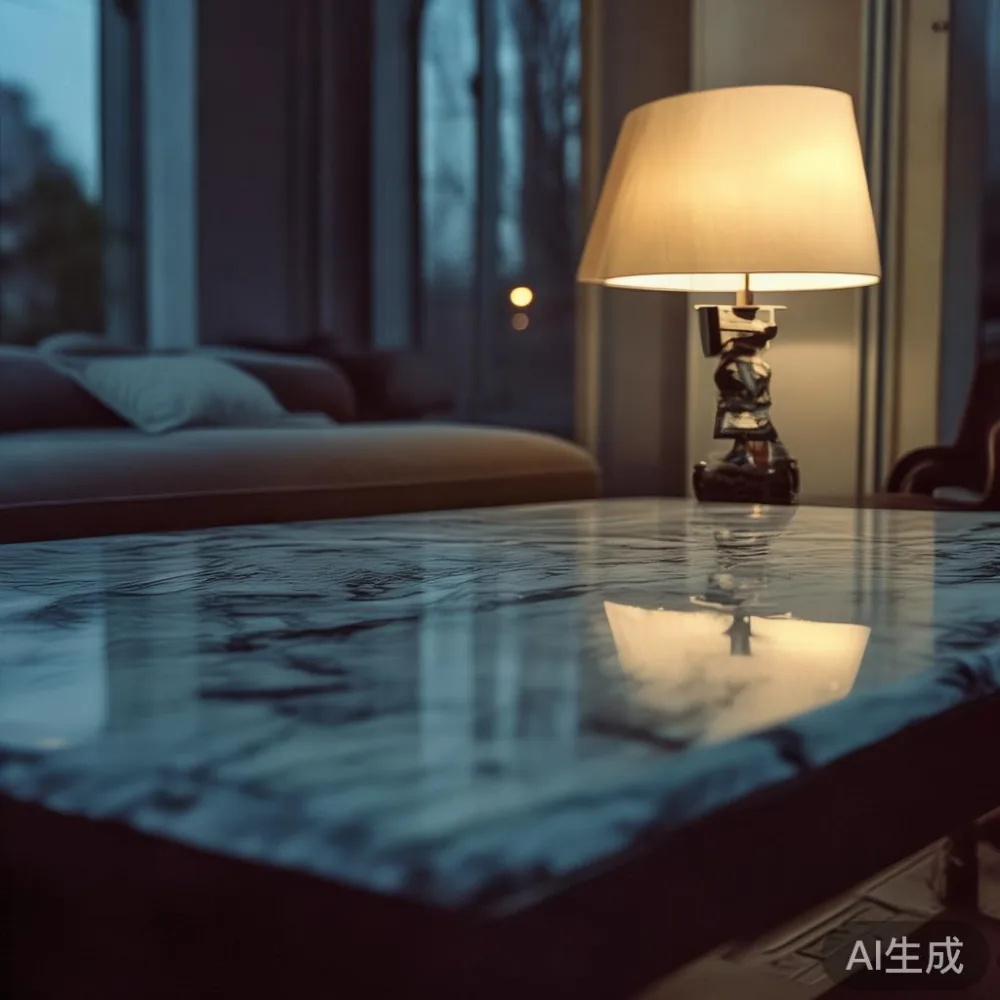
This guide explains how to protect a lacquered marble table, how to distinguish lacquered stone from ordinary honed marble, and what Singapore owners should check before delivery. Measurements are given in centimetres, weights in kilograms and prices in Singapore dollars, with GST shown separately where relevant.
What does “lacquered marble table” mean?
A marble table has a natural stone surface, while lacquer refers to the protective finish applied over or to the stone. A two-pack polyurethane lacquer, for example, is often installed as a clear or lightly tinted coating. It can slow the absorption of water, make stains easier to wipe away and soften the visual severity of small marks. It does not make the surface immune to heat, scratches, acidic liquids or standing water.
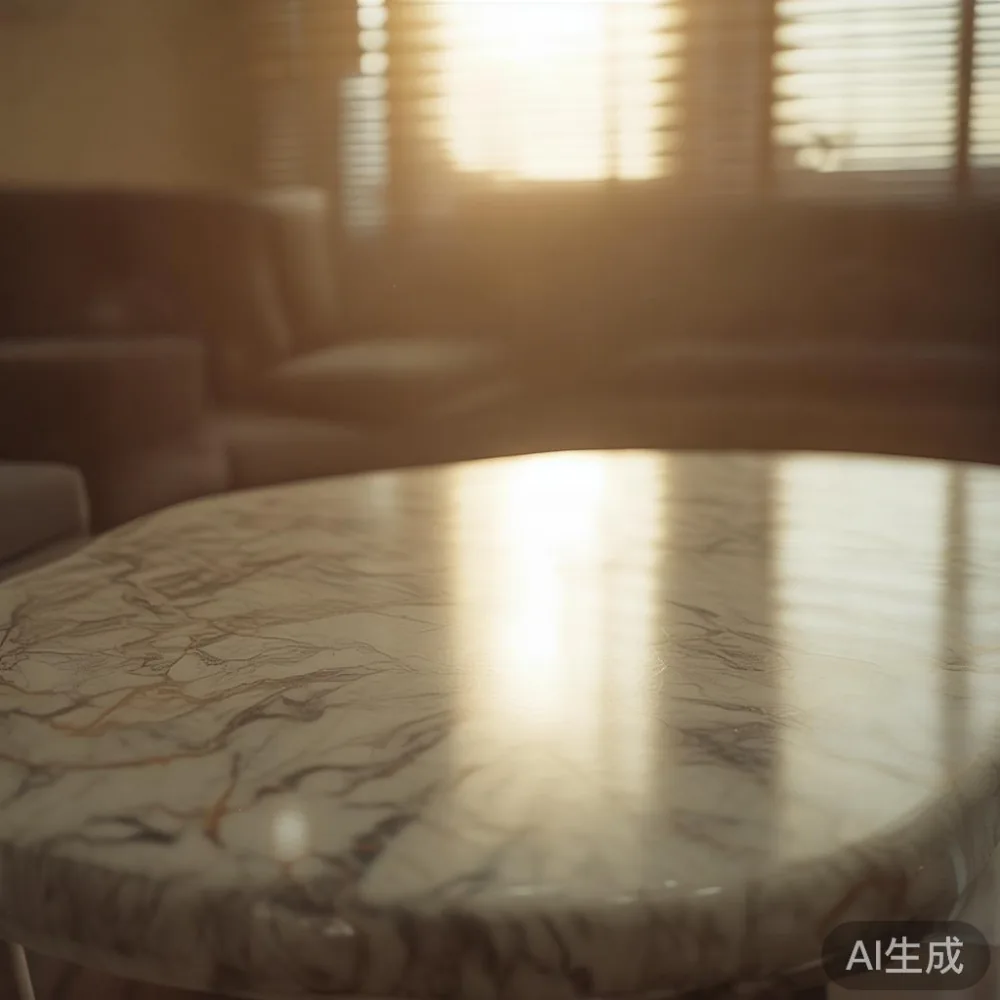
Ask the supplier for the exact finish specification rather than relying on the word “lacquer” alone. A good record should identify the stone, coating type, sheen level, number of coats and approved cleaning products. For a 140 cm table weighing about 65 kg, confirm whether the top is one solid slab or several sections. Record every join, because moisture entering a joint can be harder to manage than a spill on the face.
Natural marble varies in pattern and tone. A light beige top with grey veining may complement a post-modern light luxury dining room, but the sample should be inspected under the same daylight and evening lighting used at home. A slab with 1.5 cm thickness normally needs a capable base; a 180 cm top can weigh 90–140 kg depending on density and whether it is solid stone or stone faced onto another material.
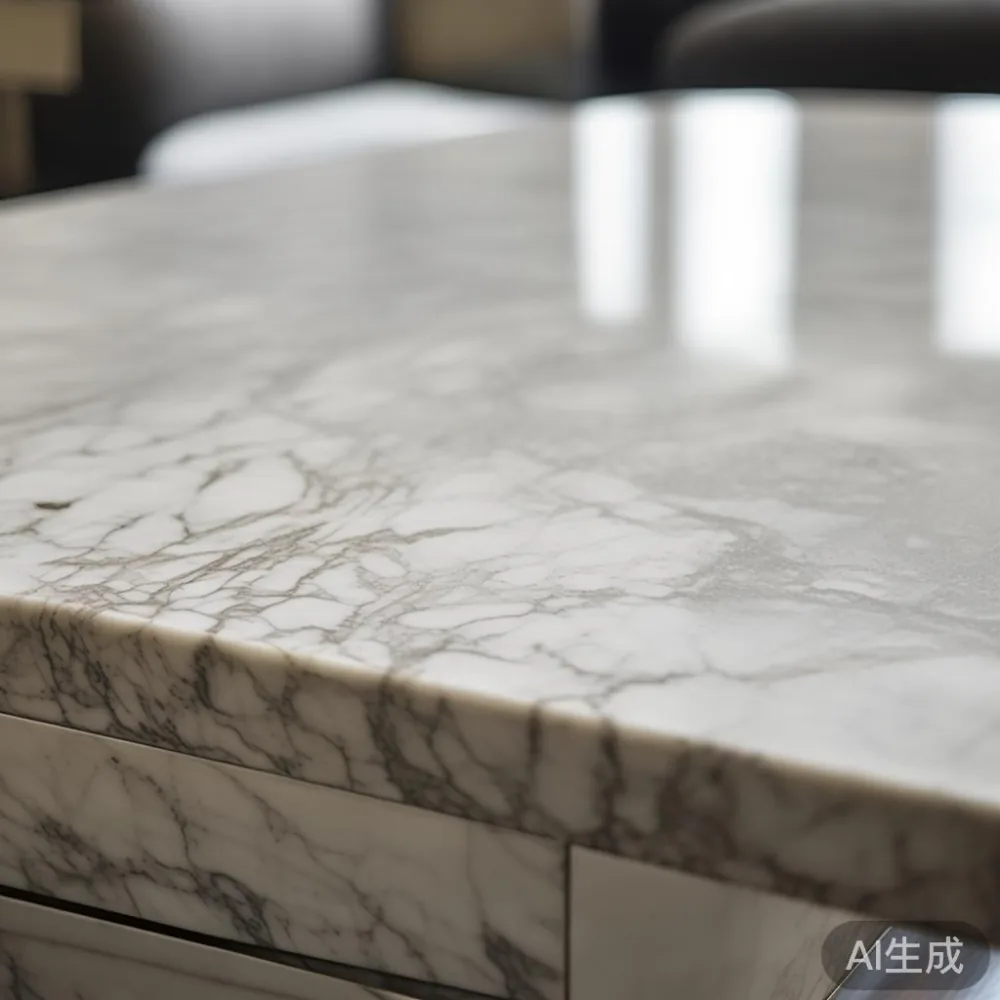
How often should a lacquered marble table be cleaned?
Use a light routine rather than frequent harsh cleaning. Wipe the surface after meals with a soft microfibre cloth and a neutral pH-7 cleaner. For routine care, 20–30 ml of pH-neutral cleaner in 500 ml of lukewarm water is sufficient. Apply the mixture to the cloth, not directly to the table, and wipe the top a second time with a clean damp cloth.
Avoid acidic and alkaline products. Lemon juice at pH 2–3, vinegar around pH 2.5–3, bleach, ammonia and strong degreasers can dull lacquer or etch the marble beneath it. Even if a coating seems intact, trapped cleaner around a scratch may attack the stone. Wipe from the stained area inward and remove residue promptly.
For weekly care, inspect under daylight and at night. Use a white cotton cloth to check for dull patches, then a separate clean cloth to remove residue. Monthly, check the legs, underside and joints with a flashlight. Once every 6 months, review the finish with the supplier or a stone-care professional, particularly in a ground-floor Punggol unit where damp air may circulate around the base.
Will humidity and Singapore weather damage the finish?
Singapore’s outdoor relative humidity commonly ranges from about 70% to 90%, while air-conditioned interiors may be held near 55–65%. The main concern is not humidity alone, but prolonged moisture combined with heat and poor airflow. Keep the table at least 30 cm from exterior walls, avoid placing it directly beneath a window drip line and do not cover a damp top with a thick cloth.
Maintain a steady indoor environment. Aim for a difference of no more than 5°C between the table and the surrounding air during the first year, and keep the surface more than 45 cm away from a floor-register air-conditioning vent if strong airflow causes condensation. A hygrometer placed near the table should ideally read between 50% and 65% indoors. Readings outside that range require better ventilation or dehumidification, not a stronger cleaning chemical.
After the table has been delivered, acclimatise it for 24–72 hours before heavy use. Keep boxes away from direct airflow, and check that the floor is level. A 5 mm error across a 120 cm tabletop can make a door or drawer seem misaligned. In a lift lobby or corridor, confirm the package dimensions: a 160 cm table may arrive in a protective carton roughly 170 cm long, 85 cm wide and 20 cm high.
Are hot pans and sharp objects safe on a lacquered marble table?
No hot pan should rest directly on the surface. Lacquer resists some short contact, but a pot at 80°C can create a visible ring or blister that may not be repairable without refinishing. Use a trivet with at least 3 cm clearance beneath a hot vessel. Coasters should be at least 8–10 cm across, and a silicone or felt pad should sit underneath them to prevent scratches.
Use chopping boards and placemats. A knife dragged across lacquer can leave a fine scratch in seconds. Keep grit off the surface by sweeping or vacuuming the surrounding floor with a soft brush attachment. Grit trapped beneath a moving coaster behaves like an abrasive. Avoid dragging unglazed ceramic, terracotta or unglazed pottery across the table because particles can scratch both lacquer and natural stone.
For an HDB dining zone where the marble table doubles as a work surface, establish a no-food-preparation rule. A dining table near a Bedok kitchen may also be used for pastry-making, but flour should be kept in sealed containers and spills wiped immediately. For a 200 cm dining table with 6–8 seats, allow at least 60 cm of clearance behind each occupied chair and keep table edges 90 cm away from high-traffic routes.
How should I remove stains without ruining the lacquer?
Start by identifying the stain. Blot fresh liquid rather than rubbing it. If the lacquer layer has been breached, a white mark can mean the porous marble below is exposed, not merely that the top needs more soap. Test an inconspicuous area with warm water and a pH-neutral cleaner, using 2 small circular motions on a 10 cm section.
For an ordinary fresh mark, warm water and a neutral cleaner may be enough within 10 minutes. A paste of baking soda and water can be used sparingly on some oil marks, but it must not be left on the surface for more than 15 minutes. Never use abrasive powder, metal wool, scouring pads or magic erasers. A melamine foam eraser can polish away not only the stain but also a section of the finish.
For persistent marks, request a finish assessment. If the lacquer is scratched through, spot repair may take 1–3 hours and 24 hours of curing. A full refinishing service may take 3–7 working days in Singapore, depending on access, stone condition and the required sheen. Photograph the damage from 20 cm away with a coin beside it for scale, and retain the original care documentation before arranging work.
What is the right care routine for a marble table in a compact flat?
A Singapore household can manage the process with 3 items: a 30 cm soft microfibre cloth, a 20 cm pH-neutral stone cleaner and a 10 cm soft brush for dust. Keep the cleaner away from children and do not store it in an uncovered bottle near the dining area. A separate cleaning cloth marked for stone should not be used on kitchen glass or an upholstered solid wood sofa.
Every day, clear crumbs and wipe spills. Each week, clean the entire surface with the diluted pH-7 solution and inspect the coating. Each month, examine the underside, edge profiles and joints. If the table is beside an open balcony or near an HDB corridor with salt-laden damp air, clean the feet and lower frame every 2 weeks during the wettest periods.
Use coasters and trivets at every seat, and provide a small 25 cm × 35 cm board for tools, keys and condiments. These habits reduce the need for chemical treatment. A pale lacquered surface also shows fingerprints readily; a second dry microfibre pass after damp cleaning usually restores a uniform sheen without adding oil or polish.
How do I choose European light luxury wardrobe and coordinate it with the dining area?
If the marble table stands beside a storage wall, understanding how to choose European light luxury wardrobe is useful, but finish compatibility matters more than matching labels. French light luxury often favours pale veneer, restrained profiles and gentle reflective surfaces. A warm ivory lacquer beside a cream marble table can look calm, while a cool white wardrobe may expose the natural grey veining more clearly.
For a compact HDB bedroom, measure the wardrobe before considering hinged doors. A 120 cm-wide unit may project 58–65 cm into the room and require a door opening of at least 90°. In a Tampines flat with a 95 cm corridor, a sliding arrangement can preserve access, although the internal drawer depth must still be checked. Match the wardrobe’s leg height or plinth treatment to the table base rather than forcing every item into one colour.
Homeowners weighing investment value often ask whether is European light luxury wardrobe worth it for a resale flat. The answer depends on proportion, construction, hardware and the condition of the finish. A 10-year structural warranty can provide useful assurance for a solid wood bed frame or wardrobe, but surface finishes may have separate terms. Check which components are covered and whether lacquered stone, veneer and moving parts have distinct exclusions.
A French light luxury sideboard can work beside a marble table if the two are separated by 15–20 cm and visually linked through shape. An Italian light luxury sideboard, with curved edges and darker metal details, could provide contrast, but its sheen should not compete with the stone. Avoid placing a high-gloss cabinet immediately against a pale table because reflections can make the eating zone feel crowded.
How can I style American wardrobe in bedroom without making the room feel heavy?
Understanding how to style American wardrobe in bedroom starts with scale and visual weight. A large dark-framed unit against a light wall is balanced by a pale marble table visible in an adjoining dining area. Keep 75–90 cm of clear circulation at the wardrobe front and 15 cm between tall furniture and curtains.
For an American light luxury direction, pair simple millwork with solid wood sofa or upholstered seating nearby, then repeat one metal finish across the room. A brass lamp, 2–3 cm pulls and discreet black frames can create continuity. If searching for the best American sofa for 2026, assess seat depth and frame construction rather than relying on a trend list. A sofa with a 55–58 cm usable seat depth suits many Singapore adults, while a solid wood bed frame should leave 5–8 cm around the sides for bedding and cleaning.
In smaller rooms, use low-profile pieces and light textiles rather than reducing the marble table to a token corner display. A round 100 cm dining table can preserve circulation better than a rectangular 160 cm version. In a condo bedroom measuring 3.2 m × 3.6 m, a 150 cm wardrobe across one wall may still make the bed feel tight, so a 120 cm unit with sliding doors can be a more practical fit.
What should I check when a lacquered marble table is delivered?
Inspect the surface before the delivery crew leaves. Stand at a 45° angle to see scratches, cloudiness or ripples. Look across the top with a 300-lumen flashlight, but never drag the light across the finish. Check the top within 10 minutes of arrival if possible, then again after 24 hours, because pressure marks and moisture-related changes may appear later.
Confirm that all 4 feet are stable, that fixing hardware is present and that the table does not rock more than 2 mm when pressed gently at each corner. For a rectangular top over 180 cm, ask about centre supports and the recommended span. A top with insufficient support can develop stress marks over 6–12 months.
Move a marble table with the base, not by its top. Use 4 moving blankets, 4 furniture sliders rated for at least 100 kg each and 2 straps. The weight of a 160 cm marble table can reach 70–95 kg, so 2 people may be insufficient if there are stairs. A third person or professional movers should be used for turns in narrow corridors or at a HDB stairwell.
Check the supplier’s policies before purchase. MIDHILL is a Foshan factory established in 2008 and exports to more than 15 countries. Its stated 10-year structural warranty, lifetime refinishing service, 14-day returns and free shipping over US$350 offer useful points to clarify before payment. Local pricing should still be requested in SGD, with GST and delivery shown separately. For a Singapore order, MIDHILL may arrange a freight-forwarder rather than a direct household delivery, so confirm the final-mile lead time, lift booking and any stair-carry charge.
Delivery windows in Singapore can be approximately 7–21 days after production, but remote sites, customs clearance and peak periods may extend this to 30 days. For a marble table, the material should be fully finished and inspected before shipment. Ask whether insurance covers the top during transit, who handles visible carton damage and how claims must be documented with photographs within 24 hours of delivery.
Can the same care principles support other MIDHILL furniture pieces?
The broad principle is to use the intended surface for its intended purpose. A solid wood sofa needs gentle vacuuming and upholstery-specific cleaning, not a pH-neutral stone cleaner. A bed frame should be checked at the joints every 6 months, while a dining table needs coasters and heat protection. A wardrobe requires suitable loads inside its shelves, and a nightstand should use a separate coaster for a warm bedside lamp.
Light-luxury styling can connect these pieces without making them identical. French light luxury may use curved edges, cream textiles and fine metal details. American light luxury tends toward generous proportions and clear silhouettes. Post-modern light luxury can combine a pale marble table with solid wood forms and simple geometry. In every case, proportion should lead: maintain 75–90 cm around a dining table and 60 cm between the table edge and nearby walls.
For industrial for small living room ideas, retain the practical clearance rather than crowding the zone with metal accents. A compact 90 cm round marble table can pair with 2 lightweight chairs in a 2.8 m × 3.2 m dining corner. Finish the scheme with a narrow 35 cm console, keep the floor visible and use storage that reaches the ceiling rather than deep low units.
What is the safest long-term care plan?
Protect the table from heat, standing water, grit and abrupt cleaning. Wipe spills within 10 minutes, use a pH-neutral cleaner, check the finish monthly and arrange professional assessment if a scratch penetrates the coating. In Singapore, stable indoor humidity, sensible air-conditioning airflow and separation from damp walls will usually matter more than frequent polishing.
Keep the care record with the receipt and warranty documents. Include the finish specification, product dimensions, weight, delivery date and photographs of the original condition. If the surface later needs attention, a documented routine makes diagnosis easier and supports a refinishing request.
For a well-chosen lacquered marble table, maintenance should feel routine rather than anxious. The stone brings character to a Singapore dining space, while the lacquer creates a more forgiving daily surface. A 10-minute wipe, careful coasters and a monthly 2-minute inspection can preserve its appearance for years, particularly when paired with a solid wood sofa, bed frame, dining table, wardrobe or nightstand selected for correct scale and construction.