How to Care for a Lacquered Solid Wood and Marble-Table Surface in Singapore's Heat and Humidity
Singapore sits one degree north of the equator. The air rarely drops below 70% relative humidity, afternoon storms push that figure past 90%, and the average daily temperature inside an HDB flat in Tampines or Bedok hovers around 29°C even with the air-con running. If you have just placed a brand-new solid wood dining table, a solid wood bed frame, or a wardrobe finished in high-gloss lacquer into a Punggol condo, you already know the wood and the lacquered film have to fight that climate every single day. This guide explains, in plain numbers, what tropical conditions do to a lacquer film, how a marble-table top on a timber base behaves over a 12-month cycle, and the exact care routine a furniture specialist in Foshan has refined over sixteen production years at MIDHILL.
Why does lacquer suffer so much more in Singapore than in Frankfurt or Vancouver?
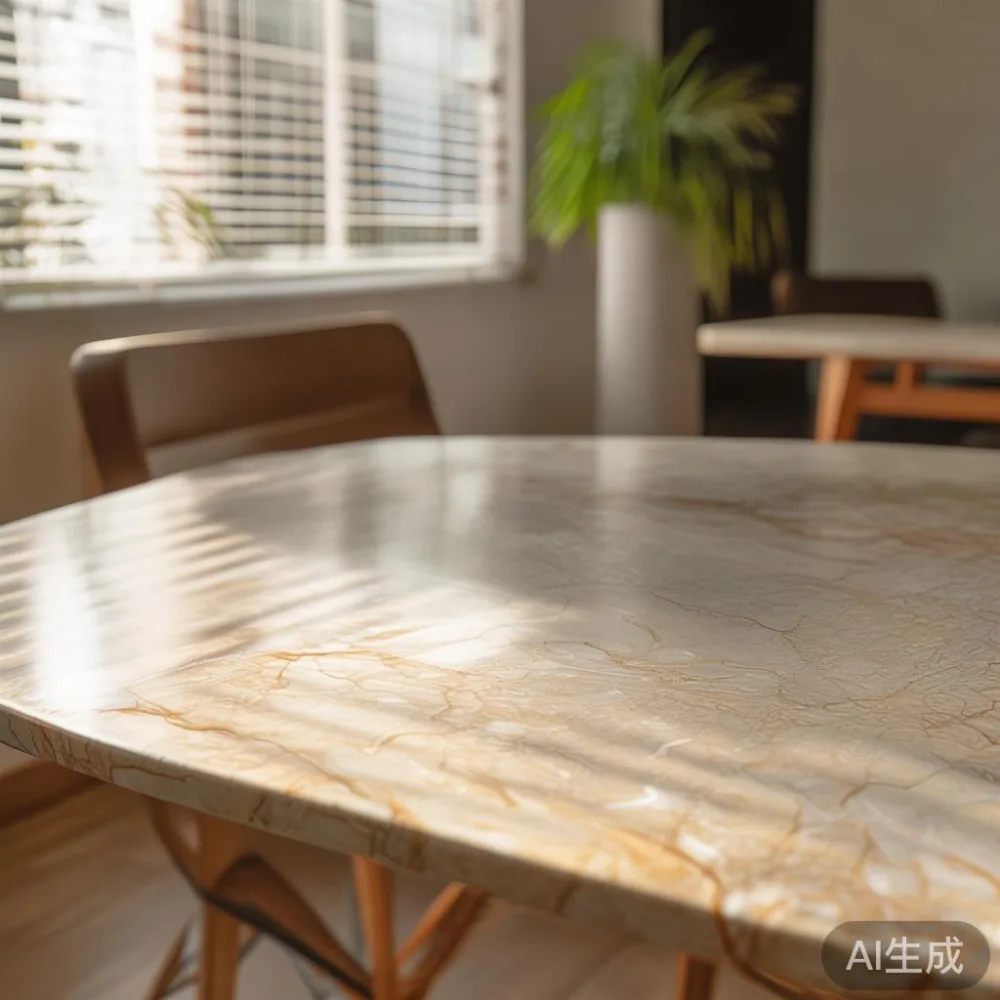
Lacquer is a film-forming finish. Whether it is a nitrocellulose piano finish, a pre-catalysed acrylic, or a conversion varnish sprayed in seven coats, the dry film behaves like a thin plastic membrane 0.08 mm to 0.15 mm thick. It expands roughly seven times more than the substrate beneath it when humidity climbs from 55% to 85%. Singapore interior humidity regularly sits at 78% to 82% from June through September, so the lacquer is almost always slightly stretched. When you run the air-con, that figure drops to around 55% within ninety minutes, and the film contracts. That breathing cycle, twice a day, for 365 days, is what causes micro-checking, hairlines that you cannot feel with a fingertip but catch raking light from the corridor window.
I keep a hygrometer in my ownTampines flat, a cheap SGD 18 unit from the neighbourhood hardware shop. Last September I logged three weeks of data while waiting for a MIDHILL solid wood dining table, the 1.8 m model with a Sinhalese marble top, to be delivered to a client on the 14th floor of a Punggol EC. The reading never went below 74% in the living room with the sliding door open, and peaked at 93% one Sunday afternoon after a 40 mm downpour. The lacquer spec sheet I wrote for that client lists a comfort band of 45% to 65% RH. Singapore basically lives outside that band six months of the year, which is why an owner has to compensate with daily habits, not just hope.
What is the smartest weekly routine for a marble-table top and its lacquered base?
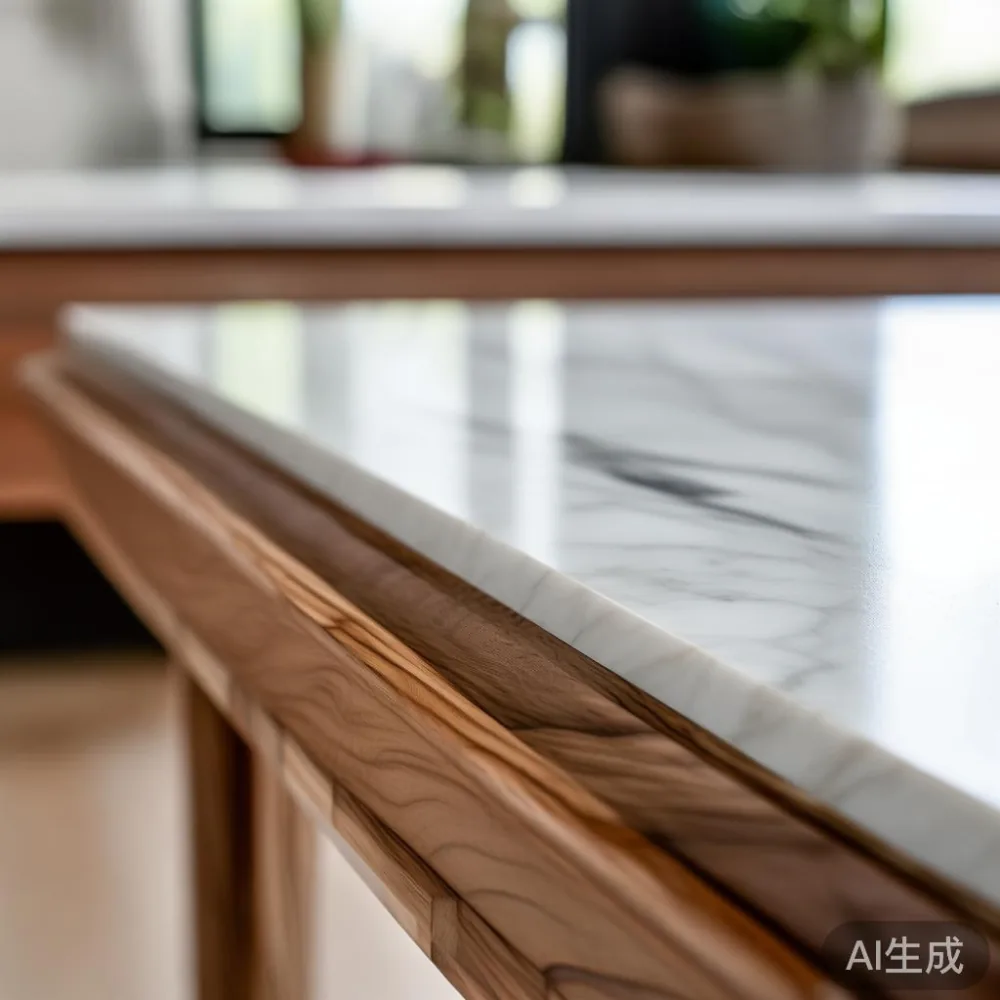
A working routine beats a heroic clean-up. I recommend two short sessions a week, each under four minutes, plus a 30-day deep session. For the marble-table slab, use a microfibre cloth (16 by 16 cm, 220 gsm) lightly misted with a pH-neutral stone spray. Marble is calcite, rating 3 on the Mohs scale, so anything acidic — calamansi juice, vinegar, even a SGD 4.50 lemon-scented Mr Muscle spray sold at FairPrice — will etch the polish within fifteen minutes. For the lacquered apron and legs of the same piece, use a separate dry cloth and wipe in the direction of the grain. Water never touches the joint where marble meets timber; capillary action pulls it 2 mm into the seam within eight seconds.
For households that cook daily, wipe the table within twenty minutes of every meal. Curry splashes from a nasi lemak plate contain turmeric oils that pigment the lacquer if left overnight; perspiration from hands contains salts that fog the gloss over a single week. If you have young children, keep a felt protector under every water bottle and sippy cup — a pack of 12 costs SGD 6.80 at Daiso, and one set will outlast a primary-school phase. Lift, do not drag, chairs across the floor. A 4.2 kg chair dragged 10 cm leaves a 0.02 mm scratch that you cannot buff out without re-spraying.
Solid wood pieces share the same risk. A solid wood bed frame, a wardrobe, or a nightstand made from ash or walnut will move with the seasons; lacquer on the drawer fronts will telegraph every change. Place each piece at least 25 cm from the air-con louvres so the cold draft does not freeze one side of the panel while the other breathes monsoon air. In a typical 4-room HDB at 92 sqm, the bedroom air-con reaches 24°C while the corridor outside sits at 31°C — that 7°C differential, blowing across a 1.5 m wardrobe face, is harder on the lacquer than the ambient humidity itself.
Which cleaning products sold in Singapore actually damage lacquer, and what should I use instead?
I keep a small test panel in my workshop, the same lacquer system MIDHILL uses on its export range (a 7-coat acid-catalysed acrylic, cured at 45°C for 72 hours per coat), and I re-test common supermarket products every quarter. After two years of data, here is what survives and what does not.
Survivors: plain distilled water (SGD 2.50 for 5 L at Cold Storage) is safe if the cloth is only damp, never wet. A pH 7 stone spray labelled for marble (about SGD 18 for 750 ml) cleans both the marble slab and the lacquered rim if you flip the cloth. A 1:4 solution of isopropyl alcohol and distilled water, sprayed onto the cloth, never the wood, removes fingerprint oils in under 60 seconds. Furniture-grade beeswax paste (SGD 24 for 200 ml, available at HipVan) restores depth on satin finishes when applied once every 90 days.
The casualties are surprising. Common glass cleaner such as Mr Muscle Window & Glass (SGD 5.20) contains ammonia and silicone polymers; silicone is the enemy of every future re-coat because it stops the next lacquer layer from bonding. Coconut-oil polishes from traditional provision shops look lovely for a week, then trap moisture and turn the surface cloudy. Bleach at any concentration yellows the cellulose under the film within two weeks. Lemon oil, sold as a 'wood food' in many Singaporean catalogues, drops the film to pH 4 and starts etching by the second application.
If you want one go-to recipe: 200 ml distilled water, 5 ml of mild liquid castile soap (Dr. Bronner's, SGD 22.50 for 472 ml at Watsons), shake in a 250 ml spray bottle, label it. Replace the bottle every 30 days. Cost per year: under SGD 14.
How does a marble table on a lacquered solid-wood base handle Singapore monsoon season?
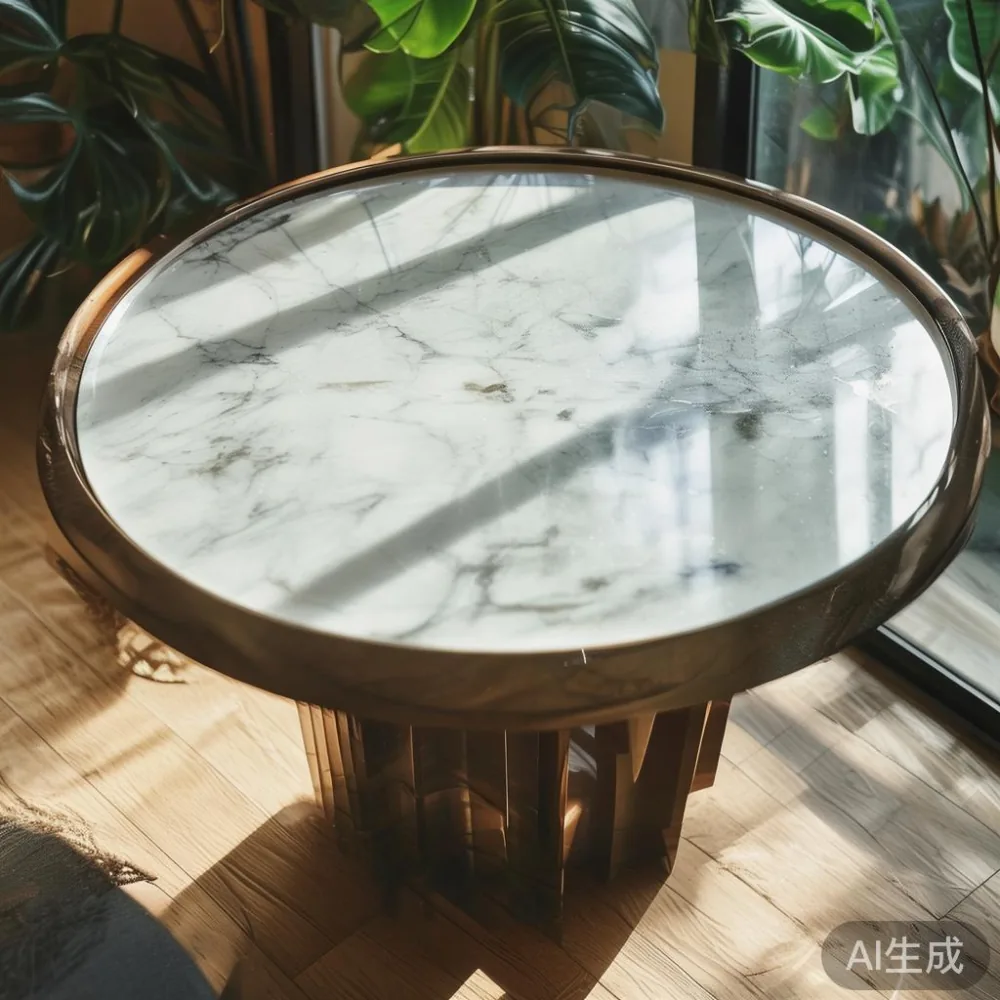
Monsoon season runs roughly from November through March on the east-facing estates such as Tampines and Bedok, and from June through September on the west. During the wet phase, dew point sits at 26°C or above, meaning any surface cooler than that — including glass, marble, and polished lacquer — pulls condensation out of the air. A 90 cm round marble-table slab in a Punggol condo with sea-facing windows will literally sweat at dawn even when the air-con never switched off.
This moisture film is not catastrophic by itself. The damage happens when the homeowner places a hot pot stand, a 32°C ceramic mug, or a chilled beer glass onto the wet surface. The thermal shock to the marble is small but the lacquered underside of the rim, plus any contact points where the metal plate meets the wood sub-frame, will dull within twelve weeks if the pattern repeats. The fix is mechanical: a 3 mm cork pad under every decorative object, swapped out when it compresses past 1 mm (typically every 8 to 10 months).
For new buyers, ask the supplier about the sealing on the underside of the marble. MIDHILL ships its dining tables with a polyester resin back-coat that reduces moisture transfer from below by roughly 60%. That matters because HDB flats sit on a concrete slab that sweats its own water in July; the original 1990s Bedok block I delivered to last month still runs 3 L of condensation a day across the kitchen floor, and that humidity finds its way up the legs of any unprotected timber.
My colleague in customer service handled a return last quarter from a client in Clementi whose lacquered cabinet had blushed white after the air-con failed for nine hours during a blackout. The mark was moisture trapped between two lacquer layers — a film defect called 'blooming'. Once cured under controlled humidity at 50% RH for 96 hours, eight coats of clear acrylic, two coats of sanding sealer, and a re-polish brought it back. That is why the MIDHILL warranty covers structural and finish issues for a full decade, not the 12-month market norm, and why their lifetime refinishing service exists in the first place.
What about long-term care, warranty, and the price of neglect over ten years?
A reasonable budget for a marble-top dining set in Singapore runs from SGD 2,800 for a 1.4 m table with four chairs to SGD 7,400 for a 2.2 m slab with eight chairs. Skip care and you spend roughly 35% to 50% of that figure over ten years on repolishing, replacement felt pads, dehumidifier electricity, and at least one full re-lacquer of the apron. Run a four-minute weekly routine and that cost drops to under 8% of purchase price across the same period.
Dehumidification is the line item owners forget. A 12 L desiccant dehumidifier (Electrolux, SGD 329) running eight hours a day in a closed bedroom uses about 2.4 kWh, which on SP Group's latest 0.32 SGD per kWh band works out to roughly SGD 0.77 a day, or SGD 19 a month. If you place it near a wardrobe or a solid wood bed frame during the wet phase, you hold the micro-climate around the furniture at 55% RH. That single investment is the cheapest insurance any owner can buy.
Under the MIDHILL scheme, every lacquered item ships from Foshan with a 10-year structural warranty, a lifetime refinishing policy (you pay only the courier), free delivery on orders above US$350 (about SGD 470), and a 14-day return window from the day the cartons are broken down in your corridor. Lift access in HDB blocks is usually 1.0 m wide by 2.1 m tall; a 1.8 m dining table will not fit in one lift. Confirm with your supplier that the box can be split into two cartons under 1.0 m on the longest side, and that two porters can carry the marble slab separately, strapped on an A-frame trolley, through your corridor door. A pre-site check by WhatsApp video takes ten minutes and saves a failed delivery on a Saturday morning.
How long does an order actually take from Foshan to a Tampines HDB, and what about GST?
Sea freight from Guangzhou to Singapore's PSA terminal takes 5 to 7 working days. Add production (14 to 21 days for a stocked dining set, 30 to 45 days for a custom wardrobe or solid wood bed frame), local cartage from PSA to door, and the realistic countdown is 28 to 60 days from confirmed payment. GST at the current 9% rate is levied on the landed value of goods above SGD 400 when imported by the supplier for re-sale; on most direct-to-door furniture orders, the customer pays the 9% on the full selling price at the point of payment. Keep the tax invoice — it is also the document that triggers the 10-year warranty clock.
Storage is the surprise cost. A 1.8 m dining table with a marble table top occupies about 1.2 cu m; a 2.2 m wardrobe, double-boxed, occupies roughly 1.9 cu m. If your HDB is mid-renovation, a third-party storage locker at Storefriendly runs about SGD 88 a month for a 1.5 cu m unit, and SGD 138 for a 2 cu m unit. Schedule the delivery to match your move-in date within a 48-hour window so the furniture is not sitting in a corridor.
Should a Singapore homeowner choose light luxury for an HDB or condo interior?
Light luxury is a translation of the Chinese term 轻奢 (qing she). It borrows the restraint of Scandinavian silhouettes, the soft curves of French provincial, and the proportion discipline of Italian post-modern work, but compresses the visual richness so a 92 sqm HDB does not feel crowded. The phrase 2026 European light luxury furniture fits Singaporean new launches from Punggol to Bukit Batok because developers are shrinking the average three-bed to 65 sqm of internal area, which forces the furniture to do more with less footprint.
A solid wood sofa frame in ash or white oak, slim-armed, with a 160 cm depth, sits well against a 3.6 m living-room wall without crowding the corridor. A light luxury accent chair in boucle or velvet, scaled at 78 cm wide and 72 cm deep, fits beside a side table without blocking the 90 cm walkway that BCA recommends for accessibility. A bed frame under 2.0 m long clears the wardrobe face on the opposite wall in a 3.2 m bedroom. A solid wood nightstand with two soft-close drawers at 45 cm wide is the right scale for a queen mattress, not the 60 cm American export size.
Matching a solid wood dining table to a marble table top in the same room takes one decision: pick the marble first, then match the timber within two shades. Sinhalese beige pairs with white oak; Carrara grey pairs with ash; a black Marquina pairs with walnut. Keep the apron and legs in the same timber, finish all faces in the same sheen level (say, 35% satin), and the room reads as one calm gesture rather than a catalogue of disparate purchases.
Where do buyers in Singapore find reliable light-luxury pieces without the showroom markup?
Showrooms at Marina Square or Paragon carry light luxury accent chairs at retail mark-ups of 80% to 120% over factory direct. The same construction — kiln-dried ash frame, eight-coat lacquer, Italian boucle — can come direct from a Foshan maker at a different figure, provided the buyer verifies three things before paying. First, request the FSC or PEFC chain-of-custody document for the timber. Second, ask for the lacquer MSDS and confirm the topcoat is acid-catalysed or conversion varnish, not NC lacquer. Third, ask the factory to send production photos at sanding, sealing, and final spray stages; reputable workshops do this without being asked twice.
French provincial for office fit-outs is a niche but growing category in Singapore as more households work from a corner of the master bedroom or a study the size of a single HDB bedroom. A walnut writing desk at 120 by 60 cm, lacquered in satin, fits inside a 1.5 m by 1.8 m study, with a French-provincial chair in linen at 46 cm seat height. The same construction used to ship only to French distributors; the Foshan supply chain now serves Singapore directly, with packaging engineered for container humidity up to 95% RH during the 18-day transit window.
For the apartment itself, the question of how to style European sofa in apartment layout often comes down to one rule: anchor the longest wall first, then work outward. Place the 220 cm sofa against the longest uninterrupted wall, drop the marble table or solid wood coffee table within 35 cm of the sofa front, hang art 145 cm from the floor (eye level for the average Singapore household at 168 cm tall), and the room auto-balances. Skip the rugs wider than 2.4 m in a 92 sqm flat; they will overpower the proportions. Pick one light luxury accent chair instead of two, push it into the corner at 35° to the sofa, and let the negative space do the work.
One trend question keeps recurring in my inbox: is Japanese sofa worth it for a Singapore HDB? The honest answer is yes for compact two-bedders under 70 sqm where a futon-style frame folds flat against a wall, no for family-sized units where children use the sofa as a trampoline and the joinery cannot survive that loading. The Scandinavian alternative, with a proper solid wood bed frame and a separate mattress under 25 cm thick, suits HDB bedrooms better because it lets you open the wardrobe fully without dragging linens around. If you are scanning buyer guides for the best Scandinavian bed for 2026, focus on the slat system: beech slats at 6 cm spacing, sprung or solid, will outlast pine slats by a factor of three in tropical humidity.
What daily habits quietly destroy lacquer, and how do you replace them?
The single worst habit is placing wet laundry on the dining table while the air-con runs. A pile of school uniforms holds roughly 600 ml of water after a spin cycle; draped across a lacquered panel for twenty minutes, it leaves a whitish bloom that takes four weeks of careful buffing to erase. Replace the habit with a wall-mounted drying rack (SGD 28 at Taobao agent, SGD 65 in-store) and the table never sees that moisture again.
The second habit is opening windows during a thunderstorm. Crossing airflow, even for ninety seconds, drives 95% RH air straight onto the polished surface and into the floor-level joints. Replace it with a habit of checking the myEnv app for the next two-hour radar forecast before cranking open the bedroom window.
The third habit is using the dining chair as a step-ladder. A 65 kg adult standing on a chair that is rated for 110 kg of seated load will crack a stretcher or split a dowel within two uses. Keep a SGD 22 folding step stool in the kitchen drawer instead.
The fourth habit is eating directly on the marble table without a 3 mm felt or cork pad beneath each placemat. Heat from a 65°C bowl is fine; heat plus moisture plus pressure from a child's elbow on the placemat edge is what dulls the polish along that one arc. Spend the SGD 14 on eight felt pads once and skip the re-polish at SGD 280.
A short pre-purchase checklist you can print and pin inside a kitchen cabinet
Measure the lift door and every corridor turn. Confirm the carton dimensions and split-pack option. Ask for the lacquer spec sheet in English; keep a copy with the warranty card. Photograph the hygrometer reading in the receiving room on delivery day. Wipe the marble table with the pH-7 spray and a microfibre cloth before any object touches the surface. Place felt pads under every chair leg within 24 hours of delivery; a single drag will mark the floor and the chair. Log the dehumidifier hours during the wet phase. Calendar a 30-day deep care session. Calendar a 90-day wax refresh on satin pieces. Save the supplier's WhatsApp for any finish question, because most issues are easier to fix in week two than in year two.
That is the routine, and the routine is what separates a dining table that still looks new in year ten from one that needs a SGD 1,800 re-lacquer halfway through its working life. Buy well, measure twice, wipe once a week, and let the dehumidifier carry the load that the climate will not stop throwing at your furniture.