How Southeast Asian Humidity Affects Solid Wood Furniture in Singapore
Singapore’s tropical climate can change a piece of solid wood furniture faster than many buyers expect. Humidity levels above 70% may encourage timber to swell, develop a sticky surface, and show uneven colour as it absorbs atmospheric moisture. Air-conditioned HDB flats and condos are usually more stable, but the transition from a cool corridor to a warm living room still exposes furniture to repeated changes of around 8–12% relative humidity.
At MIDHILL, we make solid wood furniture for practical Southeast Asian homes rather than treating climate control as a secondary concern. Our 10-year structural warranty reflects the construction, while correct sizing, material selection and a sensible care routine determine how each piece ages.
This guide explains how humidity affects wood, why marble behaves differently, and what Singapore homeowners should check before delivery. It also considers narrow HDB lifts, common corridor dimensions, local GST and the care required for a marble table beside a solid wood dining table.
What does 70% humidity do to solid wood furniture?
Wood is hygroscopic: it takes in moisture when the air is humid and releases it when the air becomes dry. A well-finished solid wood dining table may gain roughly 1–3 mm across its width during severe seasonal variation, while a solid wood bed frame can shift by 1–2 mm along its length. Small movements are normal, but repeated swelling and shrinking can loosen joints, open minor gaps and create stress around screw positions.
Singapore’s monthly readings commonly sit between 65% and 85% relative humidity, with higher figures during wet periods and at night. A daytime reading of 70% is not automatically damaging. More important are rapid changes, prolonged dampness, water contact and poor ventilation. An HDB unit with a stable air conditioner may hold indoor humidity between 50% and 60%, whereas a balcony or an unconditioned room can remain above 80% for many hours.
Acacia, teak, oak and other solid wood choices each respond differently. Dense hardwoods generally move less than softer species, yet the finish matters just as much. A good factory coating slows moisture exchange without making timber completely waterproof. Resin, oil and wax finishes offer different levels of sheen and maintenance, so buyers should compare care requirements rather than assume every finish behaves the same.
Look for solid timber panels, sound joinery and even gaps of no more than about 2–3 mm where movement is expected. Avoid furniture pushed directly against a cold exterior wall, near a bathroom or beneath a leaking window. Leave at least 5 cm from exterior walls where possible, especially in Tampines, Bedok and Punggol homes where units may have large glazed openings.
How should Singapore homeowners control humidity around furniture?
A practical indoor target is 50–60% relative humidity, with readings below 65% for most occupied periods. A small digital hygrometer placed near the dining area or bedroom is more useful than a general weather-app figure because it measures the room where the furniture actually stands. Set it beside the table, not directly against an air-conditioning vent.
For an HDB living room, run the air conditioner during particularly humid periods and use a dehumidifier when the bedroom stays above 65%. A unit rated at 12–20 litres per day is suitable for many Singapore bedrooms, although actual extraction depends on room size, seals and doors. Cross-ventilation helps, yet it should not introduce rain or direct damp airflow onto timber.
Wipe spills promptly rather than waiting. Use a soft, slightly damp cloth and dry the surface within 5 minutes. Avoid steam cleaners, silicone-based polish and aerosol products that leave a sticky film. Under a dining table, felt pads should be at least 3 mm thick and should not collect water. For a bedroom, position a solid wood wardrobe and bed frame away from air-conditioning outlets that swing continuously across them.
Cloth humidity has an indirect effect. Curtains and bedding can release moisture into poorly ventilated rooms, so laundry should dry outside the bedroom whenever possible. After air-conditioning stops overnight, leave a 10–15 cm gap between nearby furniture where circulation is tight. In a compact HDB flat, this space also reduces trapped dampness.
Why do marble tables react differently from wood?
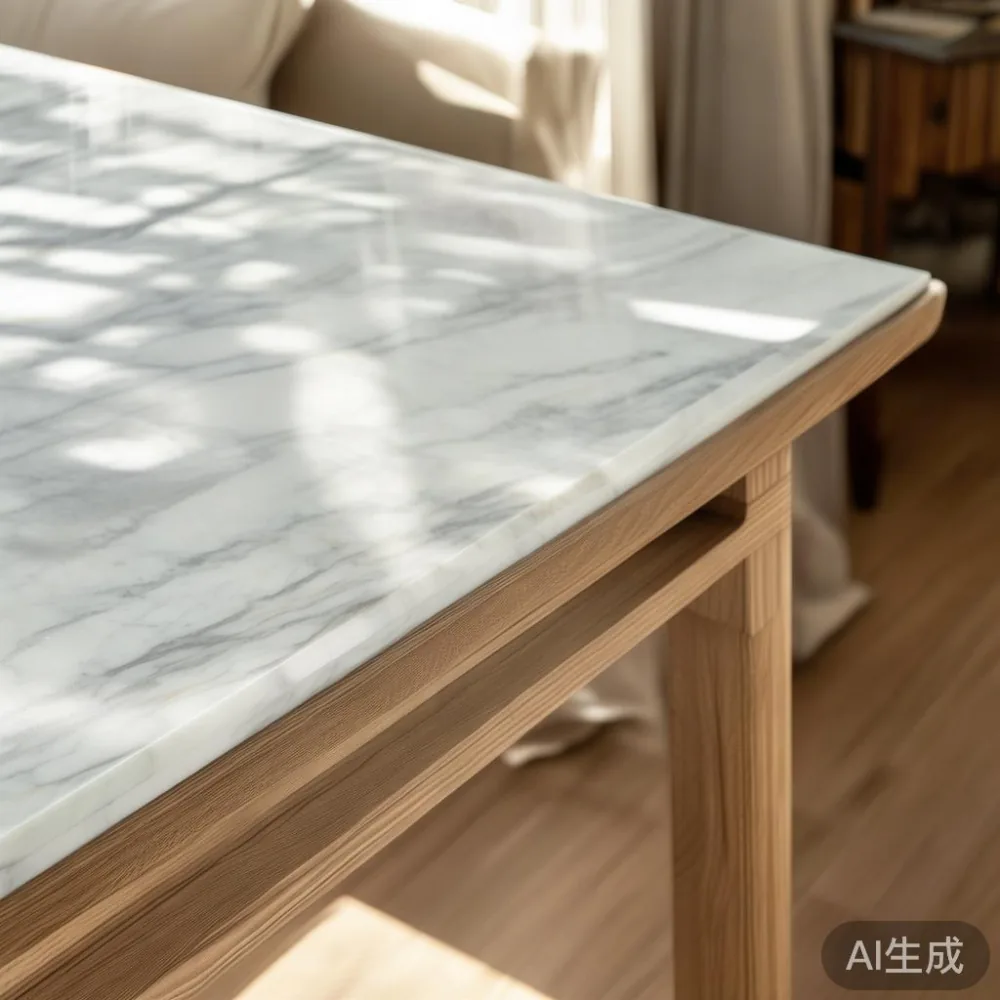
A marble table does not absorb water in the same way as timber, but humidity still matters because of the material’s structure and installation. Marble is porous, and its calcium-based composition can react with acidic liquids. Water rings may remain, while lemon juice, wine and household cleaners can etch the polished face.
Humidity can also influence the stone, adhesives and supporting structure. A marble table with a metal or engineered-stone base may expand differently from its supports, while a fully stone base carries considerable weight. Common coffee and side tables weigh around 25–45 kg; larger dining tables can weigh 80–150 kg. Those figures make measurement and handling as important as moisture protection.
For a Singapore condo, ask whether the marble table has a sealed underside, drainage path and protective treatment suited to interior use. A quality fabricator may recommend a 20–30 mm stone top for a compact dining setting and 30 mm for a larger table, although structural design governs the final choice. Provide at least 90 cm of clearance around a six-seat dining table, or 75 cm in a constrained HDB dining area where chairs can be moved.
Do not place a hot vessel directly on marble. Use a trivet with at least 2 cm of clearance beneath a hot pan, and allow approximately 5 minutes before setting a room-temperature object on a surface that has warmed in sunlight. Wipe acidic spills within 2 minutes. For routine care, use pH-neutral soap, a clean microfiber cloth and water applied to the cloth rather than the stone.
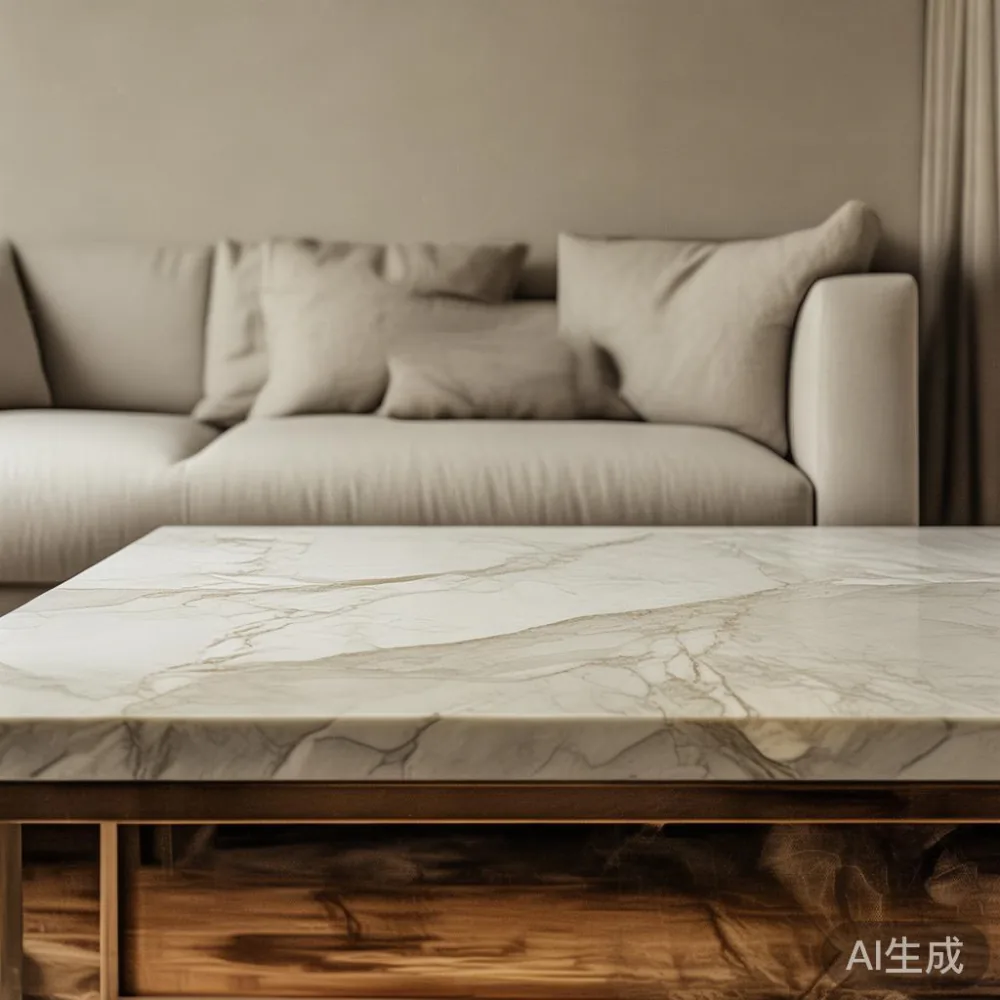
A MIDHILL coffee table with a marble top should be checked against the floor for level differences. In some older HDB flats, thresholds are 15–25 mm high, so a table with adjustable feet may sit more securely than one relying on fixed pads. Marble also needs expansion planning. Allow about 3–5 mm around stone sections where installation conditions permit, and avoid trapping the edge in a rigid frame.
Can a solid wood sofa fit through a typical HDB lift and corridor?
A solid wood sofa may look compact in a showroom yet become difficult to move into a high-rise block. Measure the complete route before ordering: the parking bay lift opening, lift car, corridor turns, fire door and the apartment door. A common HDB lift car measures about 107 cm deep by 139 cm wide at the entrance, but internal dimensions and door configurations differ by block. The usable door opening may be only 80–90 cm.
For a straight corridor of 110–140 cm, a sofa under 85 cm deep is easier to manage. A corner or L-shaped solid wood sofa may need to be partially dismantled, and upholstery cannot be removed from a fixed frame without specialist work. A modular design with detachable arms or legs can make the difference between a 20-minute delivery and a failed installation appointment.
My colleague visited a Tampines HDB flat last month to assess a delivery route. The lift was advertised as 110 cm wide, yet the usable diagonal at the doorway was only about 138 cm. A rigid sofa frame measured 168 cm long, so it could not enter upright or sideways. A similar model with removable legs and two shorter sections passed without removing the upholstery. That visit reinforced why every MIDHILL solid wood sofa should be checked against actual access dimensions before dispatch.
Protection also matters. Wrap corners with 5–10 cm foam, secure loose parts and use a moving blanket rather than thin plastic alone. The delivery team should record the route, confirm elevator booking and check the floor for scratches. For furniture over 70 kg, two or more trained handlers are appropriate.
How do you choose bedroom furniture for a humid climate?
For a bedroom, begin with stability rather than style alone. A solid wood bed frame should sit level on all 4–6 support points, and the headboard fixings should allow minor timber movement. Check that drawers have clearances of roughly 3–6 mm and that wardrobe doors can accommodate seasonal shifts without binding.
The phrase Modern light luxury for bedroom appears naturally when discussing restrained profiles, warm natural finishes and storage that reduces visual clutter. It should guide proportion and atmosphere, not override climate needs. A pale oak effect may show dust and moisture marks more readily than a darker, textured finish in a humid room.
Modern light luxury for bedroom layouts work particularly well in Punggol and Bedok where storage must be integrated. A 150 cm bed requires about 60 cm on each side for drawers and circulation, while a 135 cm bed can suit a narrower room. A nightstand top should sit within easy reach but away from an open window. For wardrobes, allow roughly 5 cm above the unit where ventilation is needed, and do not store damp clothing against untreated timber.
Door and drawer movement should be tested over a 24-hour period under normal room conditions. If a drawer jams every morning, inspect the floor level and furniture contact points before tightening hinges. Air-conditioning helps keep the bedroom stable, but direct cold air can dry wood unevenly. Set the room temperature near 24–26°C where practical and redirect the louvre away from the bed frame.
How should shoppers compare light-luxury furniture for small Singapore rooms?
Light luxury should feel composed rather than crowded. French light luxury often draws on pale woods, curved edges, upholstered seating and gentle contrast. American light luxury commonly uses broader profiles, deep cushions and substantial solid wood frames. Post-modern light luxury may pair clean geometry with one expressive material, such as a marble table beside a plain oak dining table.
For compact rooms, customers searching for Minimalist for small living room layouts should measure the sofa, coffee table and circulation route before choosing dimensions. Keep about 30–45 cm between a sofa and coffee table, and 60–75 cm from the coffee table to a television wall. These figures improve movement without making the room feel sparse.
Buyers comparing an American sofa vs Italian light luxury sofa should compare frame construction, cushion recovery, arm depth and actual access measurements, not only appearance. A deep American-style seat may project beyond a narrow corridor, while an Italian-style silhouette with slim arms can preserve visual space. If you are learning how to choose Japanese sofa, check whether the low profile uses removable covers and whether the frame can be carried through the lift without dismantling.
Italian light luxury for small living room schemes benefit from 120–140 cm seating, slim legs and a round or oval table where circulation is restricted. Italian light luxury accent chair silhouettes can work as a reading chair beside a window, provided the fabric is treated for moisture and the chair is not repeatedly exposed to wet air.
Finish samples should be viewed in the home for at least 24 hours. Compare them under daylight and evening light, and keep a cloth swatch near the intended location. If a wood sample absorbs condensation, ask for a finish with stronger moisture resistance. The showroom’s controlled humidity of about 50–60% may make a sample look different during Singapore’s wetter weeks.
What does delivery, GST and after-sales care look like in Singapore?
Singapore orders are shown with GST included, so the checkout total should state the taxable furniture price, 9% GST and any delivery charge clearly. For a marble table or solid wood dining table, confirm whether the quoted price includes carrying to the apartment, unpacking and placement. It should also identify lift or corridor surcharges rather than revealing them after the vehicle arrives.
Typical production and delivery windows are 30–60 days, depending on material, finish and current workload. Stocked pieces may be available within 7–14 days. Marble requires additional templating or fabrication for custom sizes, which can add 10–20 days. HDB parking and lift bookings should be arranged before the delivery appointment.
MIDHILL offers free shipping for orders above US$350, with international dispatch following the quoted production schedule. Local Singapore delivery terms should be confirmed on the order. Standard furniture pieces such as a dining table, wardrobe, nightstand and bed frame should arrive with assembly instructions and hardware labelled. The 14-day returns policy gives customers time to assess scale, finish and access, subject to the stated condition requirements.
The 10-year structural warranty covers qualifying structural defects, not ordinary changes caused by high humidity, direct water exposure or incorrect placement. MIDHILL also provides lifetime refinishing, which can restore a compatible solid wood piece when its construction remains sound. Customers should keep the order record, product photographs and care history because they make finish assessment more accurate.
What care routine protects wood and marble through Singapore’s wet season?
A simple routine prevents most avoidable problems. Check humidity once a day for 7 days, then twice weekly during humid periods. Keep readings below about 65% where feasible, and separate furniture from exterior walls by at least 5 cm. Do not place it against a window that remains open during heavy rain, and avoid damp mats beneath dining tables or bedroom storage.
Clean solid wood with a soft dry cloth every 1–2 weeks. If more thorough cleaning is needed, lightly dampen the cloth, wipe once and dry immediately. Re-oil furniture only according to the finish instructions, often every 12–24 months for oiled surfaces. Do not apply furniture polish over an existing wax or oil layer without checking compatibility.
For a marble table, use coasters and trivets, clean spills promptly and avoid vinegar, lemon, ammonia and bleach. Keep the stone away from wet flowers and plant pots; a saucer may still permit moisture to travel beneath it. Inspect support joints every 6 months and level uneven legs before repeated stress changes the frame.
Humidity does not make solid wood furniture unusable in Singapore. It does demand stable indoor conditions, careful placement and regular observation. A room maintained near 50–60% relative humidity, with furniture selected for its actual access route and material-specific care, is far better prepared for long-term use.