Singapore's Veneer vs. Solid Wood Furniture Cost Analysis
Last month I visited a 4-room HDB flat in Tampines where the owner was staring at a swollen dining table that had absorbed three years of afternoon monsoon humidity. The top was a 0.6 mm teak-look veneer over particleboard, and the corner near the window had bubbled to the point where a coffee cup would rock. She paid S$890 for it in 2021. Her neighbour, in the same block, paid S$2,150 for a solid wood dining table from a Foshan workshop that exports to 15+ countries. Five years on, the neighbour's table has three hairline scratches and a patina that looks richer every year. This is the kind of story I hear weekly, and it is the reason I wanted to run real numbers on what a dining table, bed frame, wardrobe, and nightstand actually cost you across 60 months in Singapore.
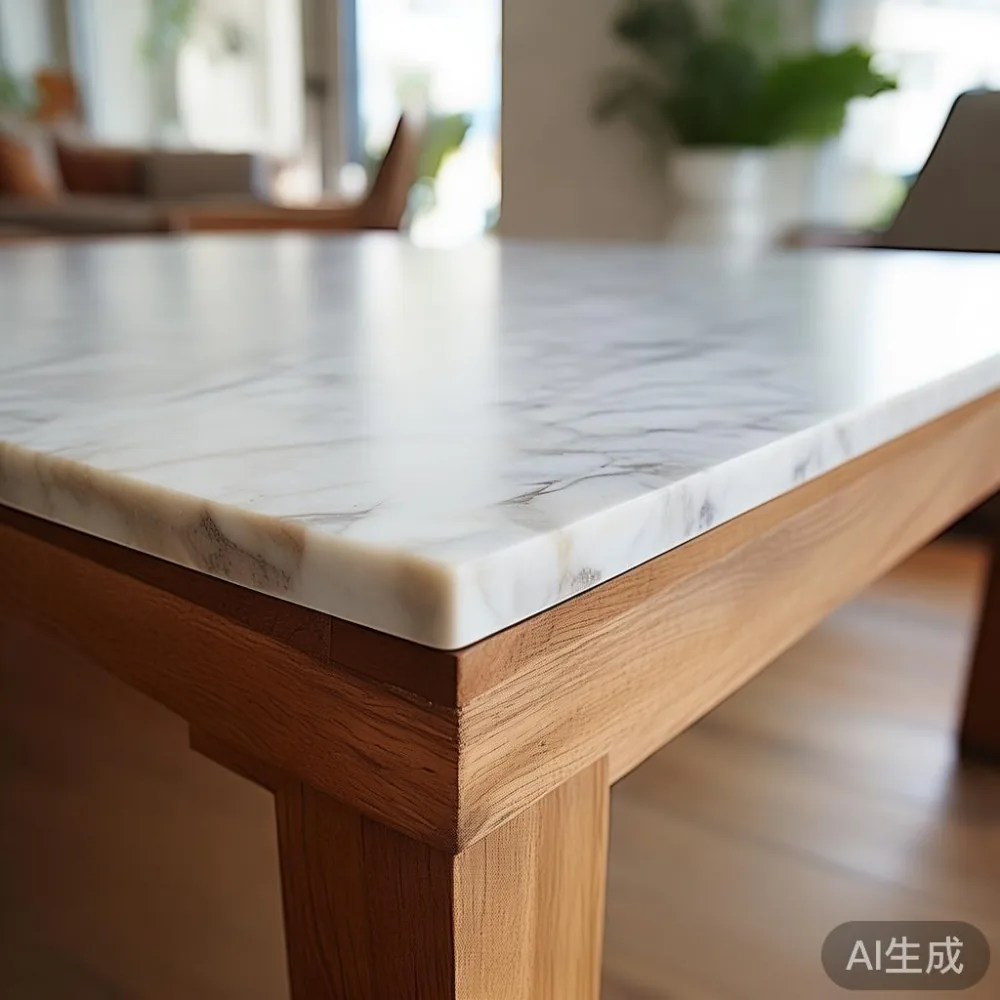
This article is built around one question: when the warranty expires and the moisture has done its worst, which furniture category leaves more money in your pocket? I will work in Singapore dollars, include 9% GST in every line, and reference local constraints that anyone who has tried to move a wardrobe into a Punggol Build-To-Order flat will recognise: lift doors that are roughly 2.1 m tall, corridors that turn 90 degrees at the lift lobby, and staircases that punish anything over 240 cm in length. I will also touch on how the same maths applies to a marble table, since a stone-topped dining table is the piece most Singaporean buyers agonise over for the longest.
What does a veneer dining table really cost over 5 years in Singapore?
Let us anchor on a realistic 1.6 m dining table that seats six, the kind that fits a 4-room HDB without blocking the corridor to the kitchen. A mid-market veneer version from a local chain typically retails for S$790 to S$1,100 before GST. Add 9% GST and the receipt sits at S$861 to S$1,199. Delivery within Tampines, Bedok, or Punggol usually runs S$60 to S$90 because the table is light enough (around 22 kg) for one man and a trolley.
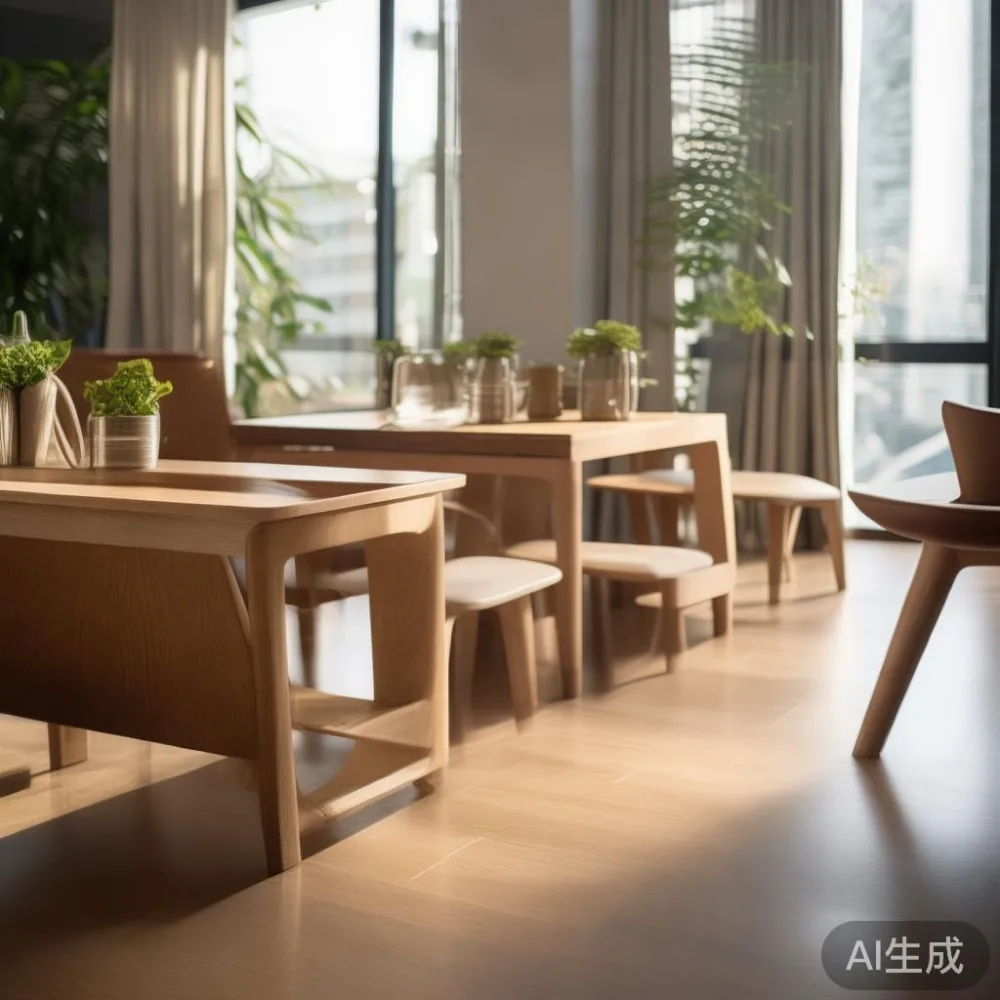
Year 1 looks fine. By Year 2, the UV streaming through a west-facing window starts to yellow the printed grain. By Year 3, edges near the aircon vent begin to chip because the underlying MDF is 12 mm and the surface layer is a printed paper, not real wood. By Year 4, most owners I speak to are searching for a replacement. The five-year landed cost, assuming you replace the table once at Year 3 and dispose of the first one (HDB bulky waste removal is S$25 to S$45 per trip), lands at roughly:
- First table: S$1,100 (with GST)
- Delivery: S$80
- Disposal at Year 3: S$35
- Replacement table: S$1,050
- Second delivery: S$80
- Second disposal at Year 6 (extrapolated): S$35
That is about S$2,380 over 5 years for a piece that never really felt like a centrepiece.
What does a solid wood dining table cost over the same 5 years?
A 1.6 m solid wood dining table in oak, ash, or walnut from a workshop with a 10-year structural warranty sits in a different bracket. In Singapore, expect S$1,950 to S$2,650 before GST, so S$2,126 to S$2,889 after 9% GST. Delivery is heavier (the table weighs 48 to 62 kg depending on the species) and runs S$120 to S$180 because two men are needed and the lift booking in some condos adds S$20. MIDHILL furniture, which exports from Foshan and offers lifetime refinishing, prices a comparable 1.6 m oak dining table around S$2,280 inclusive of GST, with free shipping above S$350 and a 14-day return window.
Now the five-year math, and this is where the comparison surprises people:
- Initial purchase: S$2,280
- Delivery: S$0 (free above S$350)
- Year 3 refinishing sand and re-oil: S$180
- Year 5 touch-up: S$120
Five-year total: roughly S$2,580. You spend about S$200 more than the veneer route, but at the end of the period you still own a piece with another 10 to 15 years of life. The per-year cost of ownership is S$516 for solid wood versus S$476 for veneer, but the residual value of the solid wood piece on Carousell or in a relative's flat is around S$900 to S$1,200, while the veneer table is worth S$0 because no one will collect it.
Is light luxury sofa worth it when the frame is hidden?
People ask me this almost every weekend, and the short answer for Singapore humidity is yes, but only if the frame is solid. A light luxury sofa at the S$3,200 to S$4,800 price point in a Tampines or Bedok showroom usually hides either a plywood frame or a solid hardwood frame. Plywood sofas retail around S$2,400 to S$3,000; solid wood sofa frames with pocket springs and down-wrapped seats start at S$3,600 and run to S$6,500. Over five years, the plywood version sags at the front edge by Year 3 because the MDF seat platform absorbs moisture from aircon condensate drips. The solid wood version keeps its geometry. If you are weighing the question is light luxury sofa worth it, the deciding factor is not the fabric or the leg colour; it is the kiln-dried hardwood frame underneath, ideally 12 to 14 cm thick at the load points.
Add the 9% GST, the S$150 white-glove delivery up your corridor, and the S$90 per visit deep-clean you should budget every 18 months, and a S$4,200 solid wood light luxury sofa lands at about S$5,150 over 5 years versus S$3,950 for a plywood frame of similar size. The delta is real, but so is the comfort of not replacing a sofa at Year 4.
How does a marble table change the comparison?
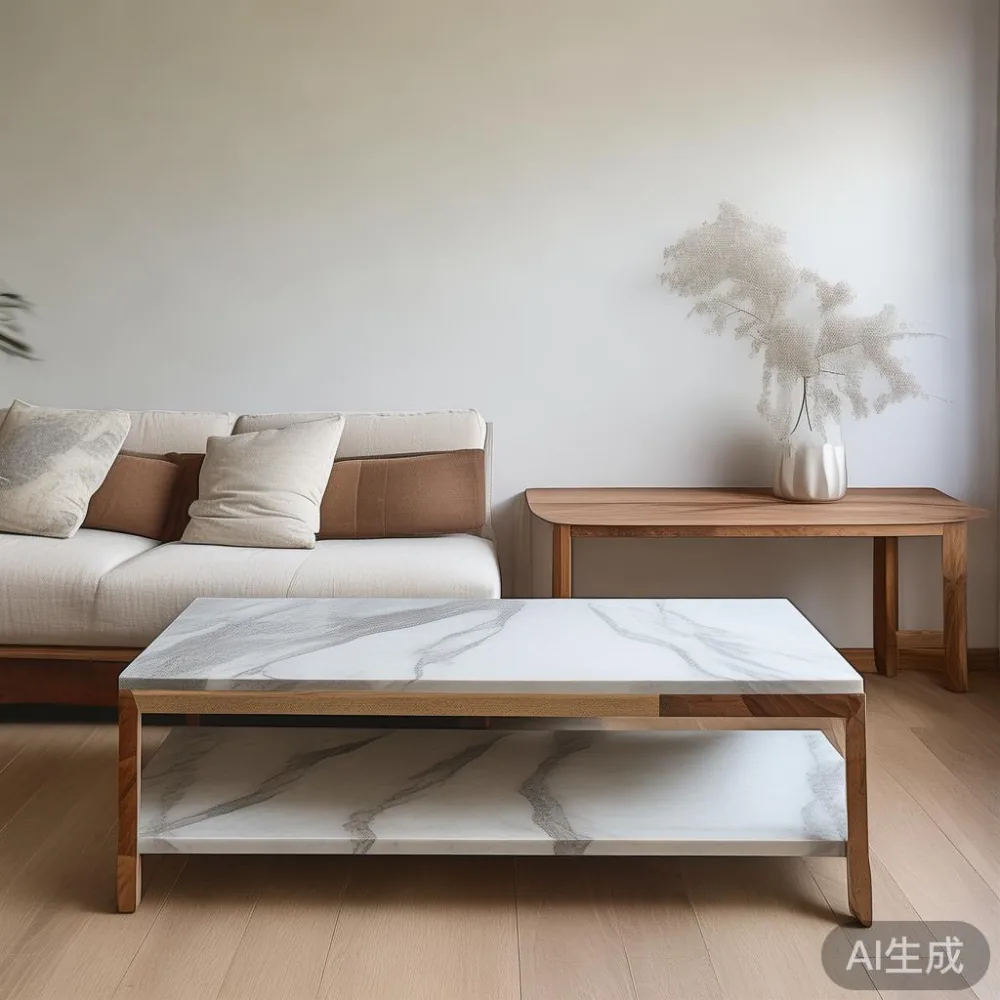
A marble table sits at the top of the wish list for most condo owners in Punggol, the River Valley area, and the new launches around Lentor. The 1.4 m round or 1.8 m rectangular versions retail from S$2,800 to S$6,500 before GST depending on the stone. Carrara from Italy sits at the top; sintered stone and engineered marble sit lower. The honest truth: the marble table itself is not where the comparison gets interesting, because both veneer and solid wood dining tables are usually topped with a stone slab in this category. The interesting question is the base. A marble table on a veneer base will fail at the joint, not at the stone. The substrate warps, the adhesive lets go, and the 65 kg top crashes. A marble table on a solid wood base with steel corner brackets is the configuration that survives five HDB moves.
Budget S$3,800 to S$5,200 for a sintered stone or Carrara-topped table with a solid wood base, plus S$180 to S$260 for two-man delivery because of the weight. Over five years, add one reseal of the stone at Year 3 (S$220) and you land at around S$4,400 to S$5,680. The base alone, if solid wood, will outlast the stone, which can be replaced for roughly S$900 to S$1,400 while keeping the original frame.
European light luxury bed vs Japandi bed: which frame survives a Punggol master bedroom?
I get asked this every other Saturday at the showroom, so let me put it on the table. A European light luxury bed tends to run a 145 cm headboard in linen or boucle, with a frame footprint of about 215 cm by 165 cm for a queen. A Japandi bed runs lower, usually 90 to 100 cm headboard, with the same mattress footprint but a more visible wood grain. Both categories use solid wood at this tier, but the species differ. European frames often use beech or ash; Japandi frames lean on oak or white-oiled ash. In Singapore humidity, ash and oak both behave well at 35 to 80% RH if the kiln-drying was done properly. Beech is denser and slightly more stable but heavier, which matters when the lift at your Punggol BTO is one of the smaller 1.1 m by 1.4 m models.
Five-year cost for a queen bed frame in each style:
- European light luxury bed (queen, solid ash, upholstered headboard): S$2,650 initial, S$0 delivery above S$350 threshold, S$150 fabric cleaning at Year 3. Five-year total: S$2,800. Residual at Year 5: S$1,200.
- Japandi bed (queen, solid oak, slatted base): S$1,950 initial, S$0 delivery, S$120 oil refresh at Year 3. Five-year total: S$2,070. Residual at Year 5: S$1,100.
So in the European light luxury bed vs Japandi bed matchup, the European version costs about S$730 more over five years and returns roughly S$100 more on resale. If you want the upholstered headboard, the European style is the right pick. If you want lower visual weight and easier moves, Japandi wins on the maths. Either way, avoid the MDF-bed category at S$1,100 to S$1,400; it is the worst five-year investment in the bedroom.
What about wardrobes and nightstands in a Tampines 4-room flat?
A 2.4 m sliding wardrobe is the most expensive piece in the bedroom, and it is also the piece that suffers most from being assembled flat-packed by a non-cabinetmaker. A veneer wardrobe from a Singapore chain runs S$1,400 to S$2,100 installed. A solid wood wardrobe in oak or ash from a workshop that builds to your exact wall measurement (always slightly less than the 2.4 m ceiling-to-floor height of a HDB room) runs S$3,400 to S$5,200. Over five years, the veneer wardrobe's chipboard backing absorbs moisture in the master bedroom, the runners stick by Year 2, and you call a carpenter for S$180 to S$280. By Year 4 you have paid S$1,800 in repairs on a S$1,800 piece. The solid wood wardrobe, by contrast, has zero maintenance in the same window.
For a couple shopping the best American wardrobe for 2026, the practical translation in Singapore is a 2.2 m solid wood wardrobe with soft-close runners, three drawers, and two hanging zones, weighing around 110 to 135 kg, delivered and installed in about 4 to 6 hours. Budget S$3,800 to S$4,600 for this specification, and you will still be using it in 2031.
Nightstands are smaller and more forgiving. A veneer nightstand at S$220 to S$380 will usually last five years if it is not directly under the aircon vent. A solid wood nightstand at S$480 to S$720 will outlast the bed. Spend the extra here only if the style matters; if you change bedrooms every lease cycle, the cheaper option is rational.
Which combination gives the lowest 5-year cost in a Singapore HDB or condo?
Let me add it all up for a realistic three-bedroom condo package in Bedok or Punggol, including one dining table, one marble table for the living room, one solid wood sofa, one queen bed frame, one wardrobe, and two nightstands.
- 1.6 m solid oak dining table: S$2,280
- 1.4 m sintered stone marble table on solid ash base: S$4,100
- Solid wood light luxury sofa in boucle: S$4,200
- Queen Japandi solid oak bed: S$1,950
- 2.2 m solid wood wardrobe: S$3,900
- 2 x solid oak nightstand: S$560 total
Subtotal: S$16,990 before GST. Add 9% GST: S$18,519. Delivery and installation is free above the S$350 threshold on each piece, which this package clears comfortably. Year 3 maintenance budget across the set: S$420. Year 5 touch-up: S$180. Five-year landed cost: about S$19,119. Residual value at the end of Year 5 if you sell the set: S$6,800 to S$8,200.
Net five-year cost: S$10,900 to S$12,300. For a veneer and MDF equivalent set, the initial receipt would be roughly S$9,400 before GST, or S$10,246 after GST. Maintenance over five years (repairs, replacements, deep cleans) typically runs S$2,400 to S$3,100, and residual value is effectively zero because the pieces do not survive a second move intact. Net five-year cost: S$12,650 to S$13,350, with the additional annoyance of replacing at least two of the six pieces at some point in the window.
The solid wood set is therefore roughly S$1,000 to S$2,450 cheaper over five years, despite a higher receipt on day one.
Does the math change for designer Modern light luxury furniture buyers in Singapore?
If you are shopping in the designer Modern light luxury furniture tier, the numbers shift upward but the conclusion does not. A 3-seater post-modern light luxury sofa in this category runs S$5,800 to S$8,500; the frame is still solid hardwood, the difference is the leather grade and the hand-finished detailing. The European light luxury for dining room package, with a marble table, six chairs in full-grain leather, and a sideboard, clears S$12,000 to S$18,000 before GST. Over five years, expect one leather conditioning at S$260 and one marble reseal at S$220. The residual is high because the brands hold value. This is the segment where the best Japandi sofa for 2026 actually overlaps with light luxury: low-profile silhouette, oak or ash frame, performance fabric, S$3,400 to S$4,800 in Singapore retail. I have sat on three of these in the last quarter, and the one from a workshop offering lifetime refinishing, a 10-year structural warranty, and free delivery above S$350 was the clear winner on frame rigidity and fabric recovery after a 4 kg bag was placed on the seat for 48 hours.
What should Singapore buyers do on Saturday morning?
Three things, in order. First, measure the lift door and the corridor turn at your block before you order anything taller than 200 cm or longer than 230 cm. Second, ask every retailer for the frame material in writing, not just the finish. If the salesperson says engineered wood, ask whether that means plywood, MDF, or particleboard, and ask about the density (anything below 680 kg/m³ is too soft for HDB humidity). Third, compare the 5-year number, not the day-one number, and include delivery, GST, and one realistic maintenance event.
If you follow those three steps, the choice between veneer and solid wood stops being a philosophical question and becomes a simple spreadsheet decision. In a Tampines, Bedok, or Punggol home, that spreadsheet almost always points to solid wood, with a marble table on a solid base for the dining or living room, and a Japandi or European light luxury bed frame in the master. Spend the extra on day one, save on Year 3, and keep the residual in your pocket on Year 5.