Veneer vs. Solid Wood Cost Comparison in Singapore HDBs
I still remember the Saturday morning I spent at a friend's new 4-room HDB in Punggol, staring at a sagging dining table her renovation contractor had assembled from veneered particleboard. Within eighteen months the corners had peeled, a humid afternoon in Tampines had swollen the panels, and the family was eating off a wobbly surface. That was the day I started comparing real numbers between veneer and solid wood furniture for Singapore homes — and the gap is wider than most people think.
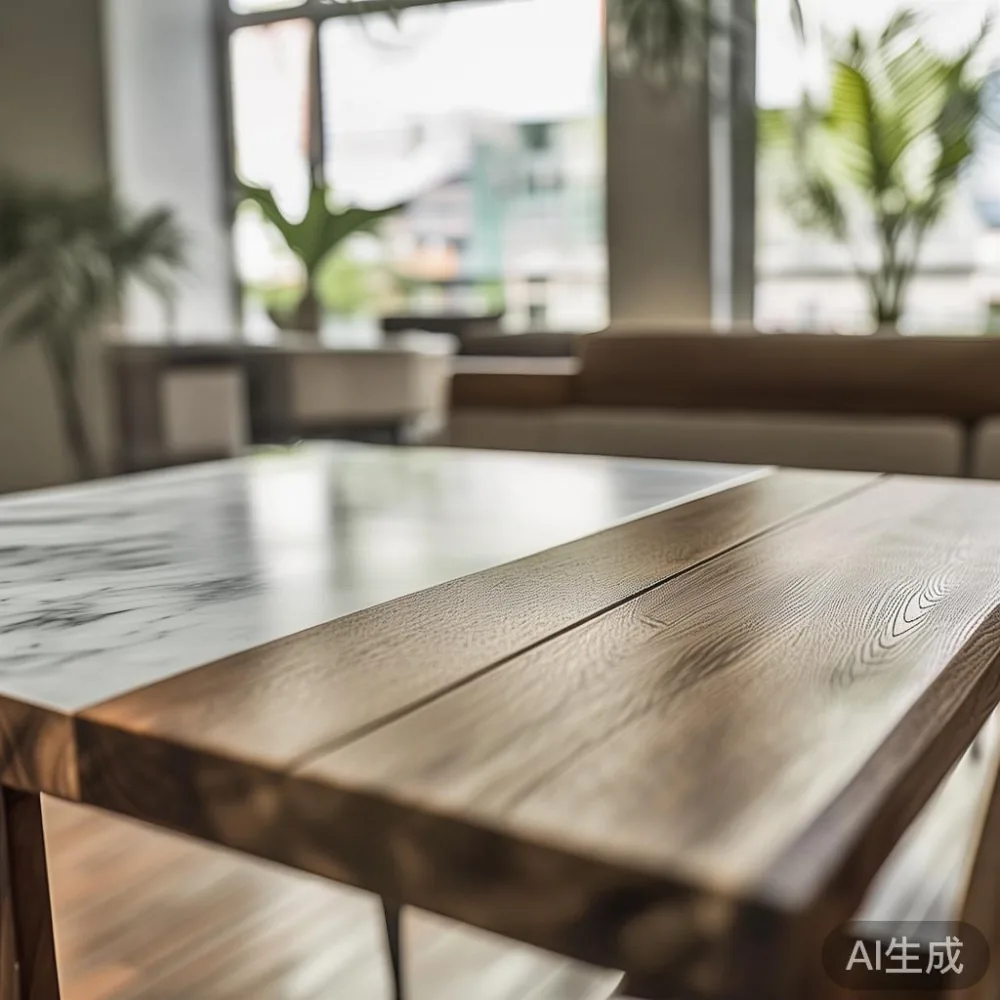
Whether you are furnishing a resale flat in Bedok, a new launch condo in Punggol, or a walk-up in Bukit Merah, the same question keeps coming back: is the higher upfront cost of a solid wood piece actually cheaper over five years? Below is the breakdown I wish I had shown my friend before she signed her furniture invoice.
What exactly are we comparing?
Veneer furniture uses a thin layer — usually 0.6 mm to 2 mm — of real wood or printed laminate glued onto a substrate of MDF, particleboard, or plywood. Solid wood furniture is milled from single pieces of timber such as oak, ash, walnut, or rubberwood. The labels can look identical on a supplier's price list, which is why the cost curve only becomes obvious after the second or third year of ownership.
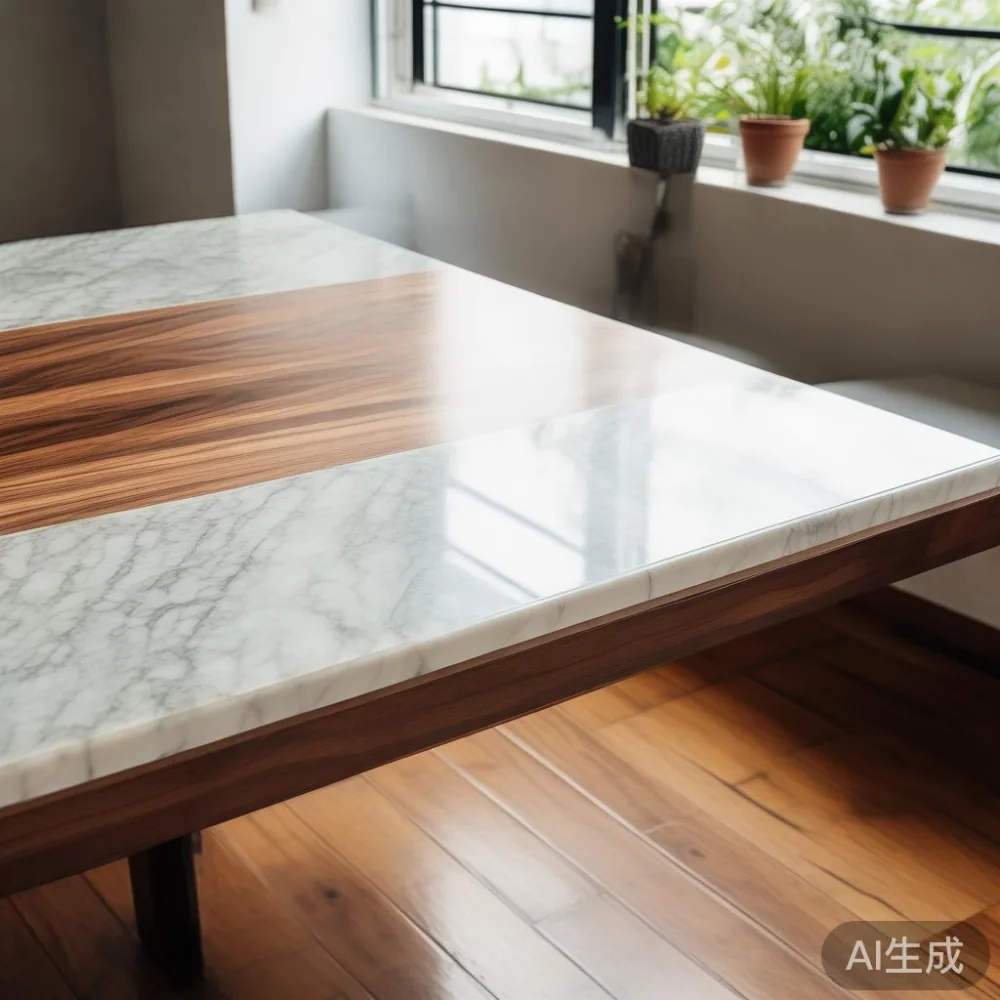
In Singapore, where the average HDB living room runs between 18 m² and 22 m² and a typical 4-room dining space is around 8 m², the furniture you choose carries the daily weight of three meals, two work-from-home laptops, and the humidity cycles that swing between 65% and 90% RH. A piece that survives those conditions costs what it costs — and a piece that does not costs twice.
What is the real 5-year cost of a veneer dining set in SGD?
Let me run the numbers for a standard 6-seater dining set (150 cm x 80 cm table + 6 chairs) delivered to a Tampines HDB. Based on the price lists I reviewed at Geylang and Sungei Kadut showrooms last month, here is what a typical veneer set costs over five years:
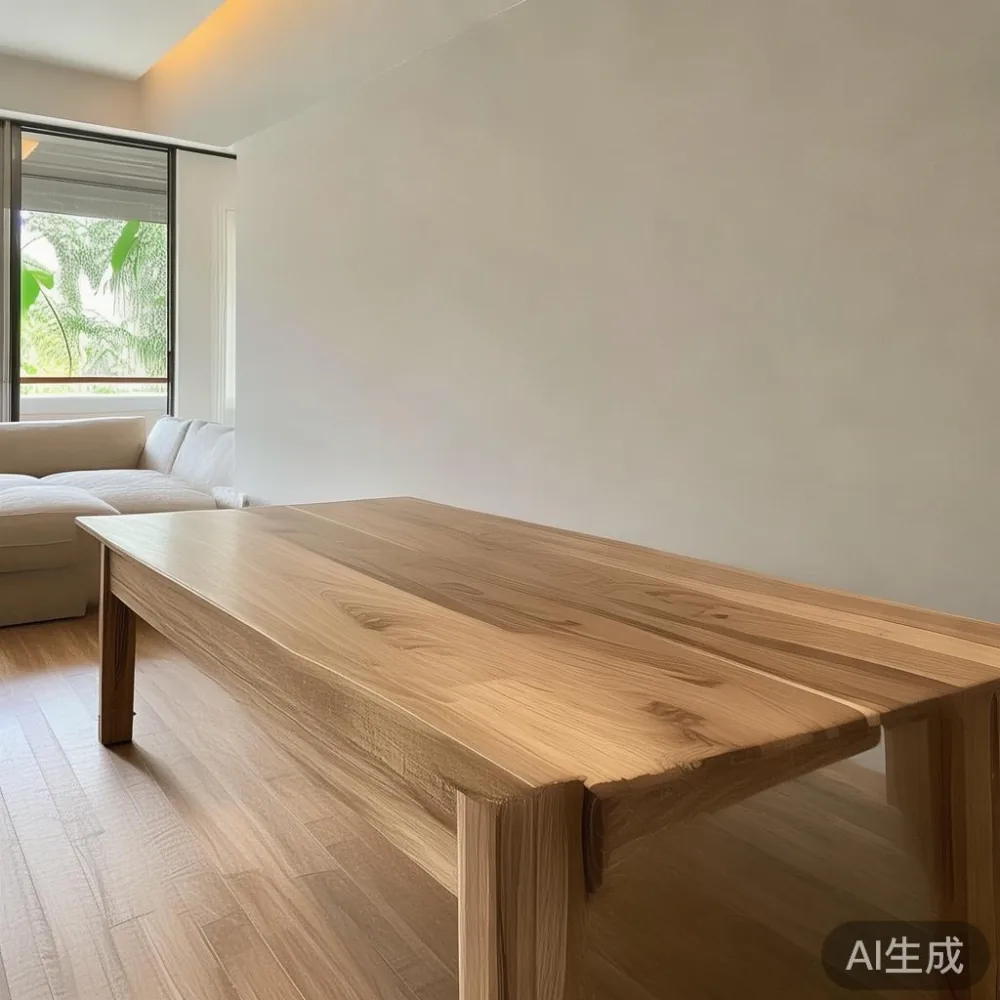
- Purchase price: SGD 850 – SGD 1,400 for a mid-range set, SGD 450 – SGD 700 for an entry-level set.
- Delivery to a 10th-floor HDB unit via the service lift (typical cargo lift footprint 1.2 m x 1.5 m, door 0.9 m wide): SGD 60 – SGD 120.
- Replacement of peeled or swollen table top after Year 2: SGD 350 – SGD 600 if the warranty is honoured, or the full purchase price if it is not.
- Disposal and re-purchase in Year 4 (common outcome for budget sets): SGD 850 – SGD 1,400.
- GST 9% on every transaction: add 9%.
Total 5-year landed cost for a budget veneer set: roughly SGD 2,800 – SGD 4,000.
For a mid-range veneer set with a one-year warranty: roughly SGD 2,100 – SGD 3,200, assuming you only replace once.
What is the real 5-year cost of a solid wood dining set in SGD?
The same 6-seater configuration in solid rubberwood or ash, sized to fit an HDB dining corner:
- Purchase price: SGD 2,200 – SGD 3,800, depending on whether you choose rubberwood (lower end) or imported ash/walnut (upper end).
- Delivery, including hoisting through narrow corridors (typical HDB corridor width 1.2 m – 1.5 m): SGD 80 – SGD 180.
- Refinishing or surface refresh in Year 3 or 4: SGD 180 – SGD 320, or free if your supplier offers lifetime refinishing — which is exactly the service MIDHILL provides on every solid wood dining table, bed frame, and nightstand shipped from Foshan since 2008.
- Disposal at end of life: typically zero, because the piece is still resold, donated, or handed down.
Total 5-year landed cost: roughly SGD 2,400 – SGD 4,300.
Look at the top of both ranges: a solid wood dining set bought from a maker with free refinishing lands at almost the same number as a mid-range veneer set replaced once. The lower end is where the gap widens — solid wood at SGD 2,400 versus veneer at SGD 2,800 — but the reason is durability, not sticker price.
Why do veneer pieces fail faster in HDB conditions?
Three Singapore-specific factors accelerate veneer failure:
- Humidity cycling. HDB flats without 24-hour air-conditioning experience nightly RH climbs above 80%. The MDF or particleboard substrate absorbs moisture, swells, and the veneer layer delaminates at the corners — the exact failure I saw at my friend's place.
- Service lift constraints. Replacement parts are usually shipped flat-packed and re-assembled on site. Joints opened twice weaken quickly, especially the cam-lock fittings common in flat-pack dining tables.
- Sun exposure through east-facing windows in Bedok and Tampines. UV dries out the glue line and lifts the veneer edge by 1 mm to 2 mm within a year.
Solid wood moves with humidity rather than against it. A properly kiln-dried oak top will expand and contract as one piece, which is why a 10-year structural warranty is meaningful only when the underlying timber is solid throughout.
Is the math the same for a bed frame and a wardrobe?
Yes, and the gap actually widens because the parts are larger and the labour to replace them is heavier.
A queen-size bed frame in veneer MDF runs SGD 600 – SGD 1,200 and typically needs full replacement by Year 4 because the slat rails split under repeated load. A solid wood bed frame in ash or rubberwood runs SGD 1,400 – SGD 2,600 and survives 10+ years; slats can be individually replaced for under SGD 80.
A 3-door wardrobe in veneer laminate runs SGD 1,100 – SGD 2,200 and begins to sag on the hinges by Year 3 — the standard HDB bedroom door opening of 0.9 m does not allow easy access, so the unit rarely gets moved out for repair. A solid wood wardrobe from a maker with export-grade joinery runs SGD 2,800 – SGD 5,500 and holds alignment for 15+ years.
If you are kitting out a full 4-room HDB (dining table, bed frame, 2-door wardrobe, 2 nightstands, marble-table console), the five-year delta is roughly SGD 1,200 – SGD 2,400 in favour of solid wood — before you count the avoided hassle of two renovation cycles.
Which corner sofa fits a 4-room HDB living room?
A solid wood-framed L-shape sofa measuring 245 cm x 165 cm, with a 90 cm seat depth and a single 18 cm armrest, fits a standard 4-room HDB living room of 20 m² while leaving a 90 cm walkway to the corridor and at least 60 cm of clearance to the marble-table TV console. If you are working through a tv to console ratio guide for the same room, the console should run between 150 cm and 180 cm wide so the sofa's longer side does not visually overpower it.
What about style — does solid wood look right for French light luxury interiors?
Yes, and this is where the stereotype fails. French light luxury interiors rely on slim profiles, fluted details, and warm neutral tones — exactly the grain patterns that solid ash and walnut deliver by default. Pairing a solid wood dining table with a marble-table console, brass hardware, and linen upholstery is a combination I have seen work in three Punggol condos in the past year alone. Post-modern light luxury goes further, mixing the timber with brushed metal and curved silhouettes that MDF simply cannot machine to the same tolerance.
If you want the American light luxury look — oversized solid wood sofa frames, deep seat depths, and chunky turned legs — solid wood is non-negotiable. Veneer legs snap at the dowel joint within two years under that kind of cantilever load. A MIDHILL solid wood sofa with a 10-year structural warranty arrives in knock-down form, fits through a 1.5 m HDB corridor, and re-assembles with dowelled joinery that is actually serviceable.
What should you check on the price tag before you commit?
Five physical checks, all of which take under three minutes in the showroom:
- Weight. A solid wood 1.8 m dining table weighs 35 kg – 55 kg. A veneered MDF equivalent weighs 18 kg – 25 kg. Lift the chair or ask the salesperson.
- Edge grain. Run a finger along the underside edge. If the grain pattern continues from the top surface, it is solid. If you see a clear seam between a thin face layer and a different substrate, it is veneer.
- Underside finish. Solid wood pieces are finished on every face. Veneer pieces often have a raw or paper-backed underside.
- Joinery. Solid wood drawers use dovetail or dowel joints; veneer drawers use staples and cam locks.
- Warranty wording. "Lifetime refinishing" and "10-year structural warranty" only make sense on solid wood. A one-year warranty on a flat-pack dining set is the industry telling you the expected service life.
How does delivery and GST change the comparison?
Two Singapore-specific items tilt the math further:
- Free shipping thresholds. Many Foshan exporters, MIDHILL included, offer free shipping above US$350 — roughly SGD 470 — to Singapore addresses. A solid wood dining set clears this in one order; veneer furniture usually needs two or three add-on carts to qualify, which fragments the warranty.
- GST 9%. Charged on every imported furniture shipment since 2024. Whether you pay 9% on SGD 1,000 once or on SGD 850 twice, the total tax bill converges — but the replacement ordering friction is real, especially if the second shipment is needed under a 14-day return window that has already closed.
So is solid wood actually cheaper over 5 years?
In a Singapore HDB, with humidity cycles, service-lift logistics, and a 9% GST layered on every replacement, a solid wood dining set, bed frame, wardrobe, and pair of nightstands bought from a maker with a 10-year structural warranty lands 10% – 25% cheaper than a comparable veneer set over five years. The break-even point arrives around Year 3 — which is, not coincidentally, when most veneer warranties expire.
If you are starting from scratch in a Tampines, Bedok, or Punggol flat, budget the full solid wood set once. If you already own veneer pieces and they are holding up, run them through Year 4 before deciding — but check the underside edge grain before you renew your confidence in them.