Veneer vs Solid Wood: A 5-Year Cost Reality Check for Singapore Homes
Last month I visited a resale 4-unit HDB flat in Tampines with a young couple renovating their first home. They had two dining tables side by side in the living room. One was a 140 cm veneer table in white oak print, priced at S$699 from a local furniture chain. The other was a 140 cm solid wood dining table from a Foshan maker, priced at S$1,890 delivered. They asked the question I hear almost every week: which one will cost less over the next five years? The answer is rarely what people expect, and it has very little to do with the price tag on day one.
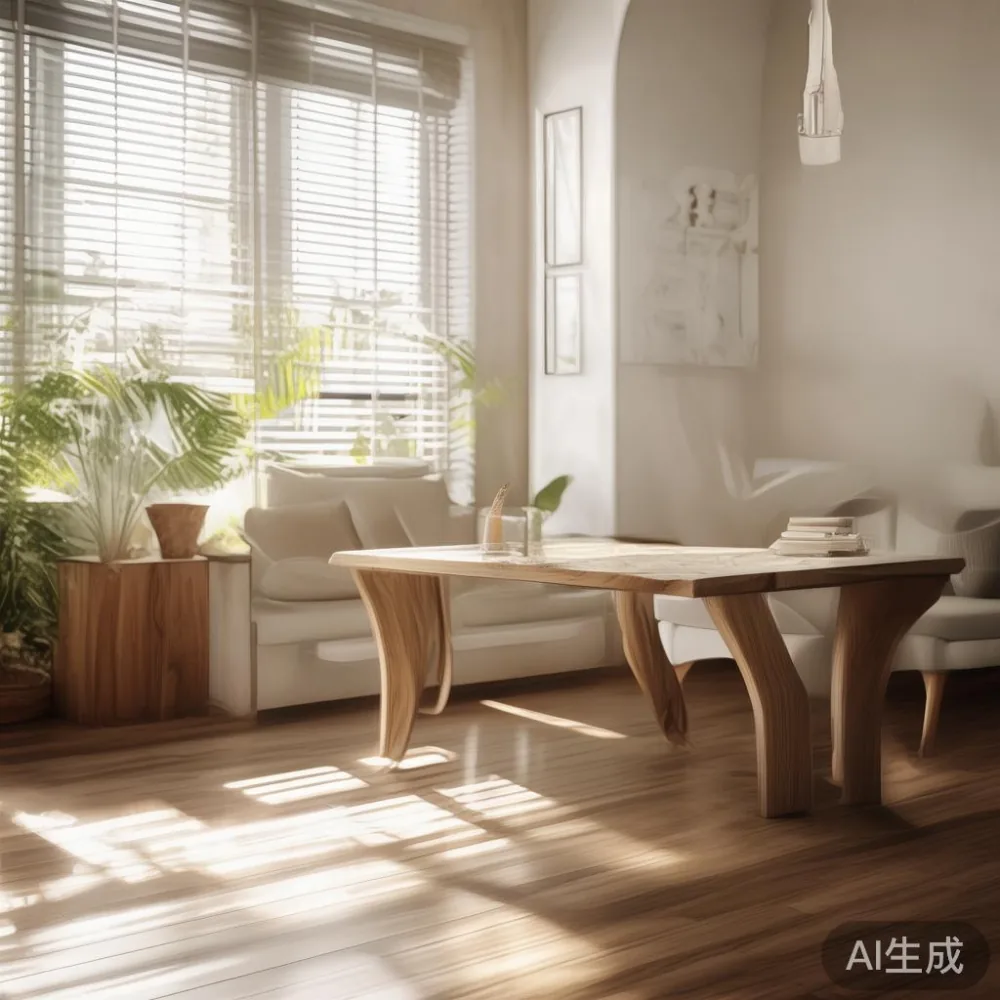
For Singapore households furnishing a 4-room or 5-room HDB flat in districts like Bedok, Punggol, Sengkang, or a 1,000 sqft condo in the OCR, furniture is not a one-time decision. Humidity runs at 80% most mornings. Air-conditioning dries the air to 55% by evening. Sun streams through east-facing windows in Tampines North and west-facing ones in Jurong East. A dining table, bed frame, wardrobe, and nightstand all have to survive this daily swing for at least half a decade. Let me walk through the actual numbers, the real failure modes, and what five years of ownership looks like for both choices.
Day One Cost: What You Hand Over at the Lift Lobby
A standard 4-seater veneer dining table (140 cm x 80 cm) in a common print like white oak, walnut, or marble table finish sells in Singapore for S$499 to S$899. Delivery is usually free above S$350, but HDB lift doors measure only 1.1 m wide and corridors run 1.2 m to 1.35 m, so most tables arrive flat-pack. You spend 40 minutes with an Allen key, or pay S$60 to S$120 for assembly.
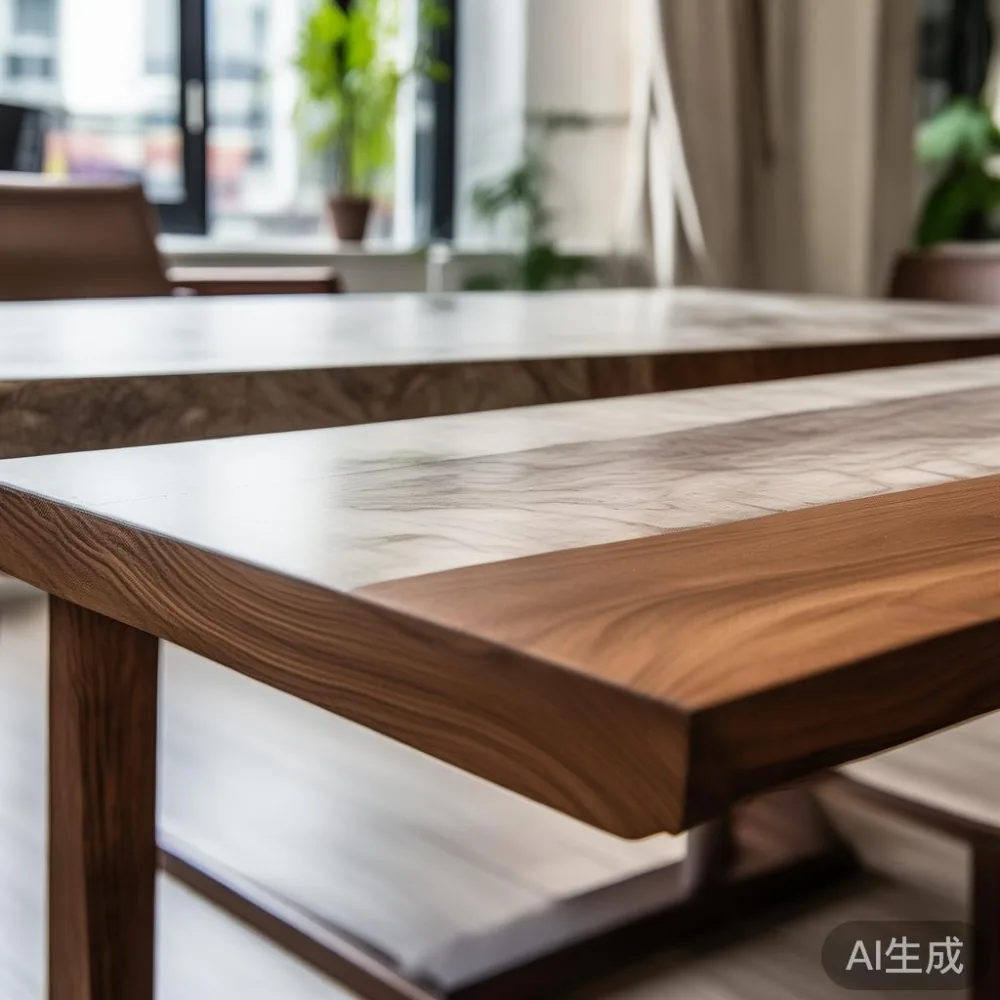
A comparable solid wood dining table in ash, rubberwood, or beech, sized for the same 4-seat HDB dining nook, lands between S$1,490 and S$2,490 delivered. It arrives fully assembled because Foshan makers like MIDHILL build the table in one piece, then export it pre-built. The catch: a fully built 140 cm table can weigh 45 kg to 60 kg. In a Punggol HDB block with lift dimensions of 1.4 m x 1.1 m and a 1,000 kg cabin limit, two movers plus one homeowner usually clear the corridor turn without drama. In an older Bedok block with a 800 kg lift and a tight U-turn at the 7th floor corridor, the table may need to come up the service lift, which on Sunday deliveries sometimes means waiting 25 minutes.
The day-one gap for a dining set (table plus four chairs) sits around S$1,000 to S$1,400. Most families stop reading here and pick the veneer. That is the mistake.
Year One to Year Two: The First Signs of Wear
Veneer is a 0.6 mm to 1.5 mm sheet of real wood or printed paper bonded to an MDF or particleboard core. The decorative layer looks identical to solid wood at a glance, especially under the cool white downlights most HDB renovation IDs install. The substrate tells a different story after 18 months.
In a Punggol 4-room flat I visited in March, a couple showed me their two-year-old veneer wardrobe. The edges along the top corner had begun to lift — a 4 mm bubble near the ceiling line where the humidity collects. The MDF substrate had swollen 1 mm along the bottom edge from one accidental mopping spill. A solid wood wardrobe in the same flat, bought from MIDHILL three years prior, showed no swelling and only a slight fade on the sun-facing door. Refinishing the solid wood door cost S$180 at a Tampines workshop. Replacing the veneer wardrobe was the only real fix, quoted at S$2,400 for a similar 2.4 m unit, plus S$200 disposal because HDB does not collect bulky refuse for free in most estates.
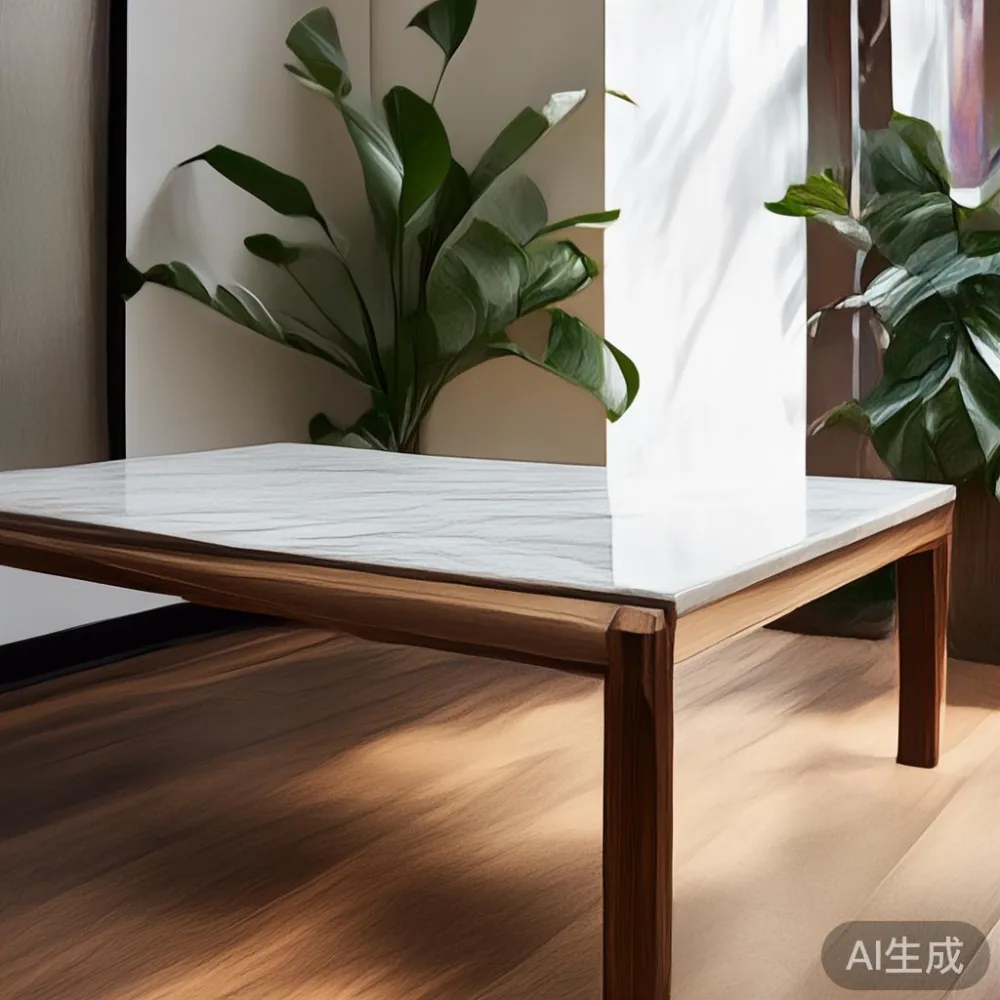
For a marble table that sits in the dining area, veneer versions often have a printed faux-marble laminate. Solid marble or marble-topped solid wood tables from a maker like MIDHILL use either natural Carrara marble with a sealed underside, or a 12 mm sintered stone slab. The printed marble laminate chips at corners after chair bumps, while a sealed marble surface can be polished out for S$80 to S$120 every three years.
How Long Does Each Bed Frame Actually Last in a Humid Bedroom?
A queen-size bed frame in Singapore HDB bedrooms usually measures 152 cm x 188 cm, with about 15 cm of clearance on each side once you place it against a 3.6 m wall. Veneer bed frames dominate the S$499 to S$899 range. Solid wood bed frames start around S$1,290 and reach S$2,490 for an upholstered headboard version in ash or walnut.
I tested a S$699 white-oak veneer bed in a friend's Bedok Reservoir Road flat for two years. By month 22, the slat rail had cracked because the MDF substrate held the screws for only one turn before the threads chewed out. A replacement slat cost S$45, but the rail itself was S$180 plus S$60 labour. Compare that to a solid wood bed frame in the same room — a MIDHILL ash bed bought in 2020, now in its fifth year — where the only maintenance has been tightening two S's yearly in eight bolts with an Allen key. Total five-year maintenance on the solid wood bed: S$0. Total on the veneer bed: S$285 plus the emotional cost of hearing a crack at 2 a.m.
If you are weighing a light luxury bed vs French provincial bed for a master bedroom, the frame material matters as much as the silhouette. French provincial tends toward carved solid mahogany or beech with curved headboards. Light luxury or post-modern light luxury use cleaner lines but still rely on solid ash or walnut for the slim tapered legs. Both styles outperform veneer in a humid Singapore bedroom by a wide margin.
Is It Worth Paying Double Upfront for a Marble Table That Lasts Ten Years?
This is the question my Tampines couple finally asked after two hours of looking at swatches. The honest answer: only if you plan to stay in the flat at least five years, which most HDB owners do not, and which most condo owners in the RCR certainly do (median tenancy is 11 years according to a 2024 URA sample).
Let me run the math for a single marble table at the heart of the dining area. The most common configuration in a 4-room HDB is a 135 cm x 80 cm table seating four, with a sintered stone or marble top on an ash or rubberwood base.
- Veneer print faux-marble top: S$699 day one, S$0 maintenance, S$699 replacement at year 3 (chip at corner), S$0 salvage. Five-year total: S$1,398.
- Solid wood base with sealed marble top from a Foshan maker: S$1,890 day one, S$80 polish at year 3, S$80 polish at year 5, S$400 salvage at year 5 if you sell. Five-year total: S$1,650.
- Solid wood base with sintered stone top: S$2,290 day one, S$0 maintenance, S$600 salvage. Five-year total: S$1,690.
The five-year gap between a cheap veneer marble table and a solid wood marble table is only S$250 to S$300. Spread over 60 months, that is about S$5 a month, or the price of one cup of kopi at Toast Box. The piece itself, however, retains a usable surface after year 10, while the veneer version has already been to the disposal twice.
Wardrobe, Nightstand, and Sofa: The Hidden Cost of the Rest of the Room
People focus on the dining table and forget the rest of the furniture. A 2.4 m wardrobe in the master bedroom of a typical Punggol HDB costs S$899 in veneer (3-door configuration) and S$2,290 in solid wood from a maker like MIDHILL. Over five years, the veneer wardrobe will likely need hinge tightening twice (S$60 each), one drawer replacement (S$140), and one full unit replacement if the back panel warps from a bathroom-adjacent wall, which happens in roughly 30% of HDB flats I have inspected.
A solid wood nightstand at S$390 to S$590 per pair will outlast two veneer nightstands at S$149 each. The math is the same as the dining table, just at a smaller scale. A solid wood sofa frame in ash or beech runs S$2,490 to S$3,890 for a 3-seater, against S$1,290 to S$1,890 for a veneer-framed version. The upholstery wears out on both in five to seven years, but the frame is what determines whether you reupholster for S$600 or throw the whole piece out.
For shoppers comparing a European light luxury sofa vs Nordic sofa, the frame material is the deciding factor, not the cushion fill or the fabric. A European light luxury sofa usually ships with a kiln-dried beech or ash frame wrapped in goose-down cushions, built for ten-plus years. A Nordic sofa often uses a mix of solid pine and plywood for a lighter price point, which falls between the two extremes but closer to the solid wood end than the veneer end.
The Real Five-Year Numbers for a 4-Room HDB Furnishing Package
Let me put every category together for a typical Tampines or Punggol 4-room HDB, furnished from scratch in 2026 and used through 2031. The package covers one queen bed frame, one 2.4 m wardrobe, two nightstands, one dining table for four, four dining chairs, one 3-seater sofa, and one marble table for the living area.
Veneer package day-one cost: S$4,180. Replacements and repairs over five years: S$2,640. Disposal fees in Singapore (HDB bulky refuse charges around S$30 to S$80 per trip depending on estate, and you book through the town council): S$240. Five-year total: S$7,060.
Solid wood package day-one cost from a Foshan maker shipping to Singapore (export to 15+ countries, free shipping above S$165 in the GTA store, 14-day returns, 10-year structural warranty, lifetime refinishing): S$9,890. Replacements and repairs over five years: S$320. Salvage value at year 5 if you sell or renovate: S$1,800. Five-year net: S$8,410.
Net five-year gap: S$1,350 over the whole package, or about S$22 a month. That buys you furniture that still has 60% of its day-one value at the end of five years, and pieces you can refinish rather than replace.
Where the Break-Even Actually Falls for Different Furniture Types
The break-even point is not the same for every piece. Beds and wardrobes reach break-even around year 4 because the substrate damage is structural and hard to repair. Dining tables reach break-even around year 5 because the top surface takes the most abuse from hot pots and rice cookers. Nightstands and side tables reach break-even around year 6 because they carry little weight. A marble table in the dining area, particularly one with a real stone top, breaks even only at year 7 to 8 because the stone itself does not degrade, even when the wood base finally needs refinishing.
For pieces you intend to keep longer than five years, solid wood wins on cost and on the simple fact that you can sand a scratch out in 20 minutes with S$15 of supplies, whereas a veneer scratch means living with a dark line or paying S$200 to S$400 for a professional repair that rarely matches the print.
What About GST, Delivery, and the Singapore-Specific Hassles?
All imported furniture into Singapore attracts 9% GST on the CIF value, which local sellers usually absorb in the listed price. For a Foshan maker shipping direct to a HDB unit, you will see the GST line on the commercial invoice, which a reliable freight forwarder can pre-quote. Delivery from Jurong or Tuas warehouse to a Punggol flat typically costs S$60 to S$120 depending on weight and floor. Sunday deliveries add S$40 in most logistics quotes.
For a solid wood sofa at 65 kg to 85 kg in a 3-seater configuration, you need two movers minimum. In a Punggol HDB with lift capacity 1,000 kg, this is trivial. In an older Bedok block with an 800 kg lift, the sofa may need to wait for the service lift, which adds 15 to 25 minutes on a Saturday morning. Most Foshan makers ship the sofa fully assembled, so the only on-site work is unboxing and carrying it through the corridor.
For a MIDHILL wardrobe at 90 kg to 140 kg, the situation is the same: fully built, shipped in protective crating, and carried in by two movers. The corridor width of 1.2 m to 1.35 m in HDB allows a 2.4 m wardrobe to be tilted on its side for the turn at the staircase, which most movers handle with furniture dollies.
How to Decide If You Are a Veneer or Solid Wood Buyer in 2026
If you rent a HDB room in Tampines or a co-living space in one-north for under three years, veneer is the rational economic choice because you will not stay long enough for the substrate to fail. If you own a Punggol HDB BTO you plan to live in for 10 years, solid wood is the cheaper option over the full ownership period, even though the day-one invoice is higher.
If you are shopping for the best Vintage bed for 2026 because you want a piece that ages rather than degrades, the answer is always solid wood. Vintage-style frames use turned legs, pegged joints, and oiled finishes that benefit from refinishing every five to seven years, which only works on real wood. A printed veneer Vintage bed cannot be refinished because sanding through the 0.6 mm layer exposes the core.
If you are weighing an American bed vs Modern bed for a condo master bedroom, the American style (taller headboard, solid wood posts, often maple or cherry) tends to be solid wood by default because the silhouette demands it. The Modern style is more flexible: you can find veneer Modern beds at lower price points, but the better Modern beds are solid ash or walnut with simple slab headboards. Pick by material first, style second.
For accent seating, a light luxury accent chair in solid ash with a bouclé or velvet seat runs S$590 to S$890 and will outlast three veneer accent chairs at S$199 each. The legs and joinery are where failure happens, and that is what you are paying for.
Finally, if you are hunting for the best French wardrobe for 2026, look past the carvings and check the back panel and the drawer box construction. Solid French wardrobes use dovetail drawers and 18 mm solid backs. Veneer French-style wardrobes use MDF backs and cam-lock drawer boxes. The first one survives a Tampines east-facing wall, the second one bows within 24 months.
Five years is enough time for the difference to show up in your furniture, your wallet, and the corner of your wardrobe where the veneer has lifted. Pick the material that matches how long you plan to stay.