How to Style a Small Singapore Apartment Without Making It Feel Crowded
A compact HDB flat in Tampines or a narrow condominium bedroom in Bedok can still feel calm, generous and visually expensive. The trick is not to fill every wall. It is to assign each piece of furniture a job, control the sightlines and introduce texture without adding clutter. For homeowners comparing under 2000 Japanese furniture options, the same principle applies: scale, proportion and material quality matter more than sheer quantity.
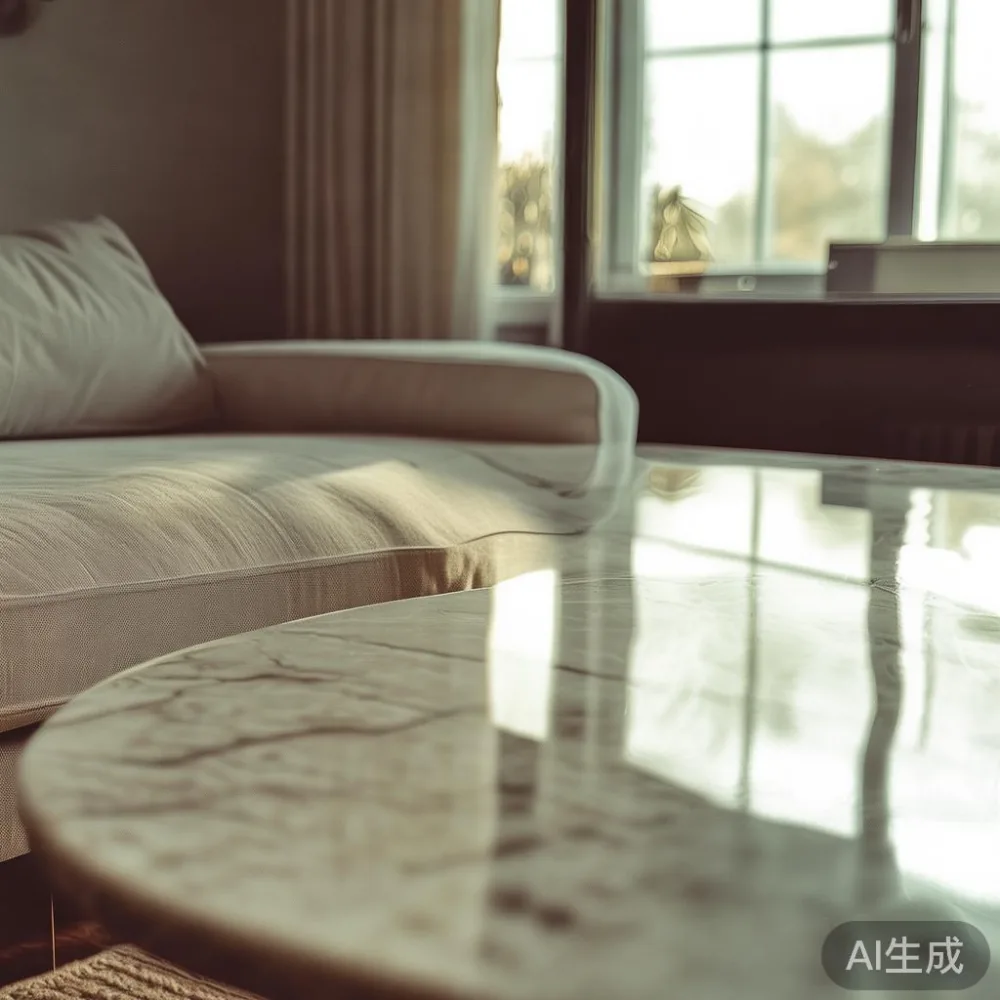
Last month I visited a new BTO apartment in Punggol with a living-dining room measuring only 3.2 by 4.1 metres. The owners had already bought a large charcoal fabric sectional, two side tables and a full-height display cabinet. The room looked smaller than its floor plan suggested. We removed the display cabinet, replaced the side tables with one 45 cm round marble table and reduced the sectional to a 210 cm configuration with slim arms. The result felt lighter, and the dining zone remained usable for four.
That visit reinforced a simple rule: in small apartments, furniture should support circulation rather than interrupt it. Singapore’s lift and corridor dimensions also deserve attention. A statement piece may look impressive in a showroom, but a 110 cm dining table will not travel comfortably through every access point. Before buying, measure the doorway, lift car and turning radius at the destination.
How can you make a small Singapore apartment feel less crowded?
Begin with circulation zones rather than a shopping list. A compact HDB living room typically needs a clear path from the entrance to the balcony, plus another route toward the kitchen or lift lobby. Keep at least 75 cm clear along the main passage and 90 cm in front of frequently used cabinets. If a sofa projects too deeply, even a beautiful solid wood sofa can divide the room into two cramped strips.
Next, work with a 60-30-10 visual balance: approximately 60 per cent in a dominant light tone, 30 per cent in a supporting mid-tone and 10 per cent in darker or textured accents. This is an interior styling device, not a rule that every home must follow. Pale walls and floors provide visual space, while warm oak, walnut, honed stone and textured upholstery prevent the room from appearing sterile.
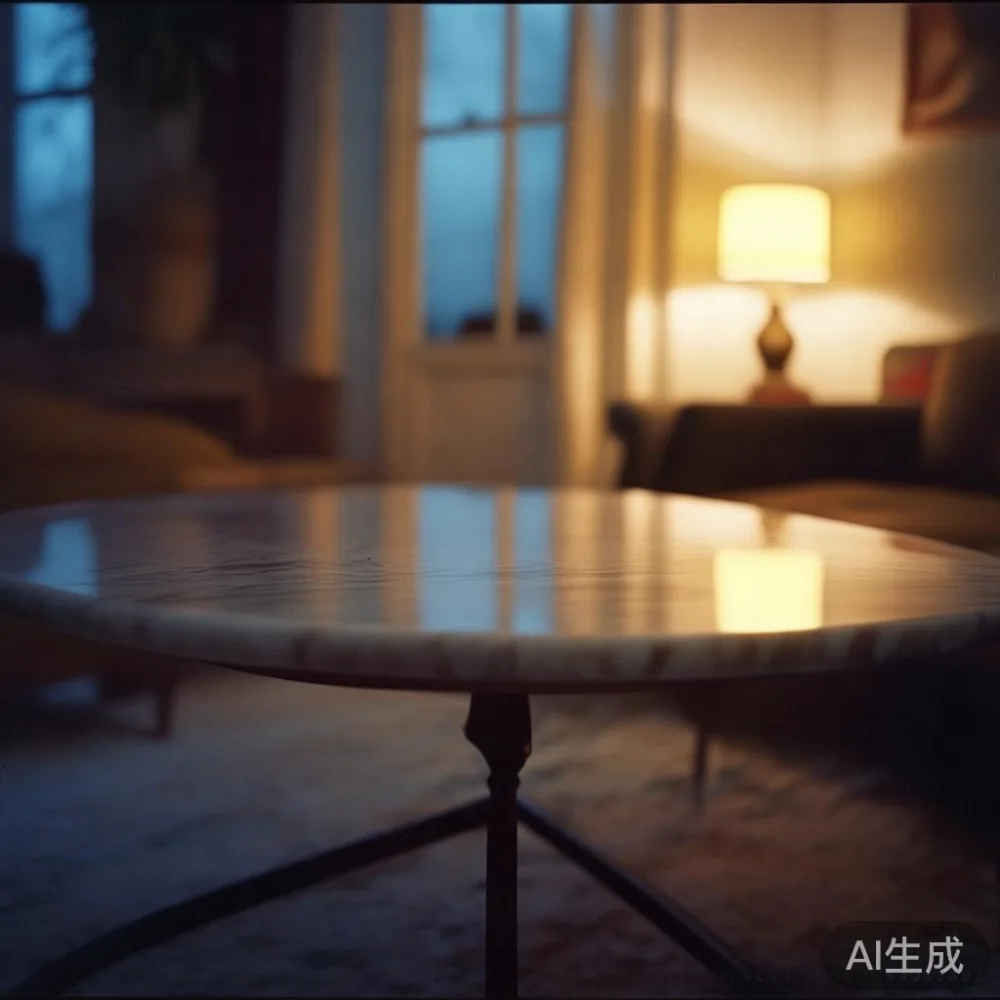
For local conditions, choose finishes that age gracefully under humid air and strong light. A honed marble table is practical for daily use because the matte surface hides small marks better than a high-gloss finish. Solid wood develops a quieter patina than some laminated alternatives, provided that its edges and joints are protected from prolonged moisture. In an east-facing Bedok unit, rotate occasional chairs and use a UV-filtering curtain to reduce fading.
What should a compact living-dining room measure?
A room of roughly 16 to 22 square metres can accommodate a sofa, dining table and practical storage if the furniture has disciplined dimensions. A dining table around 120 by 75 cm seats four without consuming excessive space. For narrower layouts, a round table measuring 100 to 110 cm can seat three or four and allows traffic to pass around the curved edge. These are working dimensions, not promises; allow space for chairs to be pulled back and for a person to stand behind them.
For a sofa, a width of 180 to 210 cm works well against a typical compact flat wall. A depth of 85 to 95 cm preserves circulation, while arms no thicker than 18 cm keep the profile visually light. Legs raised 15 to 20 cm above the floor create an open area underneath and make the piece appear less massive. A low back around 75 to 80 cm also preserves sightlines across the room.
The dining table should not be chosen independently of the room’s architecture. In many HDB layouts, the dining zone sits beside a kitchen entrance. A 120 cm table leaves about 60 cm on either side, enough for narrow chairs and moderate passage. In a 13 square metre living room, a 100 cm round marble table can serve coffee, casual dining and afternoon work without requiring a separate sideboard. Add one narrow wall shelf only if its projection stays below 20 cm.
Can a marble table work in a small HDB flat?
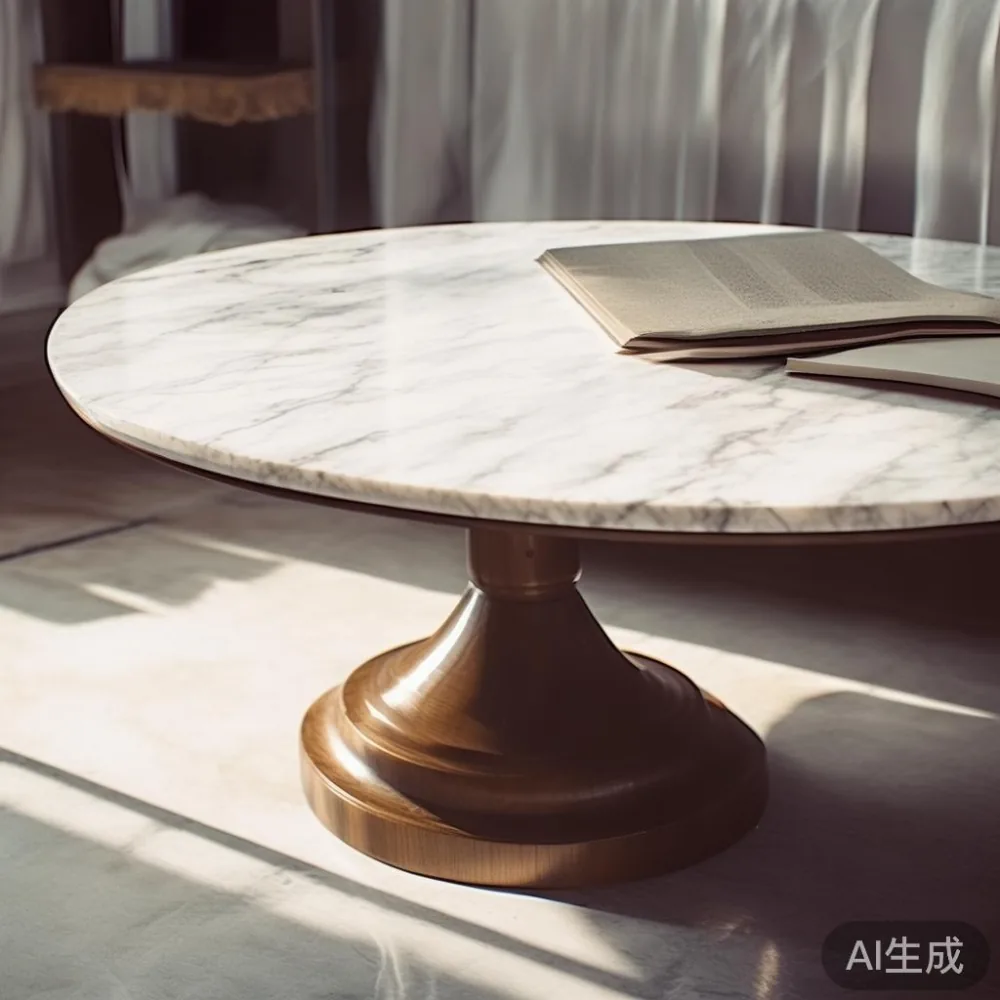
Yes, when scale and finish are considered together. A round marble table measuring 90 to 100 cm in diameter is often more suitable than a rectangular slab above 130 cm. The circular outline reduces visual corners, and the pale stone can reflect daylight into a darker room. A pedestal base may be more space-efficient than four widely spread legs, although it should be weighted properly for stability.
Marble needs sensible care because it is porous. Wipe spills promptly, use coasters and clean with a soft damp cloth rather than acidic chemicals. Do not place a very hot vessel directly on the surface. These details do not make the stone fragile; they simply protect the finish. A marble table can also be a visual anchor in an open-plan flat, replacing a bulky coffee table and several scattered accessories.
For lift access, record the internal door width and lift car dimensions before ordering. A round table is easier to manoeuvre when stood on edge, but its diameter must remain below the usable door width. For example, a 100 cm table needs a route with at least 102 cm clearance once packaging is included. If the corridor narrows below 105 cm, ask the supplier to confirm the packed dimensions and delivery method.
At MIDHILL, the emphasis is practical construction rather than showroom excess. The company has produced solid wood furniture since 2008 and exports to more than 15 countries, so its approach to sizing and packing is relevant to compact urban homes. A 10-year structural warranty and lifetime refinishing service also make long-term ownership part of the design decision. Prices shown in SGD should include GST, while delivery timing and access arrangements should be confirmed for each Singapore order.
How do you choose a bed that does not swallow the room?
Choose the bed after measuring the room, the ceiling and the remaining furniture. A queen bed at 152 by 190 cm needs more than 200 cm of wall length once a bedside gap is included. In many Singapore studios and compact condos, a super king at 180 by 200 cm leaves too little room to move around one side. A queen or compact king often gives a better balance between sleeping comfort and circulation.
For shoppers asking how to choose French bed, consider the frame’s outer dimensions, not only the mattress. Slatted bases can look visually light and allow better airflow than a solid boxed base. Low-profile frames also suit compact rooms, but they are less convenient for storing bedding. A practical compromise is a raised frame with a shallow drawer, providing roughly 25 to 35 cm of storage without increasing the bed’s footprint.
Another useful guide is how to choose French provincial bed for a small apartment. Provincial styling can become visually heavy if it includes carved posts, thick aprons and several competing patterns. Select one main feature, such as curved rails or a shaped headboard, and keep the mattress and bedding simple. A 5 to 10 cm reveal around the mattress helps the frame read as crafted rather than bulky.
To create a light-luxury for bedroom scheme, pair warm timber with linen, brushed metal and soft ivory. A solid wood bed frame in natural oak, walnut or warm ash offers tactile contrast to smooth walls. If the bedroom is under 9 square metres, a wall-mounted nightstand or 35 to 40 cm bedside table preserves floor area. This is where a narrow nightstand earns its place: it holds a lamp, a book and a phone within arm’s reach without requiring a full pedestal.
Door swing is another local planning issue. Check that the bed frame does not prevent a door from opening through 90 degrees, and that a bedside drawer can still be pulled out. Curtain rods should sit close to the ceiling visually and about 10 to 20 cm beyond the frame to make the window appear wider. These small adjustments cost little but often produce more apparent space than buying another decorative object.
Where should storage go in a compact bedroom?
Storage should be built around the room’s least disruptive wall. A floor-to-ceiling wardrobe looks orderly, but if it projects 60 cm into a narrow bedroom, it may consume a valuable route. A wardrobe between 150 and 180 cm wide can provide useful hanging space in a studio. Consider sliding or bi-fold doors when the hinged version would obstruct a desk, window or circulation line.
For anyone comparing a MIDHILL wardrobe, check the internal layout as carefully as the exterior. A 150 cm unit may include a 100 cm hanging section, shelves and drawers, with the exact division varying by model. Soft-close hinges, solid drawer boxes and adjustable shelves can improve daily use. Internal warm lighting is useful in a flat without a corridor light, but it should be on a timer or connected to a motion sensor.
Keep freestanding pieces visually quiet. A slim console no deeper than 30 cm can sit beside the bed, while open shelving can hold fewer than 12 frequently used objects. Closed storage reduces visible clutter. In a living area, one low cabinet may be preferable to three open shelves, provided the cabinet height remains below the window sill where possible.
Material coordination matters. If the room already contains a marble table, avoid placing another large stone surface nearby unless the colours clearly relate. Repeat one finish rather than many. For example, echo the table’s warm cream tone in the bedding, then introduce oak in the bed frame and a small area rug. A rug measuring 160 by 230 cm under the bed can visually unite the zone, although a smaller runner may work better in a tight layout.
How do you keep an open-plan home light and luxurious?
Use the dining table as a spatial divider instead of adding a bulky partition. A round marble table in the living zone can mark the centre of the room without forming a hard boundary. In a home office arrangement, a table placed near a window may separate work from rest. European light luxury for office planning favours restrained lines, useful storage and tactile natural materials rather than a crowded collection of furniture.
One search phrase that appears repeatedly in design catalogues is top 10 Modern light luxury furniture. While such lists can be a useful starting point, homeowners should filter them by room dimensions. A 200 cm sofa may dominate a 14 square metre living room; a 45 cm round side table may be the better choice. American light luxury often works well in compact apartments through clean profiles and plush upholstery, while French light luxury introduces curves, carved details and softer textiles. Post-modern light luxury can add character through one expressive piece, but it works best when the remaining room remains simple.
Do not skip lighting. A compact room needs at least three light layers: ceiling illumination, a floor or table lamp and a task light near a seat. Warm-white LEDs around 2700 to 3000 Kelvin feel comfortable with timber and stone. A 12 to 15 W reading lamp is enough for a bedside table, while a 20 to 25 W portable lamp can brighten a sofa corner. Switches should be reachable from the entrance so occupants do not cross a dark room unnecessarily.
Mirrors can multiply daylight, but position them carefully. A 60 by 120 cm mirror on a wall opposite a window can reflect light and make a room feel deeper. Avoid covering most of one wall with mirror panels, which can make a small space feel busier. One reflective surface, balanced by matte furniture, usually creates a calmer result.
What should you check before furniture delivery?
Measure the complete route from the building entrance to the final room. Record the lift opening, lift depth and diagonal usable length, corridor width, door width, corners and thresholds. A 105 cm corridor may be manageable for a flat-packed component but difficult for a fully assembled wardrobe. Take photographs during the site survey and share them with the supplier before dispatch.
For MIDHILL orders, clarify the packed dimensions, assembly requirements and expected delivery window in working days. Singapore’s GST is included in displayed SGD prices, but access charges, lift reservations or remote-area delivery may require separate confirmation. Orders above US$350 qualify for free shipping under the stated policy; because this threshold is denominated in US dollars, the corresponding SGD amount should be checked at checkout rather than assumed.
Inspect each item when it arrives. Check corners, joints, drawer movement, door alignment, surface finish and marble veining. Keep the delivery sheet until the pieces are placed and assembled. The 14-day returns policy gives buyers time to assess access, scale and comfort, but useful furniture should also be checked for fit before the return window closes.
The most successful small apartment is not the one with the most furniture. It is the one where every piece has a clear purpose, every route remains usable and a limited palette gives the eye some rest. A slim solid wood sofa, a correctly scaled dining table, a well-proportioned bed frame, an efficient wardrobe and a small nightstand can support daily life. A marble table, selected for proportion and finish, can then act as the room’s quiet centre rather than another obstacle.