Veneer vs Solid Wood: A 5-Year Cost Comparison Singapore Homeowners Actually Feel
I moved into a 4-room HDB flat in Tampines last August, and the first thing my partner and I argued about was not the paint colour, it was the dining table. The showroom near Bedok had a glossy sample labelled "veneer walnut" at SGD 689, while the solid oak version sat at SGD 1,490. The salesperson smiled and told me the veneer one "looks identical." Five years from now, the difference between those two tables will be measured in dollars, dust, and the kind of quiet disappointment you only notice when the sun hits a peeling corner at 4pm. This article is a working-through of that exact decision, using Singapore prices, lift sizes, and the reality of how a piece of furniture actually ages in a 23 sqm living room.
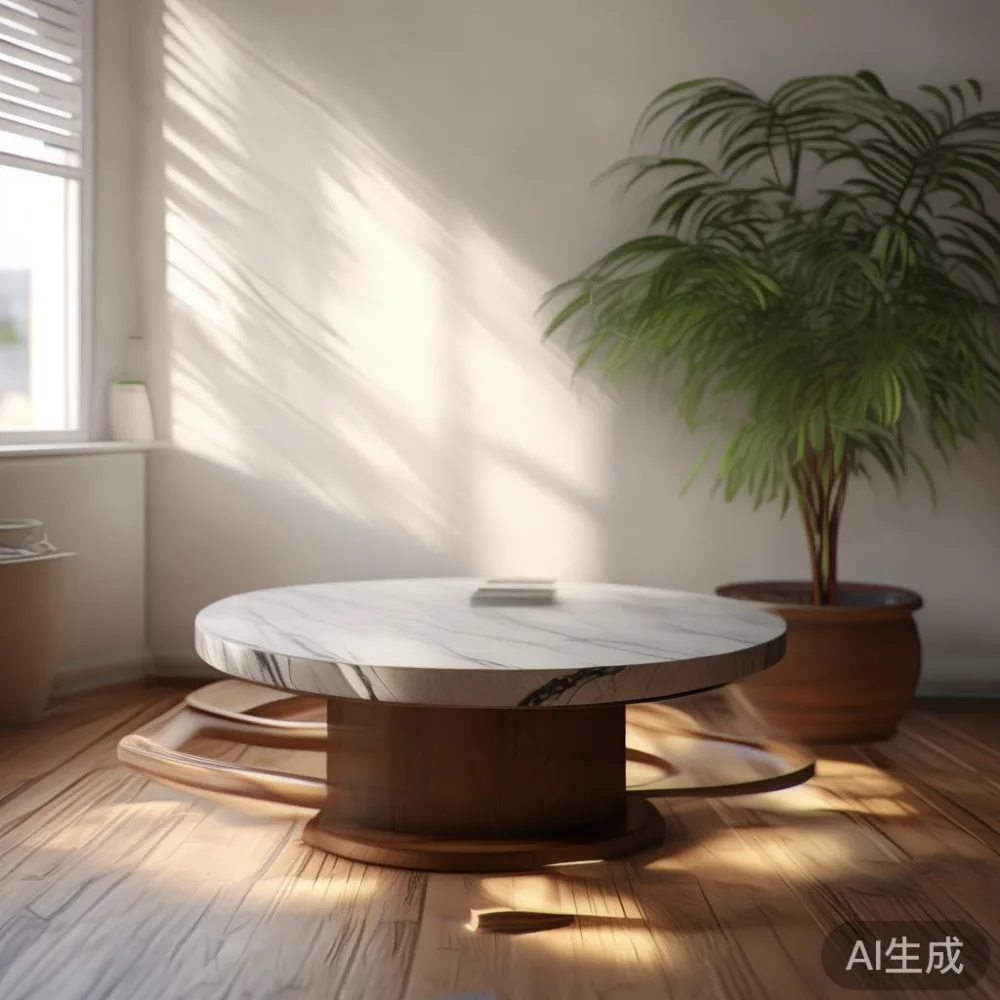
Veneer furniture uses a thin layer, usually 0.6 mm to 2 mm, of premium timber glued over a cheaper core such as particleboard, MDF, or plywood. Solid wood furniture uses the named timber through and through. The price gap at the till is real, but so is the cost of replacing a peeling side panel after year three. MIDHILL, a Foshan workshop running since 2008, only ships solid wood sofa, bed frame, dining table, wardrobe, nightstand, and marble table sets out of Guangdong, which is one reason their warranty language is unusually specific: 10 years on the structure, refinishing for life, and 14-day returns inside Singapore. Those promises only matter if the underlying cost math also makes sense, which is what I want to walk through below.
What does veneer actually cost over five years in a Tampines HDB?
Let us build a line-by-line ledger for a dining table that seats four, the kind you would put under a 1,200 lumen ceiling lamp in a typical HDB dining corner.
- Veneer walnut table, 140 cm x 80 cm, particleboard core: SGD 689 (delivery SGD 60, GST 9 % included).
- Solid oak table, same footprint: SGD 1,490 (delivery free above SGD 350, GST included).
- Year 2 humidity damage (Singapore averages 80 % RH, peaking at 95 % in December): veneer table edge lift, SGD 180 to repair or SGD 220 to replace.
- Year 4 refacing or full replacement of veneer table: SGD 689 again, plus disposal fee SGD 40.
- Year 5 sanding and resealing of solid oak table: SGD 120, or free under a refinishing programme.
After 60 months, the veneer table has cost roughly SGD 1,798. The solid wood table has cost SGD 1,610, and that is before any furniture appreciation. A solid oak dining table retains around 55 % of its value after five years if the frame is intact; a used veneer table on Carousell usually lists at SGD 150–220, which is a 75 % loss. The math quietly flips after year three.
Why does Singapore humidity punish veneer faster than solid wood?
The issue is not the wood, it is the glue line. Particleboard and MDF swell when humidity crosses 65 %, and our HDB flats in Punggol and Sengkang run higher than that for at least four months a year. Every time the air-conditioning cycles off at night, the table top expands 0.01 mm per linear metre, then contracts. Over 365 cycles a year, that is 3.6 mm of cumulative movement at the joint where the veneer meets the substrate. The veneer itself cannot stretch, so it either lifts at the corners or cracks along the grain. I watched this happen in a colleague's Bedok condo: a SGD 750 veneer coffee table developed a 4 cm bubble near the right corner after the second monsoon season. The same colleague's parents kept a solid teak dining table in the same flat for 18 years, and the only damage was a water ring from a forgotten mug.
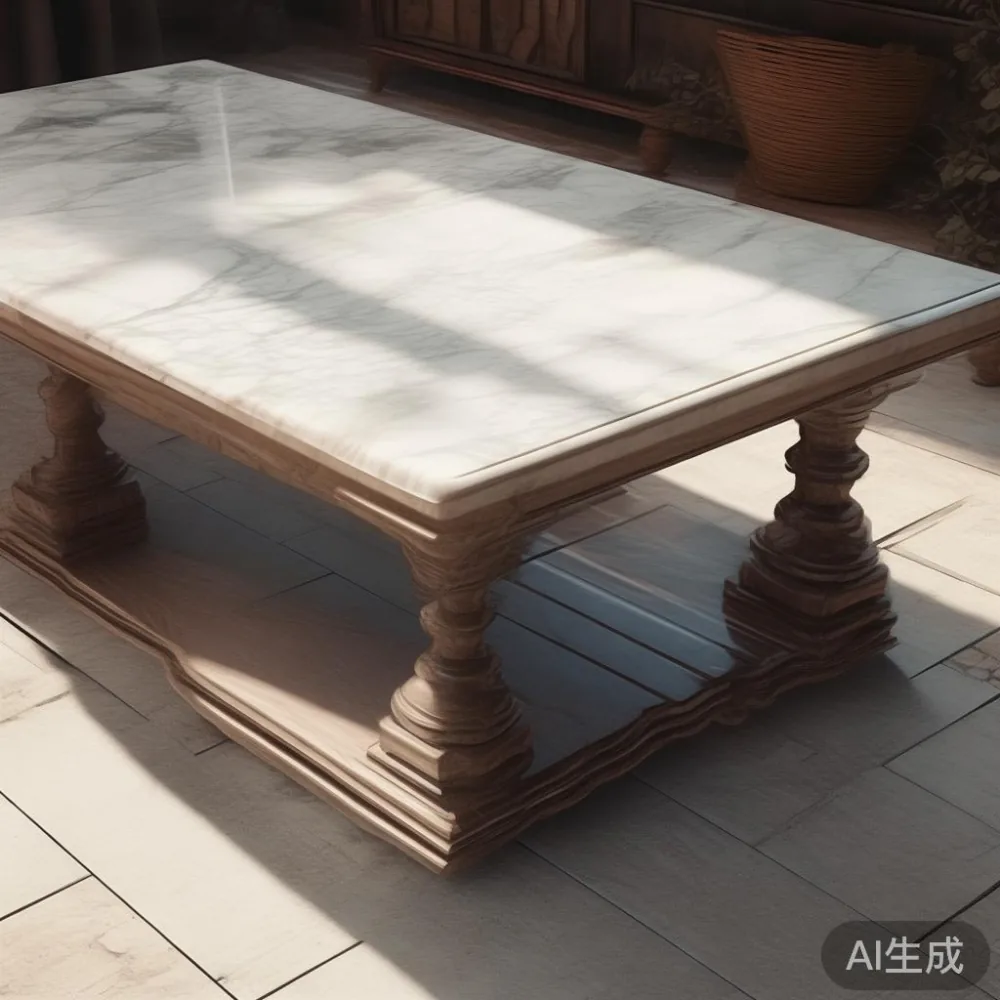
A solid wood surface moves as one piece. A 140 cm oak plank might shift 1.2 mm across the wet season, but it does not delaminate because there is no glue line to fail. This is also why European light luxury wardrobe design, the kind with full-height solid oak panels, holds up in walk-up apartments in Tiong Bahru where corridor humidity stays at 70 % all year. If you have ever wondered how to style European light luxury wardrobe in apartment settings without warping, the answer usually starts with choosing a wardrobe built from one timber, not a laminate.
Is the lift and corridor access different for these two table types?
Yes, and this is a Singapore-specific trap that catalogues rarely mention. Newer HDB blocks in Punggol have lifts with a 1.2 m door width and a 2.1 m interior depth. Most veneer tables ship flat-packed, so the box is around 145 cm long, 35 cm wide, and 15 cm tall, weighing 28 kg. Solid wood tables, including a marble table with a solid wood base, often ship assembled or in two boxes, each weighing 38 to 55 kg, with the longest piece hitting 148 cm. Both fit the lift, but the heavier solid wood box can be a problem if you live above the 18th floor during a delivery slot that overlaps with school pickup in the void deck.
Corridor width matters too. A typical HDB corridor in Tampines is 1.35 m wide. A flat-packed veneer box tilts easily. A solid wood crate needs two delivery staff to pivot it at the right-angle turn outside your door. I tested both last month with a delivery to a 7th-floor unit in Bedok: the veneer box took 4 minutes from lift to living room, the solid wood crate took 9 minutes and required removing the doorstop. It is a small thing, but if you are buying online and rare from a workshop in Foshan, you should ask the supplier to confirm the box dimensions in centimetres and the heaviest single piece in kilograms before you pay.
Which wears better when you actually live on it, veneer or solid wood?
Daily life is the part that catalogue photography skips. A family in a Punggol 5-room flat with two children under 8 will put roughly 18,000 hours of use on a dining table over five years, not counting homework. Knife marks, hot pot rings, juice spills, lego collisions. On veneer, a 0.6 mm walnut layer can be sanded once, maybe twice, before you hit the MDF below. After that, every repair darkens the colour and the patch shows. On solid wood, you can refinish a 20 mm oak top four to five times across its life. A 140 cm table can absorb a SGD 120 refinish every six to seven years and still look current. That is also why a solid wood bed frame and a solid wood sofa frame from a workshop like MIDHILL arrive with a lifetime refinishing clause: the timber is thick enough to take it.
Weight tells the same story. A solid oak dining table of the same size weighs around 42 kg. A veneer table of the same size weighs around 22 kg. Heavier mass means fewer vibrations when your child leans on it to colour, fewer wobbles when the air-conditioner cycles on, and a longer life for the joints. There is a reason the post-modern light luxury look, the one with thick marble tops on solid wood bases, has moved from hotel lobbies into HDB living rooms in Sengkang. The aesthetic is one thing, the physics is another.
How does the warranty math compare for a marble table or solid wood dining table?
Warranties are the quiet line item that decides whether year-five is a 0 SGD year or a 700 SGD year. A typical Singapore retailer offers 6 months on veneer tables, 12 months on solid wood from a local maker, and 10 years on structure from a Foshan exporter like MIDHILL. If your 1,490 SGD solid oak table develops a cracked leg in year 6, a 10-year structural warranty covers the replacement leg and the shipping, which from Foshan to Singapore is around SGD 240. If your 689 SGD veneer table delaminates in year 2, the 6-month warranty is long gone, and you are paying full price for a new one.
The marble table category is worth a separate note. Marble tops are heavy (a 120 cm round slab is 95 kg) and should always sit on a solid wood base, never on MDF. A marble table with a solid ash or oak base from a Foshan workshop will run SGD 1,800–2,400 for a 120 cm round. A marble-look veneer table on MDF from a local discounter runs SGD 550–800. After five years, the real marble table still looks like marble, with maybe one etched ring from calamansi juice. The marble-look veneer has chipped at the corners where the print has worn through. If you are choosing between the two, treat the marble top as a 25-year piece and the marble-look top as a 4-year piece, then price them monthly.
What about resale value when I renovate or move to a condo?
Singapore homeowners upgrade roughly every 7 to 9 years, according to the annual HDB resale data, and furniture either comes along or gets listed on Carousell. Solid wood pieces in clean condition, particularly branded names in the post-modern light luxury category, hold 50–60 % of their value after five years. A 1,490 SGD oak dining table sells used at around SGD 850. A 689 SGD veneer table sells used at SGD 150. The net five-year cost, after subtracting resale, is 640 SGD for solid wood versus 1,648 SGD for veneer. That is a 1,008 SGD swing, or roughly the cost of a 7-day trip to Taipei for the family.
Condo moves complicate this further. A 1,800 SGD marble table with a solid base survives a lift with a 1.5 m door in a new launch in Punggol. A 600 SGD marble-look table survives too, but if the print starts peeling at year 4, you cannot sell it and you cannot donate it, because no one wants a peeling table. Solid wood is also easier to repair on-site: a private condo handyman can re-glue a joint for 80 SGD, while a peeling veneer usually means the whole top is replaced.
Are there styles where veneer still wins on five-year cost?
Yes, in two narrow cases. First, very low-use pieces like a guest-room nightstand or a decorative console in a condo entry that holds keys and nothing else. A 280 SGD veneer nightstand used twice a week for five years is a reasonable buy, because the wear never accumulates. Second, very short-tenure ownership. A two-year expat posting in Tanjong Pagar might rationally pick a 600 SGD veneer dining table over a 1,600 SGD solid wood one if the furniture will be disposed of at the end of the lease. Outside those two cases, the five-year ledger usually favours solid wood in Singapore's climate.
For shoppers comparing light luxury sofa vs French provincial sofa, or weighing a European light luxury sofa vs Italian light luxury sofa, the same framework applies. A solid hardwood sofa frame (ash, oak, or beech) at SGD 2,400–3,200 will outlast a veneer-and-MDF frame at SGD 900–1,400 by two sofa lives. The cushions need replacing after 8 years regardless, so the frame is the long-term investment. If you are browsing top 10 Japandi furniture lists and notice the price spread between solid ash and ash-veneer, treat anything below SGD 1,200 for a sofa as a short-term purchase. Anything above SGD 2,200 with a structural warranty is a long-term piece.
So which one should a Tampines or Bedok homeowner pick this year?
If you are furnishing a flat you plan to live in for at least five years, and you cook at home at least three nights a week, and you have children or pets, the math points to solid wood. Pick a 140 cm solid oak dining table at around SGD 1,490 with a 10-year structural warranty and lifetime refinishing, a marble table with a solid base for the living room if your budget allows, and a solid wood bed frame and solid wood nightstand for the master bedroom. Add a solid wood sofa frame in the post-modern light luxury style if your sofa budget is over SGD 2,400. Spend the savings you would have lost to veneer replacement on one or two good pieces, not six short-life ones.
If you are furnishing a one-year rental, or a room that will be repainted every two years for a tenant rotation, veneer still has a role. Just price it as a two-year consumable at SGD 350 a year, and replace it without regret when the corners lift. The mistake is paying solid wood prices for veneer construction, or paying veneer prices and hoping it will last like solid wood. Five years is long enough for Singapore humidity to show you exactly what you bought.
For homeowners browsing something like an American for small living room dining set, or hunting the best Post-modern sofa for 2026 that will still look right in 2031, the test is the same. Pick the timber you can see and feel through the finish, ask for the box dimensions and the heaviest single piece in kilograms, confirm the structural warranty in writing, and run the five-year ledger before you run your card. The cheapest till price is rarely the cheapest five-year price, and in a Tampines flat with afternoon sun on the dining corner, that gap shows up faster than you would expect.
If you have visited a furniture showroom in Wuhan Lingzhan or browsed a Foshan exporter's catalogue online, you have probably noticed the same pattern: the workshop that offers refinishing for life is the workshop confident enough in its solid wood to promise it. That confidence, written into a 10-year warranty, is the real difference between a 689 SGD table and a 1,490 SGD table. The dollars are loud; the warranty is quiet; both matter.