Ideal Marble Table Sizes for Singapore HDB Living Rooms
A marble table can make an HDB living room feel more spacious, polished and light. Yet choosing the right size is not simply a matter of matching the room dimensions on paper. The table also has to leave a practical route from the lift, survive the corridor turns in your block and suit the way your family actually uses the living room.

Singapore homes are often compact by international standards, but HDB living rooms can still range from roughly 28 sqm in older Tampines blocks to 55 sqm in newer Bedok or Punggol developments. A 140 cm marble table may look modest in a 55 sqm room yet crowd a 30 sqm one. A 180 cm table has the opposite problem: generous in a large living room, obstructive in a narrow one.
This guide uses Singapore measurements, lift constraints and buying costs to help you choose with confidence. MIDHILL has supplied solid wood furniture since 2008 and ships to more than 15 countries, but the same practical checks apply whether you are ordering from a local showroom or importing a made-to-measure marble table.
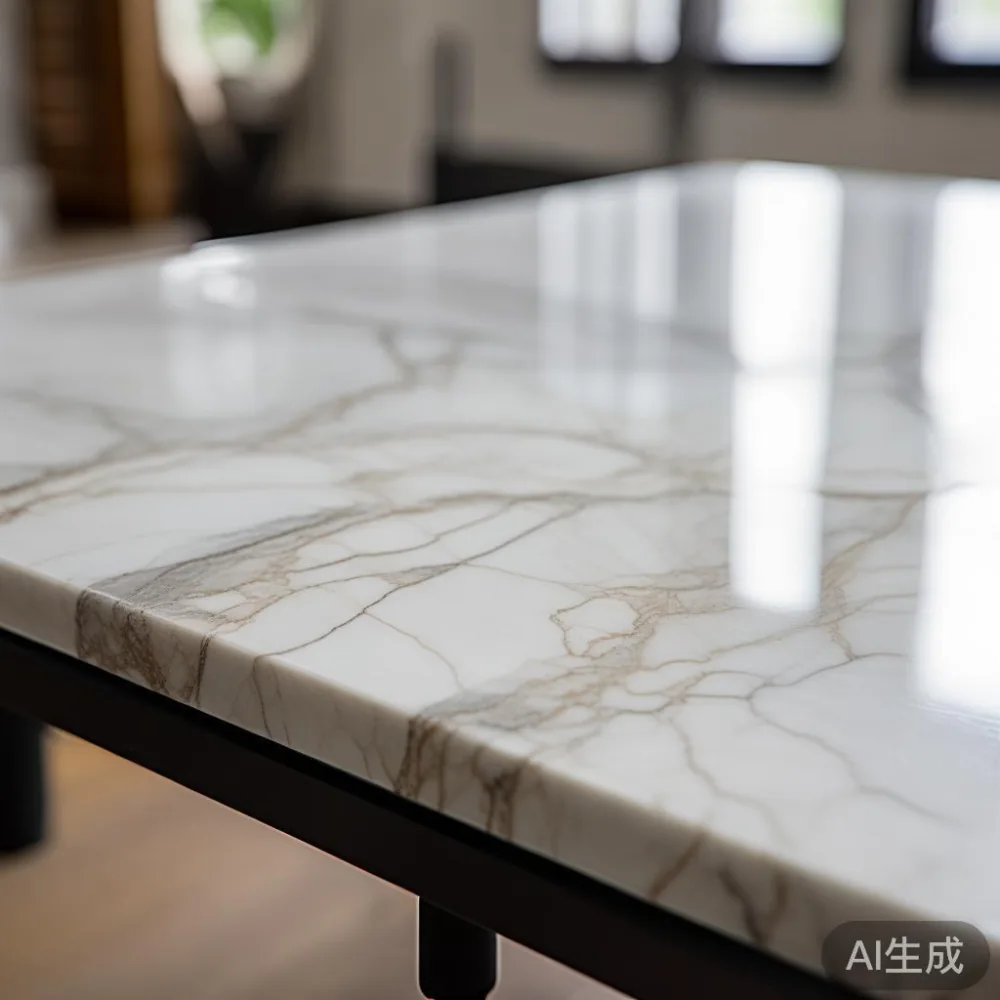
What size marble table fits a typical Singapore HDB living room?
For most 30–40 sqm HDB living rooms, a marble table measuring 100–120 cm long and 50–60 cm wide is a sensible starting point. It can serve coffee, drinks and light meals without taking over the conversation area. In a 40–55 sqm living room, 130–150 cm is more practical if you want the table to function as a low dining surface during visits.
The seating footprint matters more than the tabletop number. If 4 people should sit comfortably around the table, allow at least 60 cm of clear space per person. A 120 cm table can accommodate 4 people at some gatherings, but 6 people need about 150–180 cm. Leave another 60–75 cm between the table and the solid wood sofa so people can walk behind seated guests. Along the main route, preserve a minimum 75 cm of circulation space; 90 cm is easier for daily use and wheelchair access.
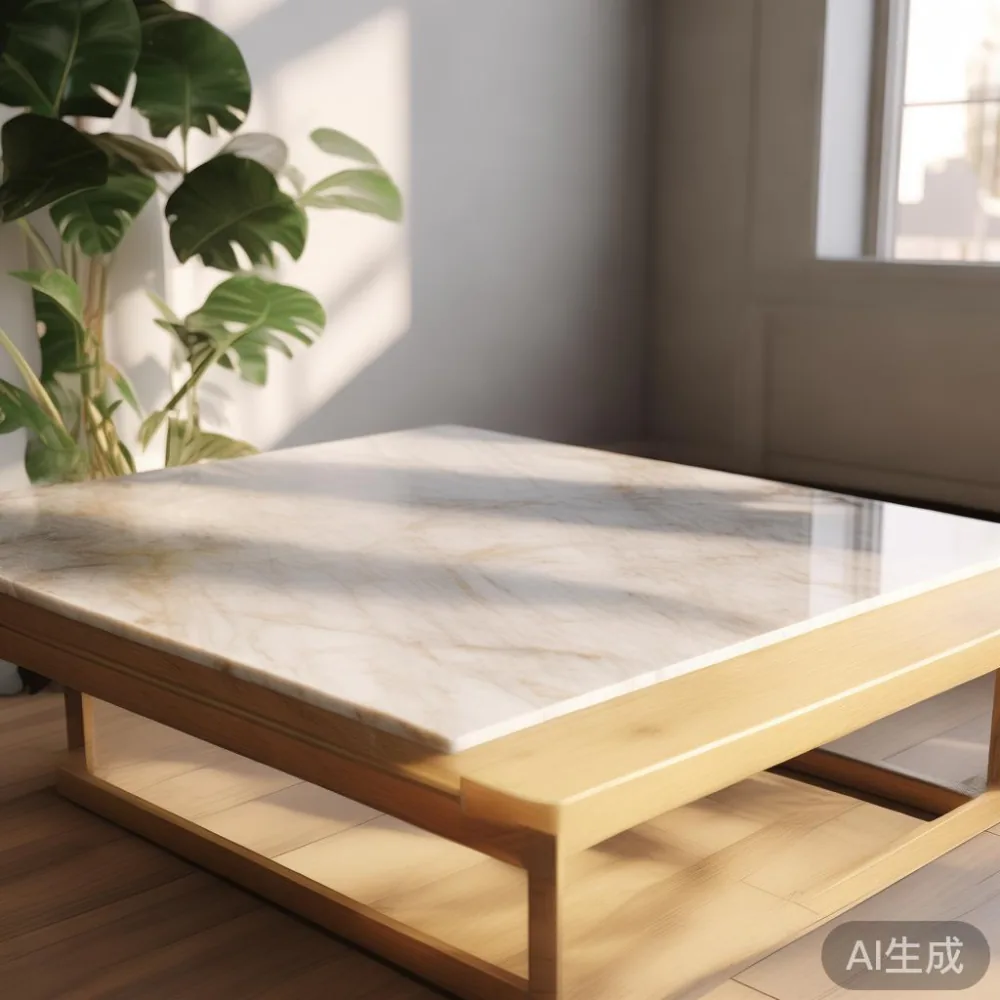
The classic coffee-table rule offers a useful guide: the table should be 30–45 cm lower than the sofa seat and roughly 40–50 cm shorter than the sofa. A 200 cm sofa, for example, pairs naturally with a 150 cm marble table, although a 130 cm table may suit a busier HDB room better.
How should I measure my HDB living room?
Measure the room in 3 stages. First, record the sofa wall, television wall and the distance between them. Next, mark the position of the door, balcony opening and air-conditioner outlets. Finally, walk the intended route with a tape or two empty cartons and note the tightest turn.
Do not rely only on the living room dimensions shown in an HDB resale listing. Actual usable space can differ by 10–30 cm because of skirting, window projections, structural columns and built-in cabinets. In many Singapore flats, the dining area connects directly to the living room, so the marble table may need to share circulation space with the dining table.
Sketch the room at 1 cm scale. Place your solid wood sofa first, then the existing dining table, then the marble table. If the marble table overlaps the main passage, reduce its length by 10–20 cm or switch from a rectangular base to a narrower oval design. A pedestal base can improve knee room, but confirm that the base is stable and does not create sharp projections in the walkway.
A 5 cm discrepancy may appear harmless on a plan but become frustrating in daily use. A 75 cm walkway that narrows to 60 cm beside the table is not equivalent to a consistent 75 cm route. Use masking tape on the floor to test the intended dimensions before ordering.
Will a large marble table fit through the lift and corridor?
Delivery access deserves as much attention as interior fit. Most HDB passenger lifts have internal door dimensions around 90 cm wide and 110–140 cm deep, although older blocks and newer high-rise lifts vary. The load carried by a lift can be 1,000–1,500 kg, so weight capacity is rarely the first concern; door width, cabin depth and turning radius are more useful checks.
Ask the building office for the lift dimensions or arrange a site check. A 150 cm marble table must often be delivered on edge, which requires enough diagonal clearance inside the cabin. If the table is packaged as one rigid slab, calculate the diagonal and add 5–10 cm for protective packaging. A 150 × 70 cm rectangular top, for example, has a diagonal of about 163 cm.
At the corridor, allow for a turning space of roughly 150–180 cm in older blocks and 180–220 cm where the corridor doubles as an access route. Measure any narrowing created by fire hose reels, refuse-chute panels or temporary signs. Doors may open inward, so the table may need to be tilted rather than dragged sideways.
Professional movers can usually turn a modest table without drilling it, but they may charge an extra SGD 40–120 for a difficult HDB transfer. The delivery fee itself may range from SGD 80–220 within Singapore. Confirm whether stair carrying is excluded. For a flight of 5–8 storeys, the charge can be SGD 150–400, and this should be settled before the order is dispatched.
One last detail: marble is heavy and brittle. A 120 × 60 cm natural-stone top may weigh 70–120 kg depending on its thickness and density. Insist on edge protection, corner guards and a written handling plan. The 10-year structural warranty on a suitable MIDHILL frame can provide reassurance, but damage during a poorly planned move is a separate issue.
Is a 120 cm or 150 cm marble table better for an HDB living room?
Choose 120 cm when the sofa is 180–200 cm wide, the living room is under about 35 sqm or the main walking route is below 90 cm. Choose 150 cm when the sofa is at least 210–230 cm wide, the living room exceeds 40 sqm and there is still a 75–90 cm route around it. These are planning guides rather than fixed limits.
The 120 cm model usually handles drinks, snacks and laptop work with less visual weight. It is also easier to move: a 120 × 55 cm top may weigh 60–100 kg, compared with 100–170 kg for a 150 × 70 cm slab with a thicker edge. If the home has only one adult frequently using the table, the smaller size may be more comfortable than an oversized surface that remains unused.
The 150 cm option earns its place when hosting 4–6 guests or using the table for simple meals. It suits an open-plan Bedok or Punggol living-dining room where the sofa is substantial and the table can double as a casual dining surface. Avoid buying by appearance alone. A large table in a small room reduces the sense of openness rather than enhancing it.
Consider the table height too. Most coffee tables stand at 38–45 cm, while a dining table is normally 73–76 cm high. A 42 cm marble table works with a standard-height solid wood sofa, but a low modular sofa may need a 35–40 cm table. Check that the table cannot roll beneath the sofa if children play nearby, and provide a non-slip mat beneath a heavy stone top.
How much should I budget for a marble table in Singapore?
A practical 100–120 cm marble table commonly costs SGD 1,200–2,800 in Singapore. A 130–150 cm model with a solid wood or metal base may range from SGD 2,200–4,500. Custom sizing, unusual stone finishes and thicker tops can raise the figure to SGD 5,000–7,500. Prices should be confirmed before payment because stone thickness, veining and freight can affect the final quotation.
For a Singapore buyer, the displayed price should include GST and delivery details. A 6% GST means that an SGD 2,000 subtotal becomes SGD 2,120 if GST is not already included. Ask the seller directly: “Is this price GST-inclusive, and does it include delivery to my HDB block?” Transport to the lobby may cost SGD 80–180, while carrying the table to the unit may add SGD 40–150, depending on the number of flights and the elevator.
Online purchases may also carry site-specific terms. MIDHILL offers free shipping on orders above US$350, international delivery and a 14-day return window, while its 10-year structural warranty and lifetime refinishing policy concern qualifying furniture products. Since this is a cross-border purchase, confirm the marble table's own warranty terms, return packaging requirements and treatment of a custom-sized item before placing the order.
Compare the full cost, not just the table price. A SGD 1,500 table delivered to the lobby may cost SGD 1,800 after GST, lift booking and carrying charges. Budget SGD 2,000–3,500 for a well-proportioned 120 cm model delivered and installed, or SGD 3,000–6,000 for a larger 150 cm version with specialist handling.
Which marble finish works with a light-luxury Singapore home?
White marble with grey veining is the easiest choice for a bright HDB interior. It reflects daylight and visually softens a compact room. Warm beige or cream stone can pair with oak, walnut and tan upholstery, creating a gentler American light luxury mood. Deep green or black marble creates a stronger post-modern light luxury focal point, but it usually appears heavier and works best in a larger room with good lighting.
French light luxury often combines pale upholstery, curved silhouettes and stone or marble accents without filling every surface. For the broader room, this is European light luxury for apartment living: restrained proportions, quality materials and a clear visual path between the entrance and balcony. In practical terms, select a pale top, a simple base and 1–2 supporting materials rather than matching every item.
The floor, wall and sofa colours should guide the choice. Cool white stone suits cool grey tiles and blue-grey upholstery; cream stone suits warm timber flooring and beige textiles. A patterned marble can clash with ornate floor tiles, so either choose a quieter pattern or balance it with plain furniture.
Finish durability matters because acidic drinks can etch untreated marble. Ask whether the surface is sealed, how often resealing is required and which household cleaners are safe. A coaster is useful, but it should not replace proper care. Wipe spills promptly, especially from citrus juice, wine and fizzy drinks.
For a nearby guest room, light luxury for guest room styling can be continued with one timber nightstand and a coordinated marble surface. For bedroom storage, guidance on how to style European light luxury wardrobe in apartment interiors follows the same principle: use pale finishes, limited contrast and full-height alignment. If you are comparing complete furnishing packages, reviews of top 10 Modern light luxury furniture lists can help you set a spending baseline, but the living-room dimensions should decide the purchase.
What should I check before ordering a marble table?
Request the exact dimensions in writing, including the tabletop length, width, height, thickness and base footprint. “150 cm” alone is not enough. A table may have a 150 cm top but a 158 cm base, or its packaging may increase the measured diagonal by 8–12 cm.
Ask for photographs of the packed item, the delivery route and the installation method. Confirm whether the table is delivered assembled or whether the base and top are separate. Separate components are often easier to carry through an HDB corridor, although the stone still needs professional handling.
Check the stone thickness against the base structure. A thin top needs a well-supported frame; a thick top should not be placed on a flexing pedestal. Look for levelers that can compensate for uneven flooring and a base wide enough to resist tipping. For a 150 cm table, a base footprint of at least 90 × 45 cm generally gives better stability than a small central column.
Also confirm the return terms for damage, the expected delivery window and the method for recording condition on arrival. Inspect the tabletop under daylight and a neutral lamp, checking corners, veins and base connections. Delivery normally takes 7–14 days for an in-stock Singapore order, while a custom or imported piece may take 4–8 weeks. Any added custom dimension can reduce return eligibility, so measurements need to be accurate.
For shoppers comparing broader imports, a for sale Scandinavian furniture listing offers useful examples of pale timber and clean proportions, but make sure the marble table's dimensions remain compatible with the sofa and lift. Do not confuse appearance with structural suitability.
How do I place the marble table without crowding the sofa?
Begin at the centre of the longest usable wall, then work outward. Keep 40–50 cm between the table edge and the sofa face, 60–75 cm behind the sofa if that area is a walkway, and at least 75–90 cm from the main entrance route. These clearances let people sit down, reach for a drink and carry a tray without brushing the marble.
Align the table lengthwise with the sofa rather than the television. This makes the composition orderly and helps the room feel wider. If the living room is narrow, an oval or kidney-shaped marble table can provide a useful surface with fewer projecting corners. Keep the centre free of large trays; a narrow table is intended for daily use, not for holding everything during a gathering.
Layer lighting carefully. A 1,200–1,500-lumen floor lamp positioned behind the sofa can brighten the marble and soften the evening room. Add a small 300–500-lumen reading lamp near a corner, but keep cables away from the table edge and walking path.
My colleague tested this process in a Tampines HDB flat last month. The room measured 34 sqm, with a 205 cm solid wood sofa and a 1,000 mm HDB lift. We marked a 120 × 60 cm footprint on the floor, then attempted it with a 150 × 70 cm model. The smaller footprint preserved a 82 cm route to the balcony, while the 150 cm version reduced it to about 68 cm beside the sofa arm. The 120 cm table was selected, and the packaged diagonal still cleared the lift door without turning the table upside down.
That exercise illustrates why the right size is a combination of room geometry, furniture layout and delivery access. Measure twice, tape out the footprint and calculate the packaged diagonal. For most Singapore HDB living rooms, 100–120 cm is the disciplined choice; 130–150 cm is justified when the sofa, floor area and access route can accommodate it.