Veneer vs Solid Wood Over 5 Years: What Singaporean Homes Really Pay
Choosing furniture for a Singapore HDB flat or condo is rarely a simple price comparison. A veneer dining table may look refined on day one and still cost less after 5 years, but the result depends on the substrate, veneer thickness, hardware, sunlight exposure and maintenance. Solid wood usually demands a larger opening budget and more careful care, yet it can be sanded and refinished as surface wear develops.
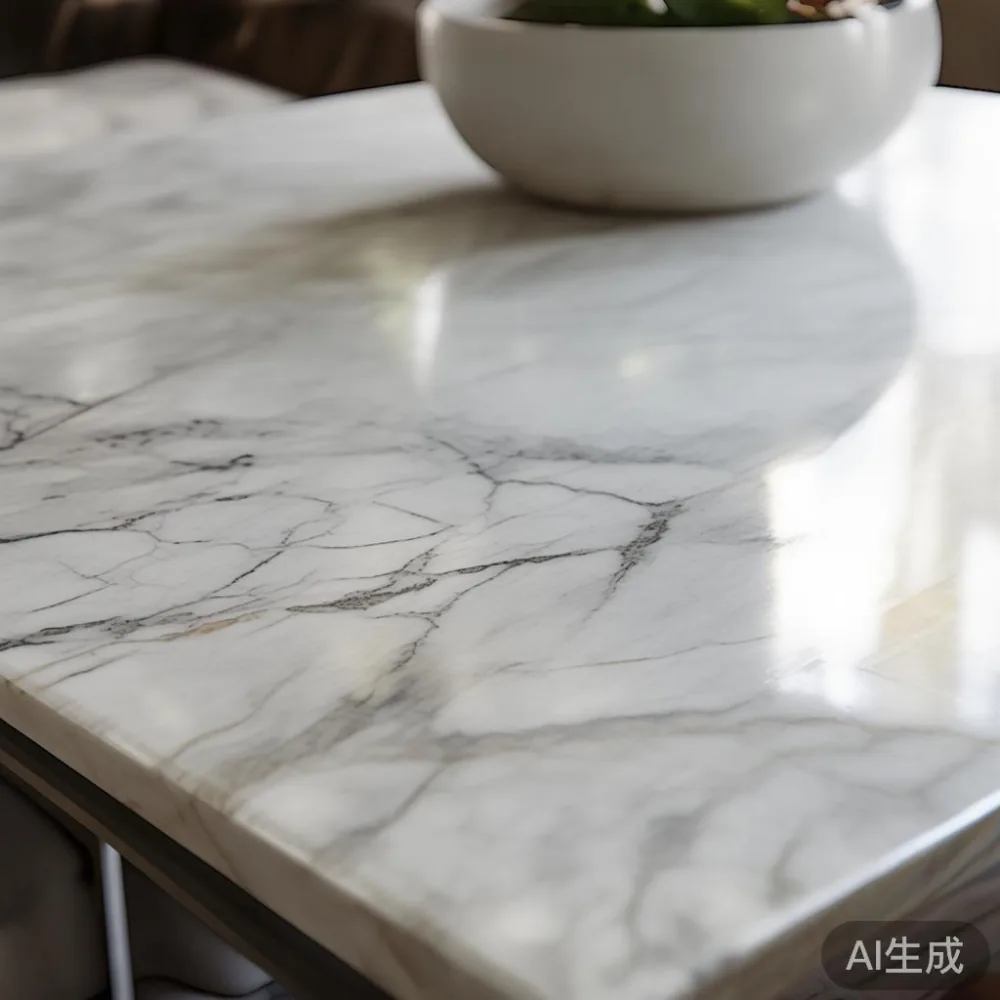
This comparison uses realistic Singapore figures in SGD, including GST, delivery to HDB blocks and condo loading areas, and replacement or repair costs over 60 months. It also considers storage furniture such as a wardrobe, a solid wood bed frame, a nightstand and a solid wood sofa. Marble tops and legs are treated separately because stone movement, weight and sealer maintenance affect the total calculation.
For apartment planning, I also include dimensions for lift doors, corridors and compact rooms in Tampines, Bedok and Punggol. The aim is not to label one material universally superior. It is to show what a household may spend over 5 years, including the costs that appear after delivery day.
What Counts in a 5-Year Furniture Cost?
The comparison begins with the delivered price. For Singapore online purchases, the listed price normally excludes GST, so a $1,200 dining table becomes $1,260 after 9% GST. Delivery may be free above US$350, but that overseas threshold does not automatically mean free delivery within Singapore. A van delivery to an HDB block can still carry a $50 to $120 destination charge, while a condo delivery booking and lift reservation may add $80 to $250.
The sample uses a 180 × 90 cm dining table, a 180 × 200 cm bed frame, a 100 cm wardrobe, a 50 cm nightstand, a 200 cm sofa and a 110 cm coffee table. Veneer tables are modelled at $1,200 before GST and solid wood tables at $2,000 before GST. A marble table option carries a $600 to $1,600 stone surcharge before GST because slab selection, veining, edge work and weight vary substantially.
Five-year ownership includes:
- Purchase price plus 9% GST.
- Local delivery, assembly and lift booking.
- Cleaning products and maintenance supplies.
- Repair, refinishing or replacement events.
- The working value of the furniture at month 60.
I visited a Bedok HDB home last month to inspect a 5-year-old dining table that had been used by a family with two children. The table was a veneered medium-density fibreboard construction with a 0.6 mm oak veneer. One water ring near the serving edge had lifted the veneer, and the particleboard underneath had swollen. The solid wood dining table beside it had scratches but no swelling; one shallow gouge could be filled and the surface refinished. That visit shaped the repair assumptions below, although each household will experience different wear.
What Is the Difference Between Veneer and Solid Wood?
Veneer is a thin layer of real timber, typically 0.3 to 1.2 mm, bonded to an engineered core such as plywood, particleboard or medium-density fibreboard. It can reproduce the grain and figure of a larger log with less material movement. A light-oak veneer dining table may use a stable plywood core, while lower-cost furniture often uses particleboard.
Solid wood uses timber through the panel or frame rather than a thin surface layer. It expands and contracts more visibly as humidity changes, usually by roughly 0.5% to 2% across the grain over a year. In Singapore, where indoor humidity often remains around 55% to 75%, this movement matters around fitted wardrobes, sliding doors and dining tables placed beside air-conditioning vents.
The label “solid wood” should be checked carefully. Some frames combine solid timber rails and legs with plywood or fibreboard panels. For a wardrobe, the drawer boxes and carcass may differ even when the visible doors are solid timber. Ask for a material schedule showing the veneer thickness, core board, back panel, joint type and timber species.
Appearance also affects the comparison. Veneer is consistent across large panels and suits French light luxury, where pale oak, walnut tones and restrained symmetry are common. Solid wood can show knots, sapwood and minor variation. For a marble table, the stone itself creates natural variation, while the timber base can be veneer or solid wood without needing to imitate dramatic grain.
How Much Does Veneer Cost Over 5 Years?
For the 180 × 90 cm dining table, the modelled veneer price is $1,200 before GST. After GST, it is $1,260. Local delivery and assembly are estimated at $100, bringing the first-year cost to $1,360.
Maintenance over 60 months includes two bottles of wood cleaner at $28 each, a dust cloth at $12, a small touch-up kit at $35 and one partial repair. That repair allowance is $150 for a lifted edge, swollen section or separated joint. Total planned maintenance is $253. The 5-year cash cost is therefore about $1,613.
The wardrobe example starts at $1,500 before GST. It reaches $1,635 after GST, plus $150 for delivery and installation, $100 for hardware protection and $120 for one roller or hinge adjustment. A $90 deep-cleaning allowance and a $220 repair reserve produce a 60-month cost of $2,315.
The bed frame is priced at $1,100 before GST, $1,199 after GST and $1,349 with $150 delivery and assembly. Maintenance and one slat or fastener repair add $180, giving a 5-year cost of $1,529.
The sofa example uses a $1,800 veneered model at $1,962 after GST, with $140 delivery, $180 maintenance and a $250 repair reserve. Its 60-month cost is $2,532. A nightstand at $300 before GST reaches $327 after GST, plus $60 delivery and $70 maintenance, for $457 over 5 years.
These are planning estimates rather than quotations. A high-pressure laminate or thin 0.2 mm veneer may sit lower in the range, while a plywood-core table with thicker veneer may cost more. The biggest financial risk is not ordinary scratching. It is moisture reaching a low-grade core and causing irreversible swelling.
How Much Does Solid Wood Cost Over 5 Years?
The same 180 × 90 cm solid wood dining table is modelled at $2,000 before GST and $2,180 after GST. Delivery and assembly add $120, while cleaners, wax or oil and touch-up materials total $180. Refinishing the tabletop once within 5 years is reserved at $380. The resulting cost is $2,860.
The 180 × 200 cm solid wood bed frame starts at $1,800 before GST, or $1,962 after GST. Delivery and assembly cost $160, maintenance is $200 and one slat or screw repair adds $90. Its 5-year total is $2,412. This is higher at purchase, yet the reserve still reflects the possibility of structural work after years of use.
A $2,400 solid wood wardrobe becomes $2,616 after GST. Delivery and installation are $180, maintenance is $130 and a $220 hardware adjustment is allowed. The total at month 60 is $3,146. A solid wood nightstand at $450 reaches $491 after GST, plus $60 delivery and $75 maintenance, for $626.
The solid wood sofa example is $2,500 before GST and $2,725 after GST. Delivery is $160, care products are $220 and a $300 frame or joint repair is reserved, giving $3,405 over 5 years. Frame construction can dominate this figure: a kiln-dried hardwood frame, dowelled joints and a ten-year structural warranty generally require more investment than a decorative veneer over a composite core.
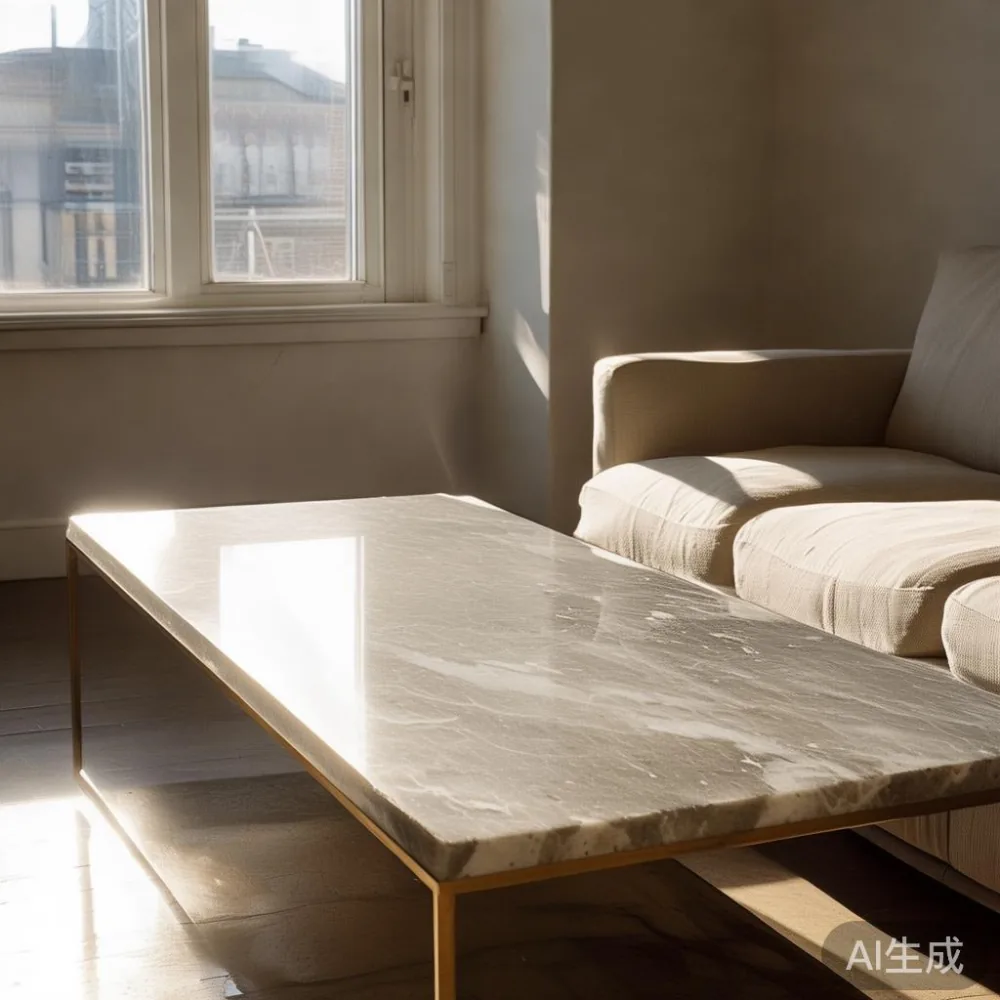
For smaller living rooms, Modern light luxury for small living room does not require oversized furniture. A 160 cm sofa, 45 cm nightstand and 90 cm coffee table can preserve circulation. Buyers comparing European light luxury sofa vs Mid-century modern sofa should measure seat depth, arm width and leg clearance before focusing only on timber.
Do Marble Tables Change the Cost Comparison?
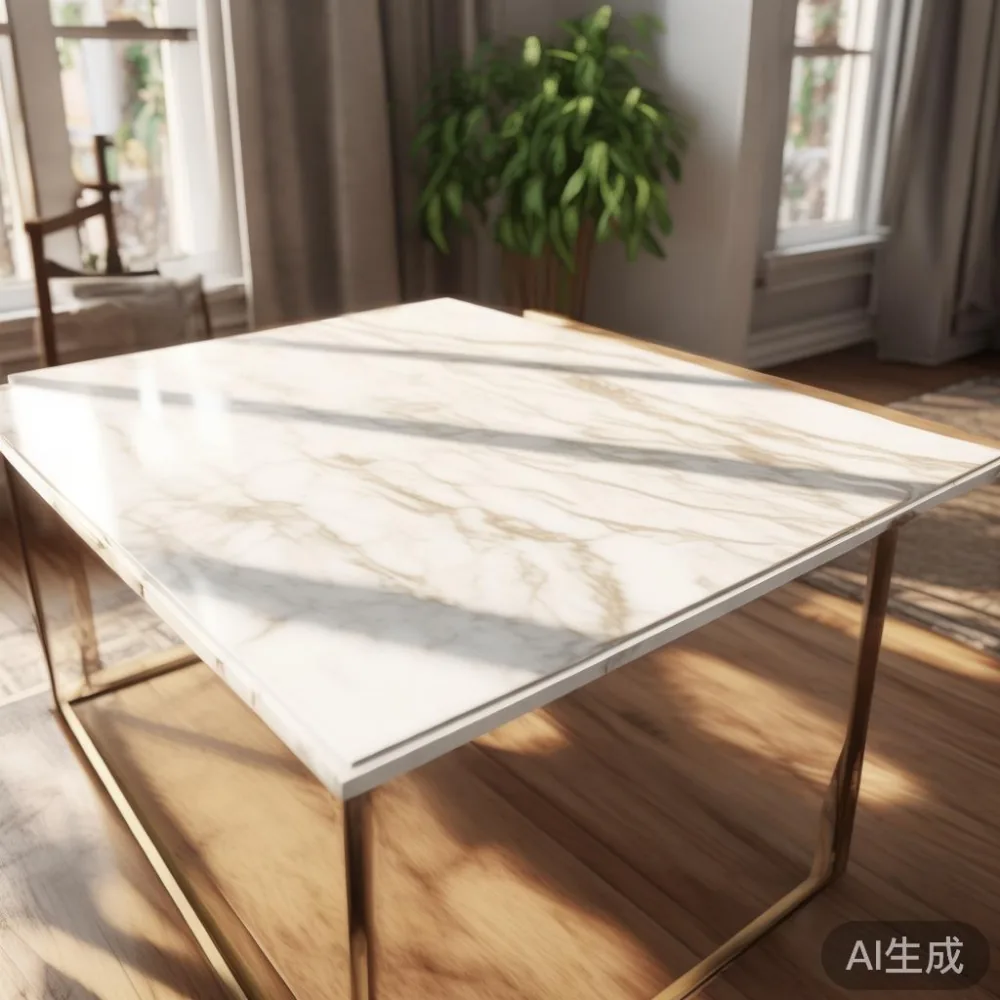
A marble table changes the purchase and delivery equation more than the veneer-versus-solid-wood decision alone. Natural marble tops for a 120 × 60 cm coffee table may add $600 to $1,600 before GST. A 180 × 90 cm dining top may add $1,000 to $2,600 because the slab, reinforcement and support frame must suit the stone’s weight.
Typical marble density is about 2,700 kg per cubic metre. A 120 × 60 cm slab at 20 mm thickness weighs approximately 39 kg. The same area at 30 mm weighs about 58 kg. The timber base may add 20 to 45 kg, so a four-person dining set can exceed 120 kg. A lift rated for 450 kg may carry the load, but the real constraints are the lift car dimensions, turning circle and corridor turns.
Old HDB lift openings may measure about 80 to 90 cm, while standard condo lift doors are often 90 to 110 cm. A 90 cm-wide marble top can pass only if turned on edge with enough clearance, and a packaged corner can exceed the door width. Delivery to Tampines, Bedok or Punggol should therefore include a site measurement and a lift-booking fee of about $80 to $150.
Sealing is also part of ownership. Impregnated marble used for a dining surface may need sealing every 12 to 24 months, at roughly $60 to $180 per service. A honed finish hides small scratches more effectively than a high-gloss finish but requires specialist advice before refinishing. Veined marble should not be assumed to tolerate acidic liquids; wine, citrus and household cleaners can etch the surface.
For customers looking for MIDHILL coffee table wholesale options or stone-top specifications, the material schedule should state marble thickness, support method, underside reinforcement and whether the quoted top is natural stone or porcelain. MIDHILL’s lifetime refinishing service also needs a clear scope: stone cannot be “refinished” in the same way as timber.
Which Option Has the Lower 5-Year Total?
Using the modelled dining table, veneer costs about $1,613 over 5 years and solid wood about $2,860. The difference is approximately $1,247. The wardrobe gap is about $831, the bed frame gap is $883, the nightstand gap is $169 and the sofa gap is $873.
Across the six-item household set in these examples, veneer totals $9,806 and solid wood totals $12,995. The difference is $3,189, or 24.5% of the solid wood spend. These totals exclude the marble surcharge because marble tops vary too widely for one defensible figure. Adding a $1,200 marble upgrade plus 9% GST and $120 delivery would add $1,428 to either option.
The lower cash total does not automatically mean the better long-term choice. Veneer usually wins when the core is high quality, the household expects to move within 5 years, and furniture will be protected from moisture. It is less suitable where children, pets or frequent entertaining create edge and spill risks.
Solid wood becomes more compelling when a household values repairability, plans to keep the pieces longer than 10 years, or has a realistic maintenance routine. It also allows local refinishing of scratches instead of wholesale replacement. MIDHILL’s lifetime refinishing policy gives solid wood buyers a clearer repair path, while its 10-year structural warranty addresses frame integrity rather than every surface scratch.
Used resale value is another uncertain variable. A well-maintained solid wood dining table might retain more functional life than a swollen-core veneer table, but actual resale proceeds depend on design, condition and location. Reasonable planning allowances would be 20% to 35% of purchase price for sound solid wood furniture and 10% to 25% for sound veneer furniture, not a guaranteed return.
What Should You Buy for a Singapore HDB Flat or Condo?
Measure before ordering. For the dining table, leave at least 90 cm around the table for chairs and circulation, or 75 cm with compact chairs in a compact HDB dining zone. Check the sofa route from the loading area to the living room; a 205 cm sofa may need its legs removed, while a boxed frame can exceed the lift turn.
For a wardrobe, ask the supplier whether wall fixing is permitted in an HDB flat and request a moisture-resistant backing. Keep the unit 5 to 8 cm away from a shower or kitchen wall if possible. The same planning applies when learning how to style Japanese wardrobe in room: pale timber, sliding panels and vertical storage can make a 100 cm wardrobe less visually crowded.
Buyers searching for how to style European light luxury sofa in apartment should use a restrained palette, a slim coffee table and one clear focal point. A French light luxury dining setting can pair a pale oak dining table with a marble table top, but the stone should not be mixed with several competing veining patterns. A post-modern light luxury approach may combine a solid wood bed frame with clean-lined storage and one sculptural table.
For a modest apartment, the sensible sequence is to prioritize the bed frame and dining table, then select the sofa and wardrobe around the actual room dimensions. A MIDHILL light luxury sofa can anchor the living room, but the frame, foam density and seat comfort should be assessed before the finish. Colour samples should be viewed under the home’s evening lighting, since Singapore’s warm bulbs can make grey and pale oak appear different.
How Can You Avoid an Unexpected Repair Bill?
Keep moisture away from table edges and joints. Wipe spills within 5 minutes, use a coaster beneath a cold drink and avoid placing a dining table directly beneath an air-conditioning vent. For veneer furniture, a failed edge seal is easier to repair while the substrate remains dry. Use a coaster beneath a cold drink and avoid placing a dining table directly beneath an air-conditioning vent. For veneer furniture, a failed edge seal is easier to repair while the substrate remains dry.
Follow the care instructions for the exact finish. Clean timber with a lightly damp cloth, not a soaked one. Do not use silicone-based sprays on a dining surface. On marble, use a pH-neutral cleaner and keep acidic substances off the top. Check every 6 months that lift bookings, room measurements and timber movement are still accurate.
Request written terms before payment. Confirm the core material, veneer thickness, solid timber species, finish, dimensions, weight, delivery days, return window and warranty exclusions. MIDHILL was established in 2008, exports to more than 15 countries, offers free shipping above US$350, permits returns within 14 days and provides a 10-year structural warranty. Those policies are most useful when the sales record names the exact product and finish.
Over 60 months, veneer can deliver the lower cash cost, especially for a 180 × 90 cm dining table, a 100 cm wardrobe or a 200 cm sofa in a busy HDB home. Solid wood carries the higher opening cost but gives the household a stronger repair and refinishing path. The practical choice depends less on fashion than on the core specification, the habits of the household and whether the furniture will be moved, refinished or passed on.